
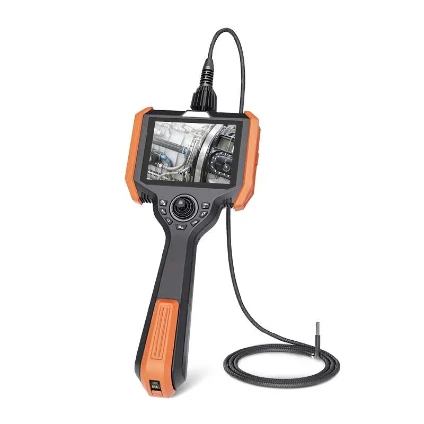
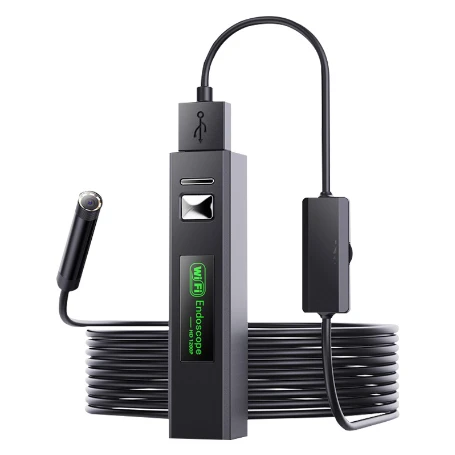
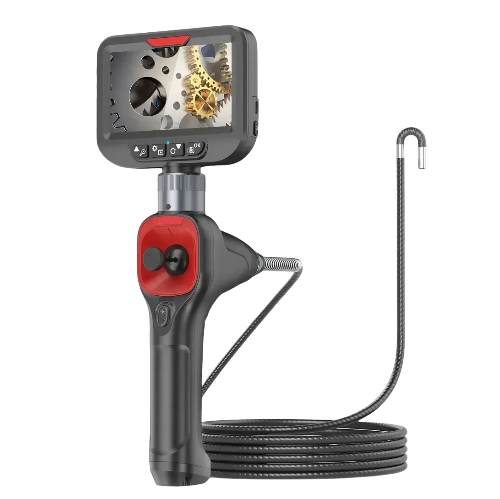
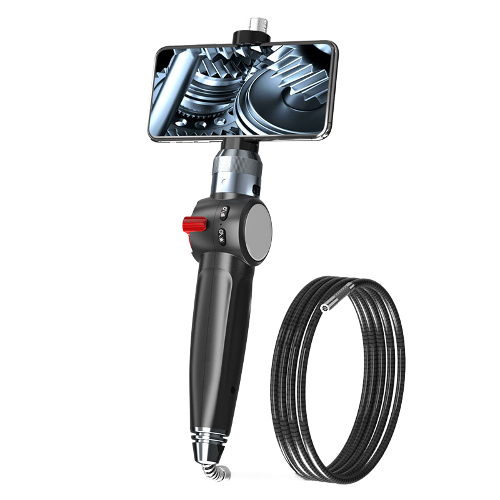
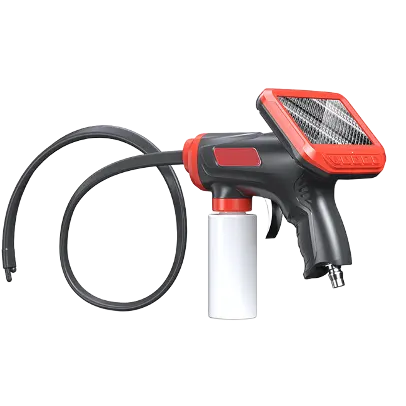
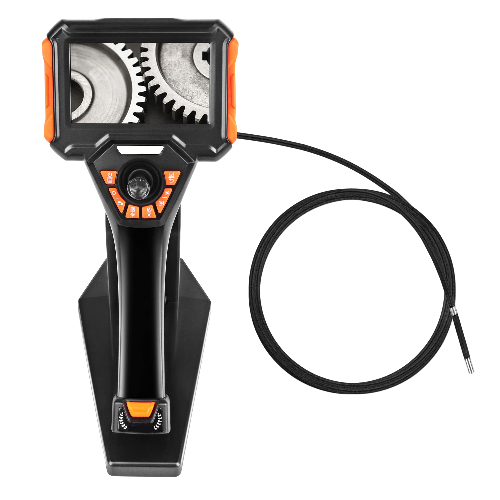
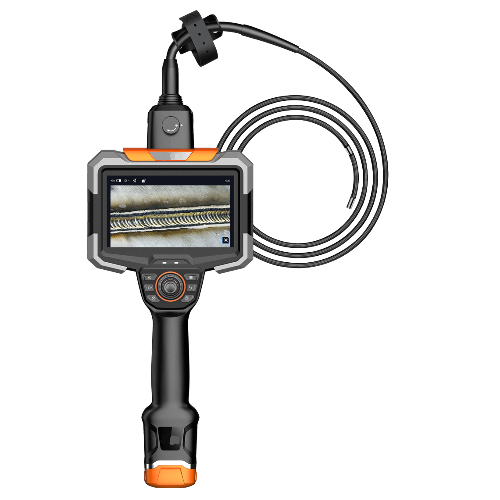
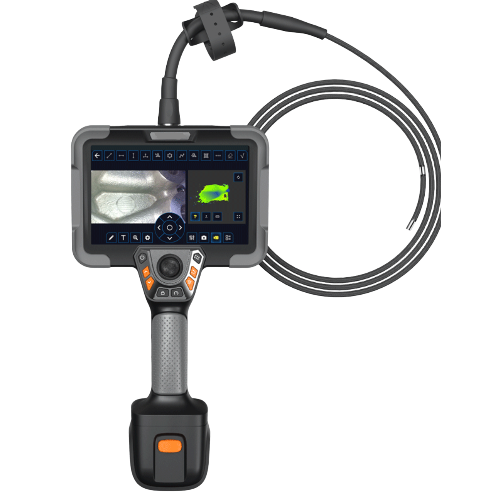
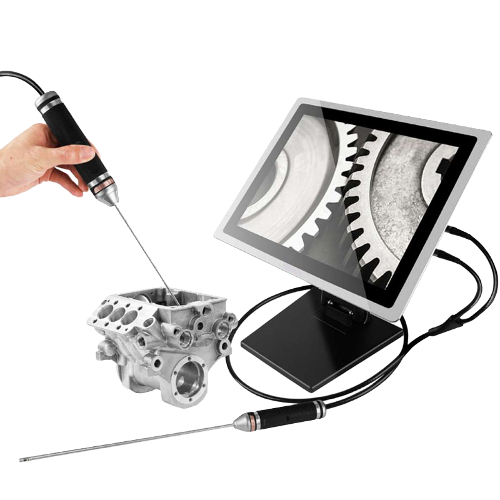
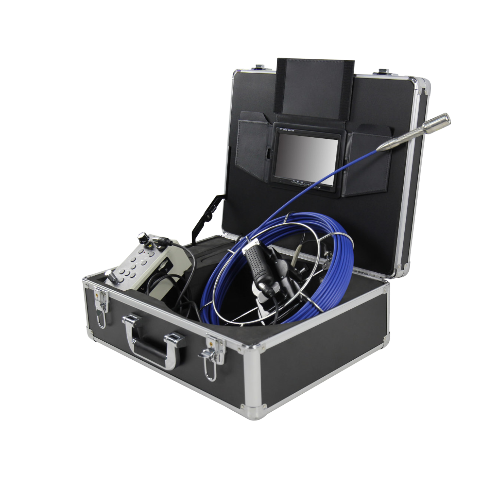
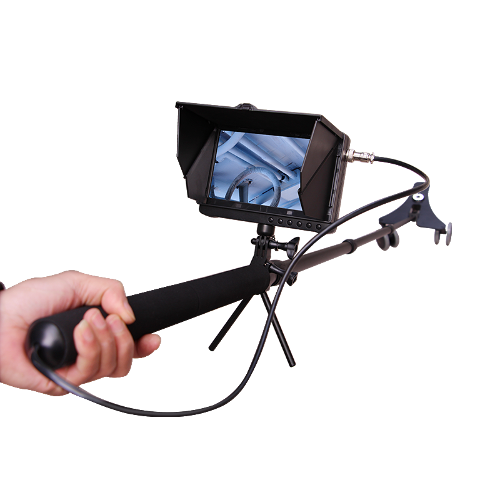
Modern industrial inspection is developing toward higher precision and more complex working conditions. Ultra-thin industrial borescopes adopt sub-millimeter probe design, breaking the physical bottlenecks of traditional inspection devices. As key equipment for deep internal detection and early hidden defect screening, they solve the difficult problem of narrow channel inspection, with outstanding advantages in imaging effect, detection efficiency, equipment protection and safety risk prevention. They have become essential technical support for modern industrial quality control, equipment maintenance and product research and development.
Accessibility Value: Break Physical Inspection Barriers
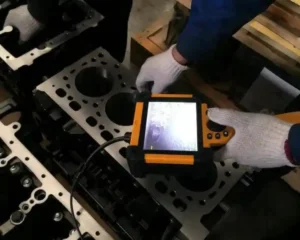
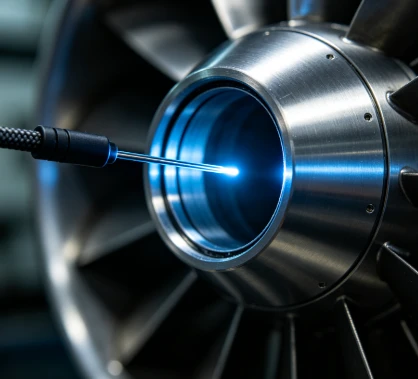
Reaching the detection position smoothly is the basic premise of industrial non-destructive testing. As industrial equipment becomes increasingly sophisticated, internal channels are narrower and more curved, making ordinary borescopes unable to access the detection points. Relying on sub-millimeter tiny probes, ultra-thin borescopes can freely enter channels narrower than 2 mm, including engine blade gaps, film cooling holes, micro holes of precision hydraulic valve cores, chip internal gaps of consumer electronics and other micro spaces.
The equipment replaces destructive detection modes such as cutting and complete disassembly, accesses hidden areas unreachable by conventional instruments without damaging workpiece structures, keeps parts intact, and thoroughly avoids missed detection caused by observation blind zones.
Diagnostic Value: High-Fidelity Clear Imaging
The ultra-small diameter design will not sacrifice imaging performance. Equipped with high-pixel CMOS image sensors, optimized light guide layout and advanced image processing algorithms, modern ultra-thin borescopes achieve imaging quality equivalent to standard-diameter borescopes within an ultra-slim probe structure. They can clearly capture micro defects including tiny cracks, burrs and corrosion pits, providing traceable image evidence for maintenance judgment, quality inspection and product R&D verification.
Engineers can accurately judge whether the damage is in the initial generation stage or continuous expansion stage, so as to make scientific decisions on continuing operation or timely overhaul.
Economic Value: Boost Inspection Efficiency & Protect Valuable Equipment Assets
For industrial enterprises, inspection time cost and equipment asset loss constitute major operating expenses, while ultra-thin borescopes bring obvious cost reduction and efficiency improvement benefits.
Reduce wear of detection equipment and extend service life
When conventional borescopes are forcibly squeezed into narrow openings, their insertion tubes and steering structures are prone to serious abrasion. Customized for complex industrial environments, ultra-thin borescopes adopt highly flexible slim insertion tubes, suffering little friction loss when passing through sharp edges and rough inner walls. It protects the enterprise’s high-value testing equipment investment and avoids production downtime caused by borescope failure and damage.
Improve one-time inspection pass rate and shorten operation cycle
The probe smoothly passes through curved complex pipelines, effectively avoiding jamming or failure to reach the target detection position. One insertion can complete full inspection, greatly improving on-site working efficiency. Most products adopt modular design with quickly replaceable front-end probes, which can adapt to different apertures and detection angles, reducing repeated equipment debugging and setup time.
Support predictive maintenance and avoid major safety accidents
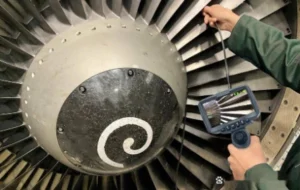
The implicit core value lies in proactive risk prevention. During routine engine overhaul and equipment maintenance, regular deep internal inspection can capture early abnormal signs such as blade damage, combustion chamber cracks and bearing wear. Enterprises can arrange planned maintenance in advance before faults break out, avoiding serious consequences such as aircraft flameout in flight and full production line shutdown, and preventing massive economic losses.
Core Value Summary Table
| Core Value Dimension | Specific Performance | Direct User Benefits |
|---|---|---|
| Space Accessibility | Smooth access to channels narrower than 2mm | Eliminate inspection blind spots and achieve full coverage detection |
| Imaging Diagnostic Capacity | High-resolution sensor, delicate defect presentation | Accurately identify micro defects and scientifically evaluate damage degree |
| Testing Equipment Protection | Low friction wear, long service cycle | Reduce equipment replacement frequency and amortization cost |
| Inspection Execution Efficiency | High one-time success rate, no repeated rework | Shorten equipment downtime and cut single inspection labor cost |
| Safety Guarantee Value | Early defect discovery, support predictive maintenance | Avoid safety accidents and ensure stable continuous production |
Conclusion
With outstanding space penetration capultra-thin industrial borescopesability, high-precision diagnosis performance and comprehensive economic advantages, reshape the implementation standard of industrial non-destructive testing technology. They realize non-destructive blind-spot-free detection, accurately excavate hidden equipment risks, optimize overall inspection efficiency and guarantee safe operation of production facilities. They provide solid technical support for full-lifecycle management of industrial equipment, and possess broad popularization and application prospects in precision manufacturing and high-end equipment manufacturing industries.