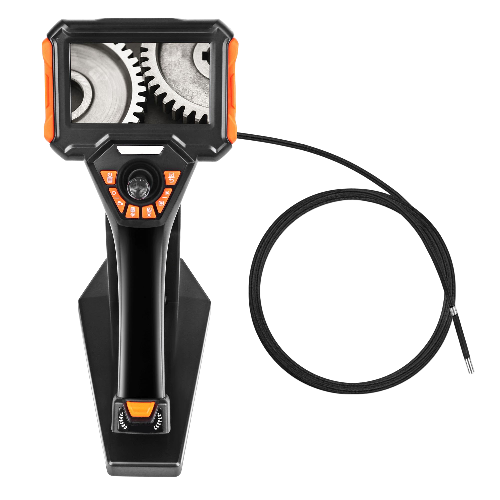
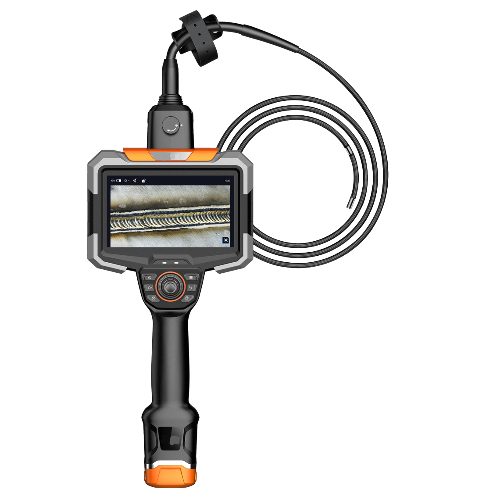
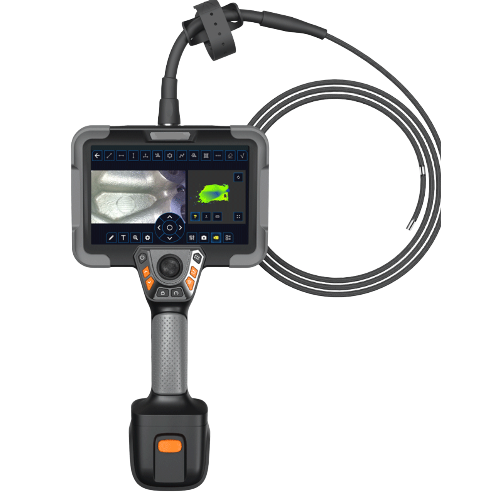
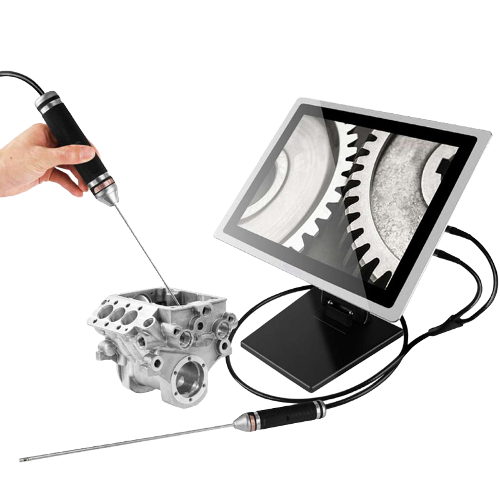
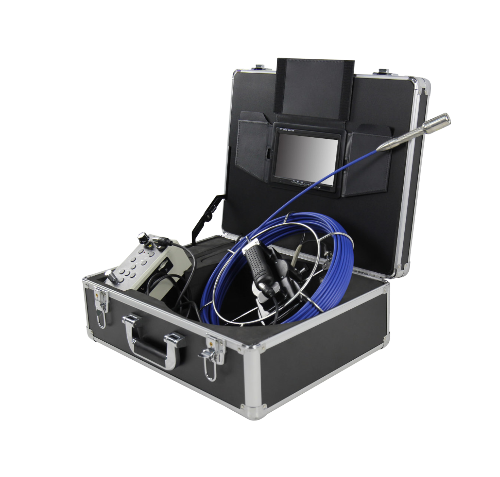
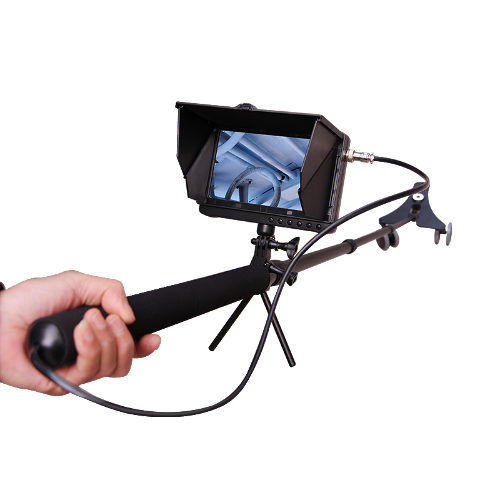
In industries such as power, petrochemicals, metallurgy, and heavy manufacturing, routine operation, maintenance, and non-destructive testing (NDT) of confined equipment like boilers, high-temperature steam pipelines, and reaction vessels face extreme challenges. The testing environment often involves high risks and ultra-high temperatures. Once the environmental temperature surpasses 100°C, ordinary industrial borescopes fail to function properly due to structural and material constraints. For high-temperature complicated working scenarios,professional high-temperature resistant industrial borescopes equipped with active cooling and thermal insulation structures stand as the ideal solution to safeguard operator safety and guarantee reliable inspection results. So, how to pick a qualified high-temperature industrial borescope that stably adapts to extreme thermal environments?
Probe Thermal Limit
For ultra-high temperature confined working conditions, confirming the max temperature resistance rating is the core prerequisite for industrial endoscope selection. During procurement, clearly differentiate two critical temperature indicators: the heat resistance limit of the bare probe (the temperature that electronic and optical components can withstand without cooling) , and the operating temperature rating with cooling system. Models with air-cooling or water-cooling structures can adapt to operating environments of 300°C, 500°C or even 1000°C.
Material and Protection
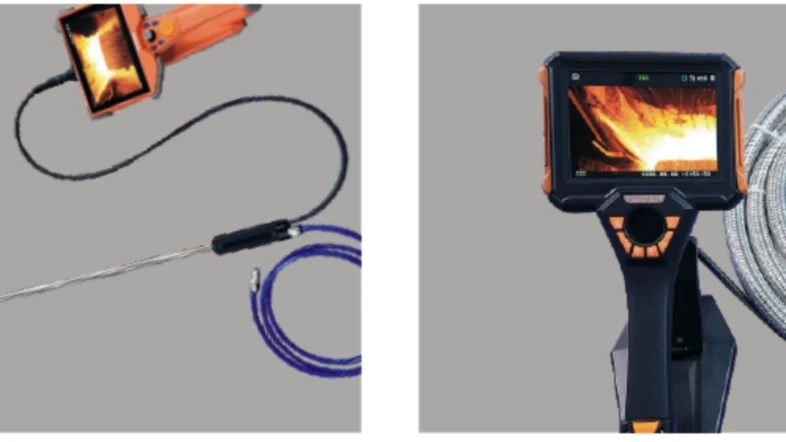
The core of high-temperature resistant endoscopes lies in specialized materials and protective design. Probes made of high-temperature alloy and Ceramic resist deformation and damage under extreme heat. The active cooling system serves as a standard core configuration for ultra-high-temperature detection tasks. With mature air cooling and water cooling solutions, it conducts continuous heat conduction and heat dissipation for the probe, greatly broadening the equipment’s adaptability to high-temperature inspection environments.
For the insertion tube and protective outer layer, opt for tubing materials with outstanding heat resistance and anti-corrosion performance, including fiberglass wrapped stainless steel tube, 316 stainless steel tube and tungsten wire braided tube. These materials guarantee outstanding flexibility and mechanical strength during long-term harsh-condition operation, avoiding failures such as thermal softening, oxidative brittleness or fracture.
The whole device adopts integrated thermal isolation design. A reinforced heat insulation protective layer is added at the connection position between the probe and the operating handle to cut off high-temperature heat conduction toward the control terminal. This design realizes long-term stable operation of the equipment and fully safeguards the personal safety of operators.
Imaging Quality
Megapixel high-definition cameras have become standard configuration to identify tiny defects accurately. The lighting system is optimized for high-temperature environments. The front-mounted high-brightness LED with multi-level brightness adjustment delivers sharp imaging under complicated light conditions.
Operational Flexibility
Precise articulation boosts inspection efficiency drastically. The probe features 360° rotation and maximum 180° bending angle, accessing narrow gaps and blind spots of equipment to achieve full-coverage inspection with zero dead vision.
Cost
High-temperature resistant industrial endoscopes adopt special heat-resistant structures, leading to relatively high overall costs. It is recommended to select functions according to actual on-site working conditions to avoid extra expenses caused by redundant configurations.
FAQ
Q: What core indicators should be prioritized for high-temperature endoscopes?
A: Focus on probe temperature resistance, cooling mode
Q: Can a non-cooled probe be directly used for high-temperature pipeline inspection?
A: No. Bare probes only withstand high heat briefly; air or water cooling is mandatory for high-temperature work.
Q: How to prevent the insertion tube from damage under high temperature?
A: Adopt tungsten braided or 316 stainless steel sheathed tubes for heat resistance, flexibility and corrosion resistance.