
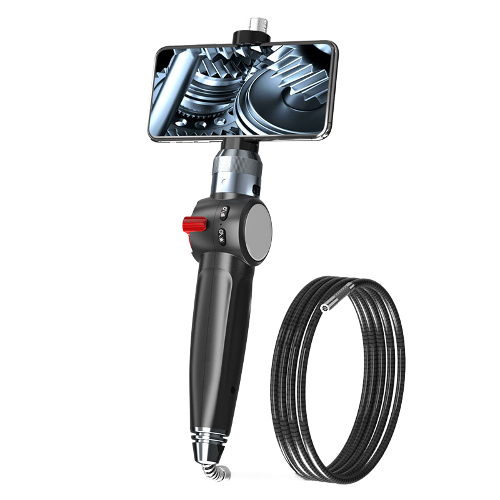
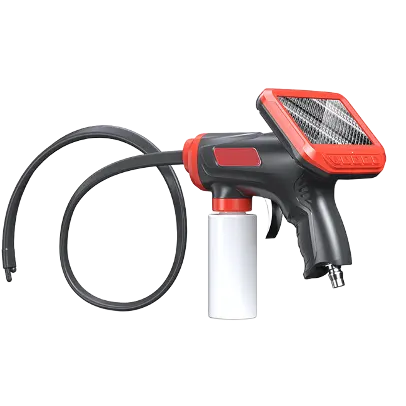
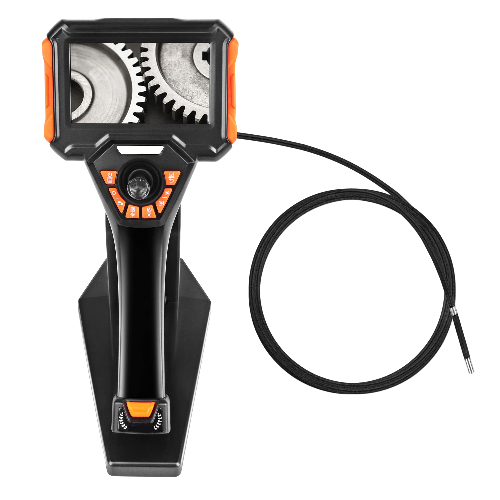
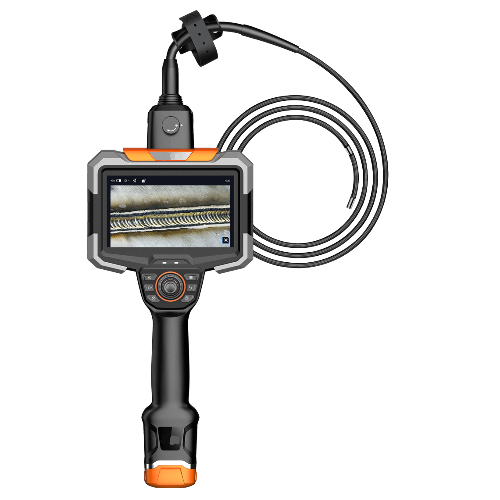
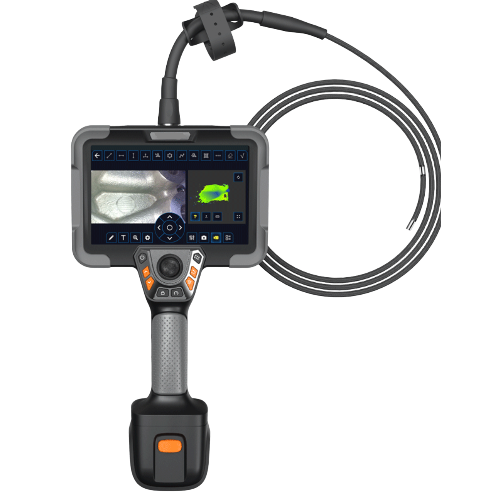
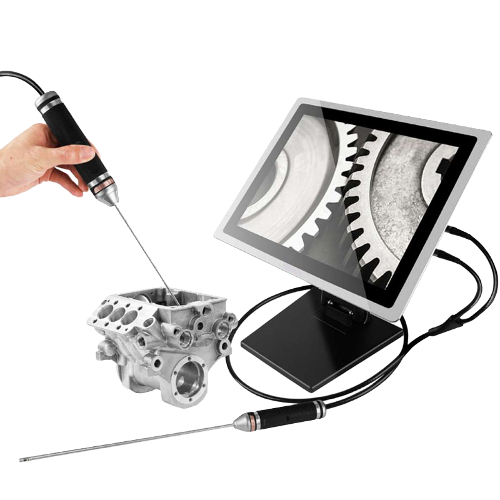
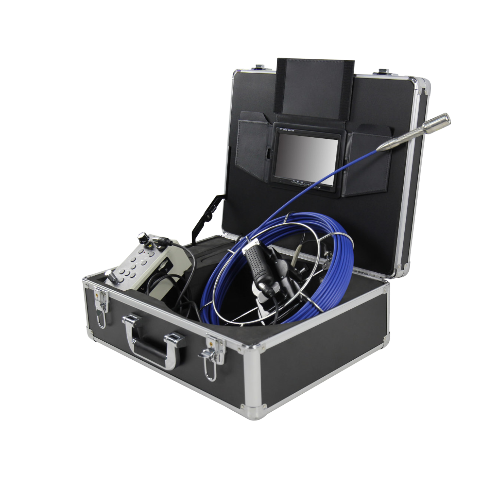
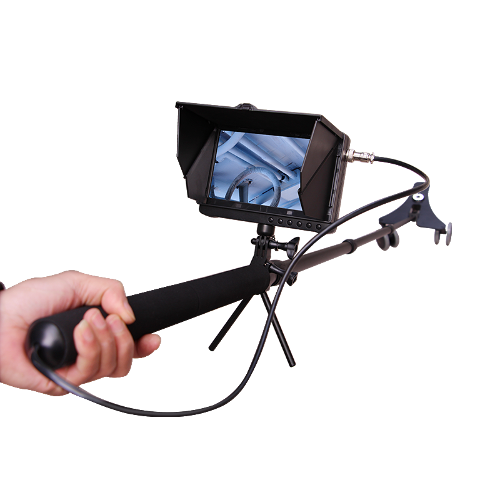
In industries such as petrochemicals, coal mining, aviation maintenance, and power generation, internal equipment inspection always faces the same challenge: you need to see exactly what is happening inside a component, but the inspection process itself must not create a spark that turns the facility into an accident scene. Once a conventional borescope is introduced into a confined space containing flammable gases or combustible dust, electrical sparks or excessive surface temperatures can potentially trigger a catastrophic explosion.
This is precisely why explosion‑proof industrial borescopes exist. They enable inspectors to safely “see” internal corrosion, cracks, wear, and blockages without shutting down equipment, dismantling assets, or exposing personnel directly to hazardous environments.
This guide explains what explosion‑proof borescopes are, what problems they solve, where they are used, how to select the right system, and where the technology is heading—helping you avoid costly mistakes during procurement and operation.
What Is an Explosion‑Proof Industrial Borescope?
An explosion‑proof industrial borescope is a non‑destructive testing (NDT) instrument specifically designed for hazardous environments and certified under recognized explosion‑protection standards.
The fundamental difference between an explosion‑proof borescope and a standard industrial borescope is not image quality. The key distinction is whether the entire system—particularly the probe tip and electrical components—has been certified under standards such as ATEX and IECEx, allowing it to operate safely in classified explosive atmospheres (Zone 0, Zone 1, and Zone 2) without becoming an ignition source due to electrical faults, static discharge, or excessive surface temperatures.
To determine whether a device is truly explosion‑proof, do not rely solely on marketing claims. Verify the following three factors:
- Certification Rating: Confirm that the equipment holds valid third‑party explosion‑proof certification. Ensure that the certified gas groups (IIA/IIB/IIC) and temperature classes (T1‑T6) match your actual operating environment.
- Intrinsically Safe Circuit Design: Verify that the probe, cable, and main unit are designed as an intrinsically safe system that cannot generate sparks even under fault conditions.
- Construction and Materials: Ensure the housing is anti‑static, impact‑resistant, and chemically resistant to prevent electrostatic discharge or mechanical spark generation.
Three Core Components
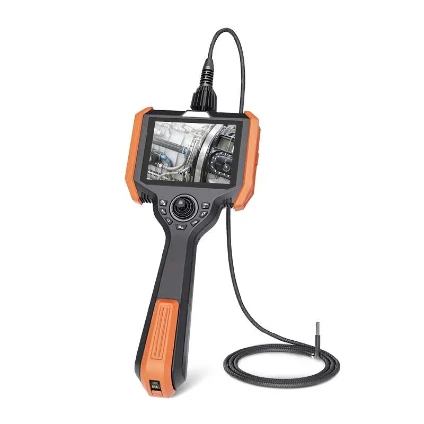
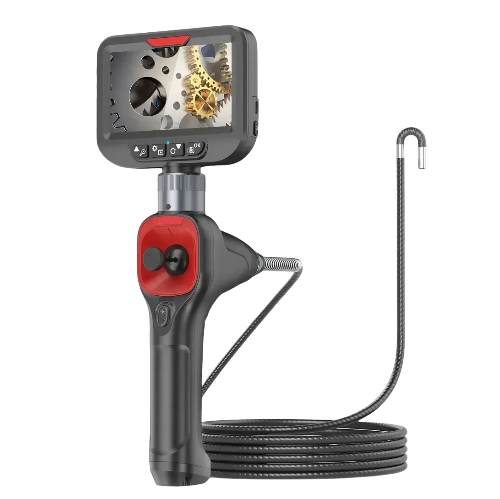
Like conventional borescopes, explosion‑proof borescopes consist of three primary components: the probe, the main unit, and the power supply. However, each component is specially engineered for explosion protection.
- Probe: Available in flexible and rigid configurations, the probe enters the inspection target and captures images through an optical lens located at the distal tip.
- Main Unit: Integrates control and display functions, enabling probe articulation, focus adjustment, and real‑time image viewing. The housing is typically manufactured from high‑strength metal materials for corrosion resistance and impact protection. Connectors, switches, and electrical interfaces feature multiple sealing layers to prevent ingress of flammable gases, dust, and moisture.
- Power Supply: Uses dedicated explosion‑proof power systems. Illumination is commonly delivered through fiber‑optic transmission or low‑power LED technology to tightly control energy consumption and heat generation.
These three components work together to ensure stable and safe inspection performance in hazardous environments.
What Problems Does an Explosion‑Proof Borescope Solve?
Safety Value: Eliminating Explosion Risks at the Source
Most oil and gas facilities, chemical plants, coal‑processing sites, mines, and grain‑processing facilities contain Zone 1 or Zone 2 hazardous areas.
Conventional borescopes, smartphones, and standard imaging devices are not designed with intrinsic safety protection. Minor electrical faults, static discharge, or elevated surface temperatures may ignite combustible gases or dust.
Explosion‑proof borescopes address this risk through intrinsically safe circuit design, limiting both electrical and thermal energy at the source. Even in the event of a short circuit, the released energy remains well below the minimum ignition energy required to ignite an explosive atmosphere. Combined with sealed construction and spark‑free electrical architecture, explosion risks are effectively eliminated at the source.
Efficiency Value: Inspection Without Shutdown or Disassembly
Traditional internal equipment inspections often require the following process:
Shutdown → Disassembly → Inspection → Reassembly → Restart
Depending on the equipment, this process can take anywhere from several hours to several days.
Many facilities underestimate the true cost of downtime. For refineries, gas pipelines, and power‑generation systems, a single day of downtime can result in production losses, contract penalties, and raw‑material waste that far exceed the cost of the inspection equipment itself.
Explosion‑proof borescopes eliminate the need for shutdown and disassembly. Operators simply insert the probe to assess internal conditions, making this one of the most immediate and measurable benefits.
Precision Value: Seeing Clearly and Measuring Accurately
Many critical areas inside industrial equipment are inaccessible to direct visual inspection.
Modern explosion‑proof borescopes commonly feature high‑definition cameras with megapixel‑level resolution. Many systems support 360° motorized articulation, allowing probes to navigate complex pipework and confined spaces. Probe diameters can be smaller than 2.8 mm, enabling access to extremely narrow openings while delivering clear visualization of internal defects.
As a result, the missed‑defect rates commonly associated with manual inspections can be significantly reduced.
Compliance Value: Meeting Regulatory Requirements
Government safety agencies, hazardous‑material regulators, and industrial safety auditors are placing increasing emphasis on inspection‑tool qualifications, equipment maintenance records, and hazard‑identification documentation.
Stored inspection images, defect records, timestamps, and location data can be compiled directly into standardized inspection reports for monthly safety documentation, annual management‑system audits, and third‑party safety assessments.
During safety inspections or environmental compliance reviews, comprehensive visual inspection records provide documented evidence that the facility has implemented routine hazard‑identification procedures, helping reduce corrective‑action findings.
Six Core Application Scenarios
Petrochemical Facilities: Pipelines, Storage Tanks, and Reactors
Reactors, storage vessels, and pipelines in petrochemical plants operate under high temperatures, high pressures, and corrosive media while often being surrounded by flammable gases.
Traditional inspections require shutdowns, purging procedures, and hot‑work preparation, resulting in significant costs and downtime.
Explosion‑proof borescopes can be inserted directly into equipment without hot work or confined‑space entry, enabling inspectors to identify weld cracks, corrosion pits, scale buildup, and foreign‑object blockages while minimizing personnel exposure to hazardous substances.
Power Generation Facilities: Transformers, Switchgear, and Generators
Transformer tanks, high‑voltage switchgear, and generator interiors are confined spaces where manual inspection introduces electrical‑shock and short‑circuit risks.
Using flexible explosion‑proof probes, maintenance personnel can inspect insulation degradation, overheating marks on terminals, dust accumulation, and foreign objects without complete disassembly and, in some cases, with minimal power interruption.
This helps reduce the likelihood of unplanned outages.
Aviation Engines and MRO Operations
Engine maintenance facilities and fuel‑system areas represent typical flammable environments where explosion protection remains essential.
Engineers use borescopes to inspect complex structures such as high‑pressure turbine (HPT) blades, combustors, and ceramic matrix composite (CMC) shrouds, evaluating blade cracking, thermal damage, and foreign object damage (FOD) without dismantling the engine.
These inspections demand exceptional image quality, articulation capability, and measurement accuracy because inspection results directly influence airworthiness decisions.
Mining and Underground Operations
Underground mining environments contain both coal dust and methane, making them among the most hazardous explosive atmospheres encountered in industry.
Explosion‑proof borescopes equipped with dual‑light‑source systems and vibration‑resistant construction can inspect ventilation ducts, electrical equipment, rail systems, and hydraulic supports. Even in dark, dust‑heavy conditions, they provide clear images that help maintenance teams identify hazards in areas where conventional inspection methods are ineffective.
Shipbuilding and Offshore Engineering
Engine rooms, fuel systems, and ballast tanks on vessels feature complex structures, confined spaces, and long‑term exposure to moisture and salt corrosion.
Explosion‑proof borescopes typically offer IP67 or higher protection ratings, allowing reliable operation in harsh marine environments. Inspectors can evaluate engine internals, fuel lines, and welded structures without disassembly, reducing the risk of unexpected failures during offshore operations.
High‑Temperature Industrial Applications: Boilers and Gas Turbines
Boiler water‑wall systems, gas turbine blades, and high‑temperature petrochemical pipelines may operate at temperatures ranging from several hundred to over one thousand degrees Celsius—far beyond the limits of standard borescope probes.
These applications require a combination of high‑temperature‑resistant materials, specialized alloys, integrated cooling systems, and explosion‑proof certification. Such capabilities allow operators to detect ash buildup, corrosion, and cracking at an early stage before failures escalate into major incidents.
How to Choose an Explosion‑Proof Industrial Borescope
Safety should always be the primary consideration when selecting an explosion‑proof borescope.
Explosion‑Proof Certification
The first priority is ensuring the system holds internationally recognized certifications such as ATEX (European Union) and IECEx.
Before selecting equipment, identify the hazardous‑area classification and gas or dust categories present in your operating environment. Then choose a borescope with a matching explosion‑protection rating to ensure safe operation.
Probe, Main Unit, and Battery System
Select probe diameter and insertion‑tube length according to inspection‑access requirements.
A 360° articulating probe is generally recommended because it provides comprehensive visibility inside cavities and pipelines. Insertion tubes with anti‑static coatings are preferable because they reduce the risk of electrostatic discharge during rapid insertion and withdrawal.
The main unit should feature a high‑strength, corrosion‑resistant, impact‑resistant metal housing. A high‑brightness anti‑glare display improves visibility under outdoor lighting conditions.
Both the power supply and battery system should employ dedicated explosion‑proof designs to prevent electrical spark generation.
Environmental Protection Rating
Industrial inspection environments often contain oil, moisture, and corrosive liquids.
The probe and insertion tube should provide at least IP67 or IP68 protection against dust and water ingress.
For high‑temperature applications such as boilers and hot process piping, prioritize specialized probes featuring thermal protection systems or integrated air‑cooling technology.
Practical Features
Because of their specialized design and certification requirements, explosion‑proof borescopes are generally more expensive than standard industrial borescopes.
Select practical features such as image archiving and defect‑measurement capabilities according to your industry requirements rather than simply pursuing higher specifications.
In addition, operator training is essential. Understanding both explosion‑protection principles and safe operating procedures is critical to realizing the full safety benefits of the equipment.
Future Trends in Explosion‑Proof Borescopes
Continuous Improvements in Imaging Quality
Image quality has advanced rapidly in recent years, progressing from standard definition to 1080P and now to 4K, with future developments moving toward 8K resolution.
Higher resolution enables clear detection of micro‑defects at the 0.01 mm level, representing a major advancement for applications such as aviation engine blades and precision tubing.
Combined with increasingly mature 3D measurement technologies, explosion‑proof borescopes are evolving from tools for qualitative observation into systems capable of precise quantitative analysis. Crack depth, corrosion area, and gap dimensions can now be measured in three dimensions with errors controlled within ±2%.
Lightweight and Modular Designs
Traditional explosion‑proof borescopes have often been relatively heavy because of their reinforced safety structures.
New‑generation systems place significant emphasis on weight reduction. Some portable units now weigh as little as 0.45 kg, improving operator comfort during extended inspections and enhancing safety during work at height.
Many systems also support interchangeable probes ranging from approximately 0.75 mm to 8 mm in diameter, allowing a single platform to serve multiple applications while reducing procurement and transportation costs.
AI‑Enhanced Inspection Accuracy
Historically, the primary function of an explosion‑proof borescope was simply to provide visual access. Image interpretation depended entirely on human inspectors.
Today, AI‑powered defect recognition is rapidly transforming inspection workflows. Modern systems can not only detect anomalies but also automatically identify defect locations, perform measurements, assess risk levels, and even generate inspection reports.
This capability is especially valuable in hazardous environments such as petrochemical facilities, mines, and oil and gas operations. AI can screen inspection data first and highlight only potential problem areas for human review, significantly reducing personnel exposure time in dangerous locations.
Continuous Upgrading of Explosion‑Proof Standards
Ultimately, the core competitive advantage of an explosion‑proof borescope remains its explosion‑protection performance.
Both international and domestic safety standards continue to evolve. Requirements under China’s GA standards, as well as ATEX and IECEx certifications, are becoming increasingly stringent.
Next‑generation products must not only meet basic explosion‑protection requirements but also maintain reliable operation in extreme conditions involving high temperatures, high pressures, and severe corrosion.
Some advanced models now incorporate gas‑concentration sensors capable of issuing real‑time alarms when combustible‑gas levels exceed safe limits.
Conclusion
The fundamental value of an explosion‑proof industrial borescope is replacing uncertainty with direct visual evidence.
It helps prevent explosion hazards at the source, significantly reduces downtime costs, lowers the probability of missed defects, and provides standardized visual records that simplify compliance with safety audits and inspections.
As certification standards continue to mature and imaging technologies advance, the scope of applications for explosion‑proof borescopes will continue to expand.
For equipment managers, the most effective way to avoid repeated purchases and inappropriate equipment selection is to first understand the specific hazard classification of the operating environment and then evaluate explosion‑protection certifications, probe temperature and pressure resistance, imaging and measurement performance, environmental protection ratings, as well as the supplier’s application‑engineering support and long‑term after‑sales service capabilities.
Frequently Asked Questions (FAQ)
Q1: What is the difference between an explosion‑proof industrial borescope and a standard industrial borescope?
The key difference is whether the device has obtained explosion‑protection certifications such as ATEX and IECEx and whether it incorporates intrinsically safe circuit design. Standard borescopes may become ignition sources in environments containing flammable gases or combustible dust, whereas explosion‑proof borescopes are specifically designed and certified for safe use in classified hazardous areas.
Q2: Where are explosion‑proof borescopes required?
Explosion‑proof borescopes should be used in any location classified as a hazardous explosive atmosphere (Zone 0, Zone 1, or Zone 2) or where combustible dust is present, including petrochemical facilities, oil and gas storage tanks, underground coal mines, and certain aviation maintenance areas. The required protection level should always be determined according to the site’s hazardous‑area classification report.
Q3: How should explosion‑proof certification ratings be interpreted?
Explosion‑protection certifications typically specify the protection method (such as intrinsic safety Ex ic), gas group classification (IIA/IIB/IIC), and temperature class (T1‑T6).
When selecting equipment, all three factors must be matched against the actual gas type and environmental conditions present at the inspection site rather than simply verifying the existence of an explosion‑proof certification.
Q4: What temperature ranges can explosion‑proof borescopes withstand?
Temperature capability varies significantly by model.
Standard probes typically operate within approximately ‑25°C to 100°C. Systems designed for boilers, gas turbines, and other high‑temperature applications may incorporate cooling systems and specialized alloy construction, enabling operation in environments reaching several hundred degrees Celsius or higher.
Equipment selection should always be based on the maximum anticipated operating temperature, with an appropriate safety margin included.
Q5: Besides specifications, what else should companies consider when purchasing an explosion‑proof borescope?
Technical support capabilities should be evaluated alongside product specifications.
Consider whether the supplier provides application‑specific equipment selection guidance, operator training, spare‑parts availability, and responsive after‑sales service. Since explosion‑proof borescopes are long‑term professional inspection tools, the supplier’s technical support capabilities often have a greater impact on real‑world performance than a one‑time comparison of specifications alone.