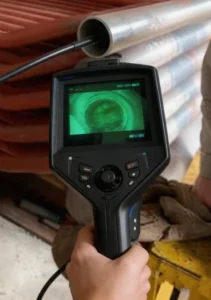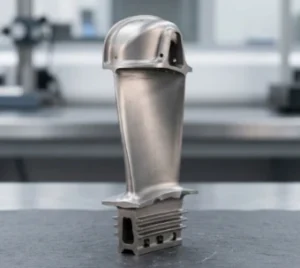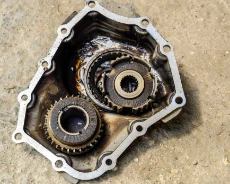

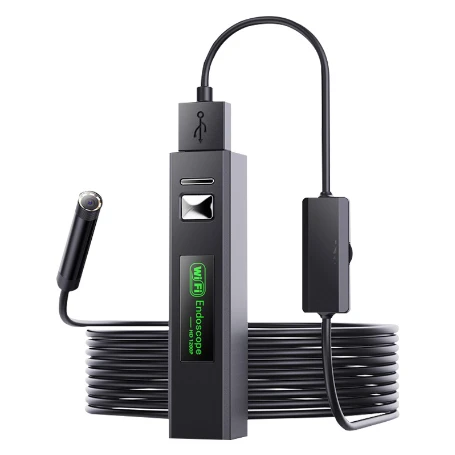
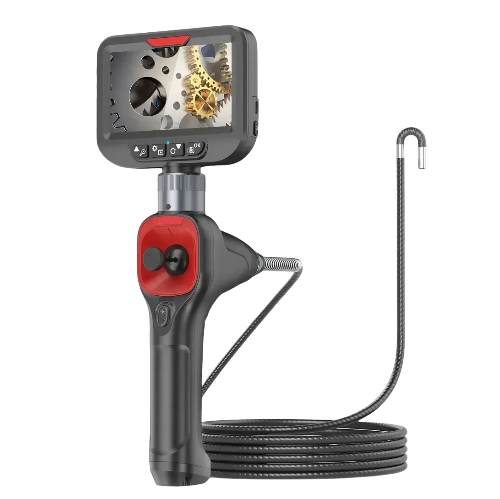
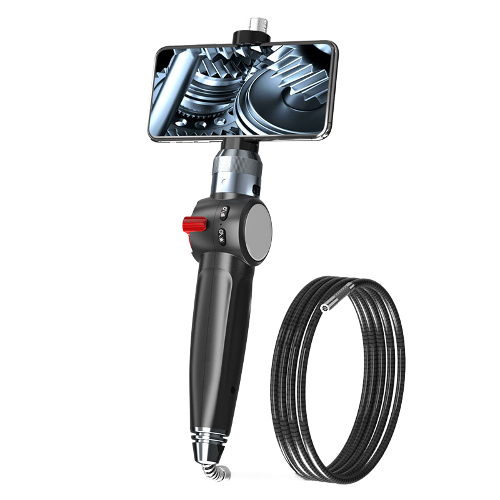
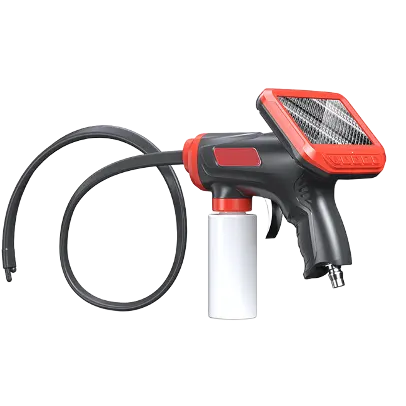
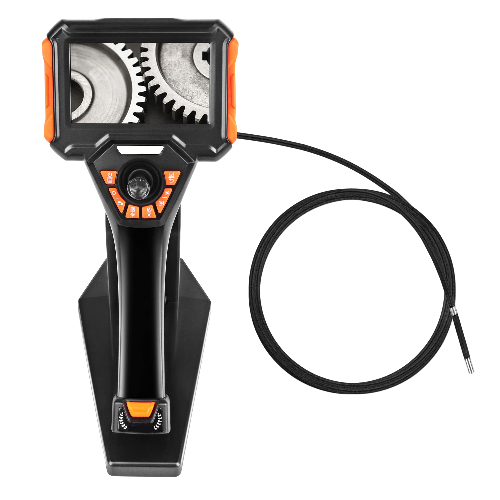
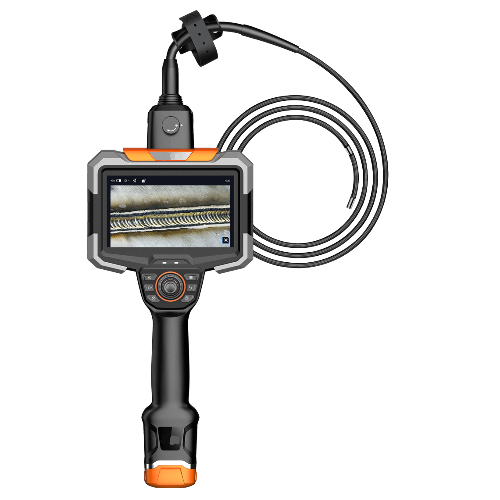
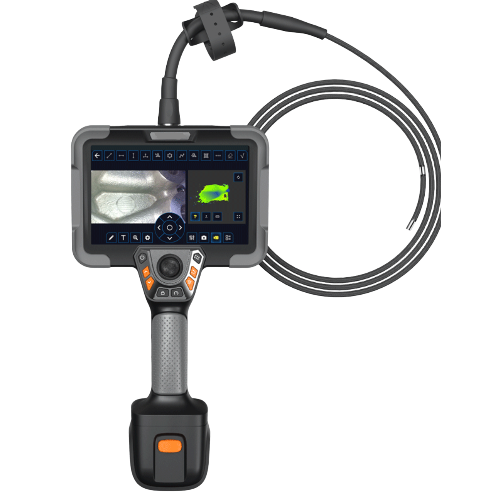
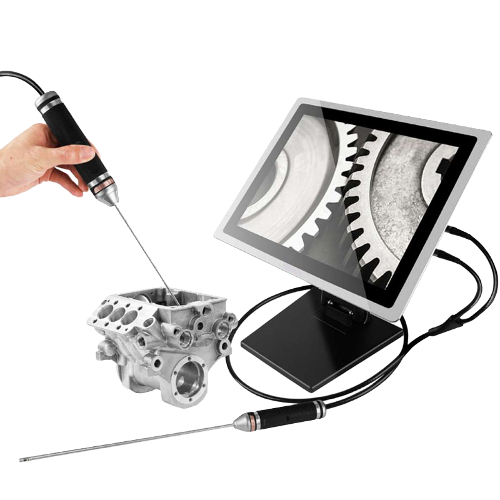
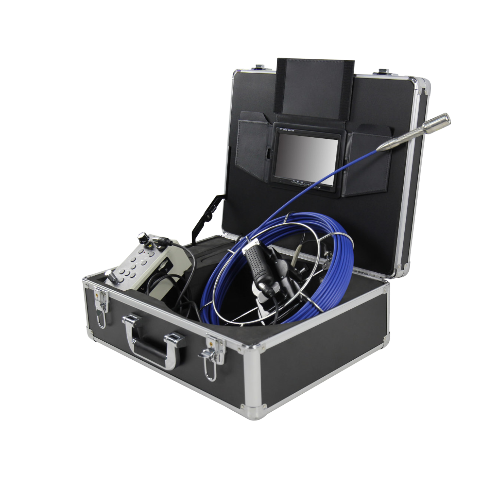
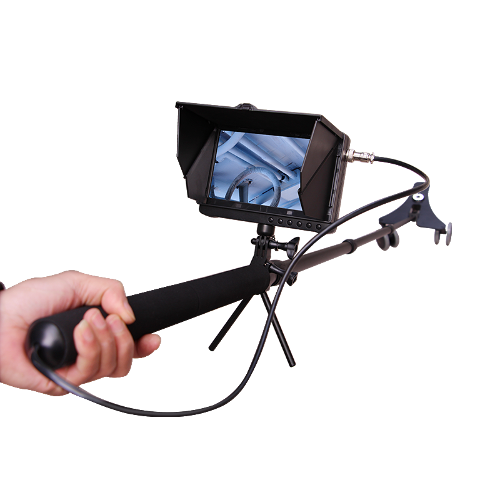
In modern industry, sectors such as metallurgy, petrochemicals, power generation, and aerospace often operate in high‑temperature environments, with temperature reaching up to 2000℃. Conventional inspection tools are unable to adapt to such harsh thermal environments, easily creating blind spots and posing hidden risks of equipment failure. High temperature resistant industrial endoscopes enable safe and clear internal inspection of equipment in ultra‑high‑temperature scenarios, achieving efficient visual non‑destructive testing.
What’s the High Temperature Borescope
High‑temperature resistant industrial borescopes are dedicated NDT instruments that operate reliably in environments starting from 100°C, with max working temperatures up to 2000 °C. They are characterized by outstanding heat resistance, clear imaging and flexible operation. Fitted with high‑definition probes, these units capture real‑time internal imagery of workpieces and transmit them to display, delivering intuitive and accurate visual data for inspectors. Their core advantage is enabling on‑site visual inspection without equipment cooling or production shutdowns, significantly reducing downtime losses.
What are the components of High Temperature Borescope
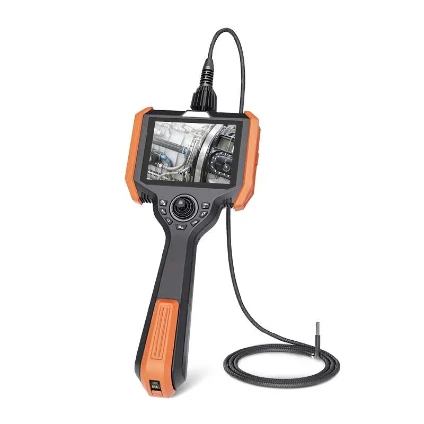
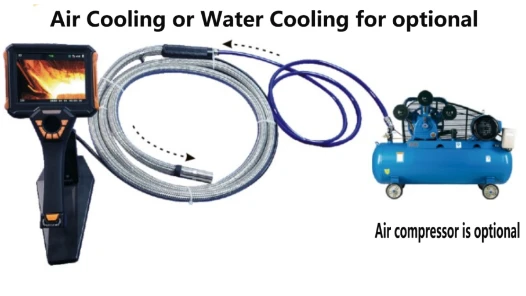
High‑temperature industrial borescopes primarily consist of four main components: the probe, active cooling system, control unit, and display screen. The core performance of high‑temperature borescopes lies in the thermal resistance of materials. The probe must be made of heat‑resistant materials such as high‑temperature alloys or ceramics to ensure it remains deformation‑free and undamaged under high temperatures. The cooling system plays a vital role in coping with ultra‑high temperatures. It is equipped with internal channels for compressed air or coolant. It reduces probe temperature through airflow sweeping or liquid cooling circulation, enhancing the equipment’s efficiency and service life. The probe and handle are designed with thermal isolation and high‑temperature insulation materials to prevent heat transfer to the control unit and prevent operators from suffering scald injuries.
High‑temperature industrial borescopes can operate within a temperature range from 100°C to 2000°C, playing a crucial role in various modern industrial applications. As industrial equipment grows more sophisticated and inspection standards become increasingly rigorous, such borescopes will keep evolving toward higher temperature resistance, intelligent high‑definition imaging and stronger environmental adaptability, thereby supporting industrial safety and production.
Frequently Asked Questions
- What temperature range can high‑temperature industrial borescopes adapt to?
- They can work stably under operating temperatures ranging from 100 °C up to 2000 °C.
- What is the biggest advantage for high‑temperature resistant industrial borescopes?
- Without cooling equipment or production shutdowns, reducing downtime losses.
- How to protect the lens and probe in high‑temperature environments?
- The probe is made of heat‑resistant alloys and ceramics and equipped with thermal insulation layers. Combined with air cooling or water cooling systems, it can effectively prevent high‑temperature damage.