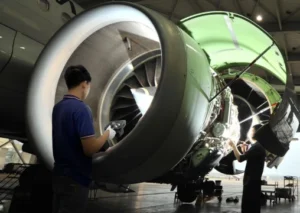

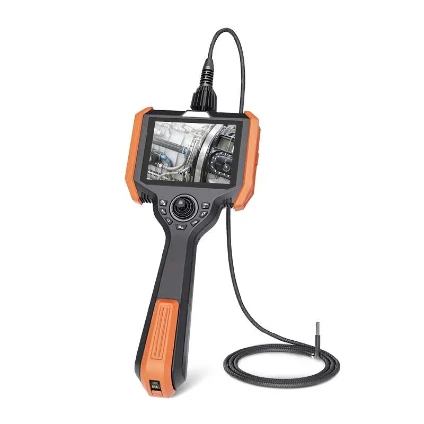
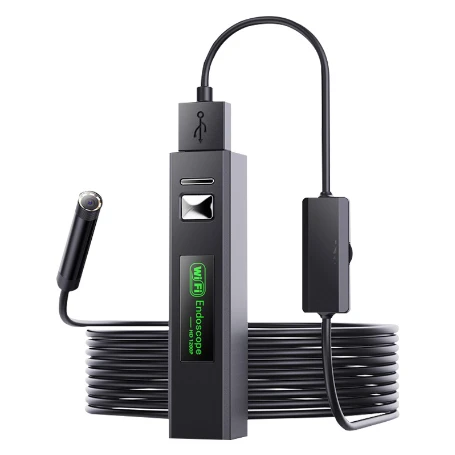
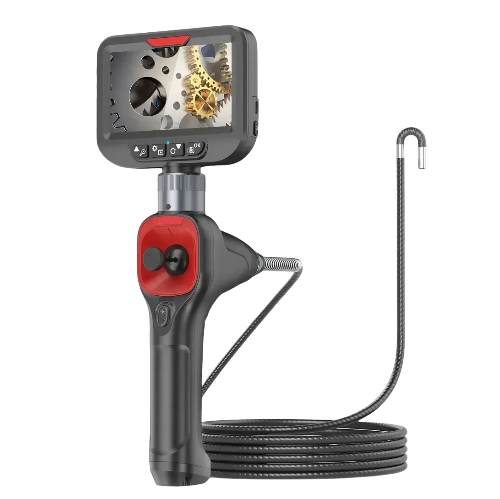
The Cost Challenge Facing Aviation MRO Operations
The aviation MRO industry faces persistent operating pressure. Spare part prices keep rising, skilled senior technicians command higher labor costs, while airlines continuously demand shorter aircraft turnaround times. Meanwhile, civil aviation regulatory standards under CCAR and EASA are becoming stricter with zero room for relaxation.
This puts all MRO service providers in a universal dilemma: compliance inspection benchmarks cannot be lowered, yet total operating expenses must be controlled effectively.
Against this backdrop, most maintenance operators are rethinking a core operational question:
Is there a systematic way to cut costs throughout the whole inspection workflow?
Industrial borescope inspection has become the mainstream, reliable answer for the industry.
The Hidden Costs of Traditional Tear-Down Inspections
Without industrial borescopes, the only way to evaluate the internal health of engine core components is full disassembly.
Critical hot-section parts including guide vanes, combustion liners and high-pressure turbine stages have to be completely dismantled before technicians can carry out conventional visual checks. Every disassembly procedure generates tangible costs: extra working hours, dedicated special tooling, high risks of secondary scratch or deformation damage during removal and reassembly, plus mandatory post-reassembly functional testing, all inflating overall maintenance expenditure.
What makes this mode even less cost-effective is that most disassembly results show components remain serviceable with no replacement required. In short, the engine is fully torn apart merely to confirm there are no hidden faults.
Such unnecessary complete disassembly is widespread across aviation MRO workshops. Even if no spare parts are changed, labor loss, extended aircraft downtime and component damage risks are already incurred. This constitutes the largest hidden expense of traditional inspection workflows — enterprises pay a heavy price just to visually check internal conditions.
Five Ways Industrial Borescopes Help Reduce MRO Costs
Industrial borescopes are not designed to replace all NDT inspection means, but deliver an economical method to judge whether engine disassembly is truly necessary. For MRO facilities, the following five dimensions bring the most direct cost-saving benefits:
Reducing Unnecessary Teardowns
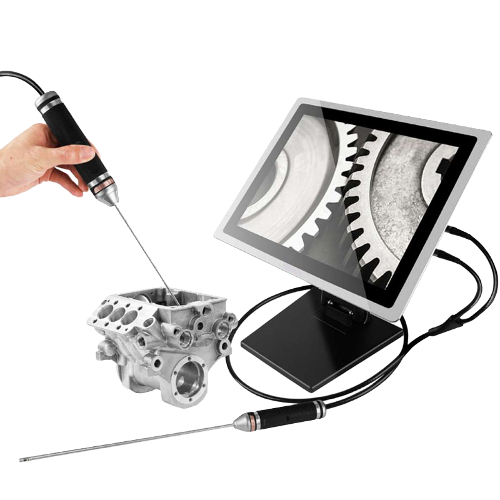
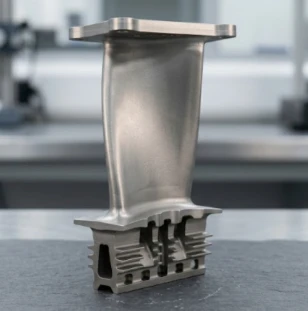
Industrial borescopes penetrate reserved inspection ports to directly complete visual assessment of hot-section components such as HPT blades, combustor liners and LPT guide vanes.
If component conditions captured by the probe meet OEM serviceable limits, the engine can be kept in operation without full disassembly. This judgment can usually be finalized within several hours, while traditional disassembly inspection often consumes several days. Every avoided teardown directly translates into obvious cost savings for MRO workshops.
Detecting Damage Early and Preventing Unplanned AOG Events
Aircraft-on-Ground (AOG) emergencies bring the highest comprehensive loss to both airlines and MRO suppliers.
Regular scheduled borescope inspections allow technicians to capture early-stage defects including blade cracks, thermal coating peeling and foreign object damage (FOD) during routine maintenance, rather than waiting until obvious performance degradation triggers malfunctions.
Industry practical data proves that the total loss caused by unplanned AOG events is several times higher than the cost of scheduled inspection and maintenance. Early defect identification via borescopes delivers remarkable economic value for fleet operation.
Shortening Inspection Cycles and Increasing Shop Throughput
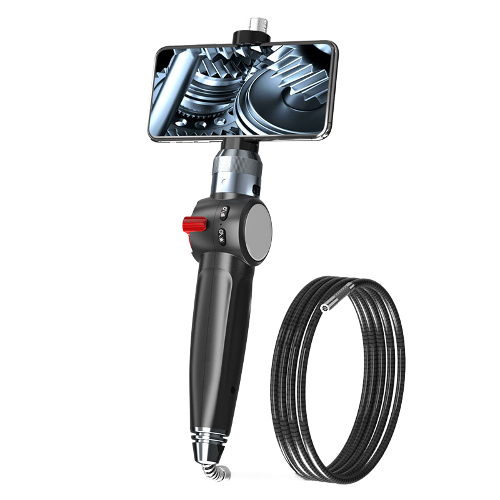
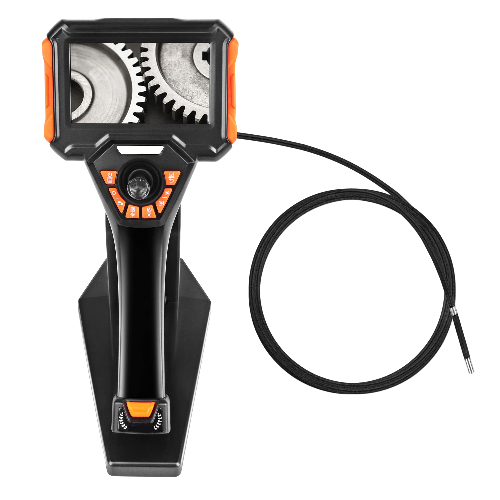
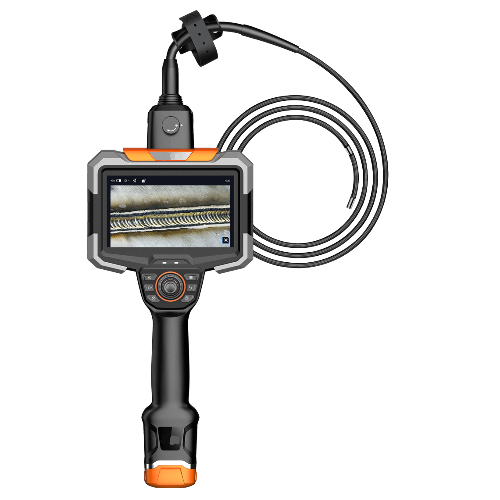
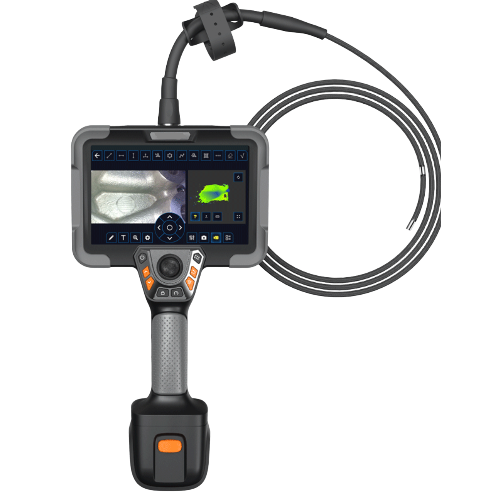
Modern full-direction articulating video borescopes can reach complex internal cavities inaccessible to rigid probes, while minimizing repeated probe angle adjustments.
Engine full inspection consumes fewer man-hours, freeing up maintenance workstations faster. For MRO factories with limited workshop space and equipment capacity, improved inspection efficiency directly lifts overall fleet processing throughput.
Supporting Data-Driven Maintenance Decisions and Avoiding Over-Maintenance
The conservative judgment logic of “replace components in case of uncertainty” is prevalent when objective visual evidence is unavailable, which leads to excessive unnecessary part replacement.
Industrial borescopes output high-definition images that can be cross-referenced against OEM official damage limits and acceptance standards, enabling maintenance judgments based on objective visual evidence instead of subjective experience. This approach does not relax airworthiness standards, but eliminates excessive conservative replacement of serviceable components to cut spare part consumption costs.
Improving Traceability and Reducing Compliance Audit Risks
CCAR-145 and EASA Part-145 mandate complete, traceable maintenance records for all aircraft inspection work.
Pictures and HD videos captured during borescope inspection can be directly archived as official attachments of maintenance work packages. Compared with text-only written records, visual archives are clearer and avoid ambiguous descriptive errors. This effectively reduces communication disputes during regulatory audits, airline acceptance and maintenance file reviews, lowering compliance rectification costs.
Industrial Borescopes vs. Traditional Tear-Down Inspection
The comparison below summarizes general industry practice standards, serving as universal reference instead of targeted data for specific aircraft models or single MRO workshops:
| Inspection Factor | Traditional Tear-Down Inspection | Industrial Borescope Inspection |
|---|---|---|
| Inspection duration | Several days to weeks | Usually completed within several hours |
| Risk of secondary component damage | High, caused by repeated disassembly and reassembly | Extremely low, fully non-destructive access via reserved ports |
| Defect detection timing | Reactive, only achievable after full teardown | Proactive, applicable to frequent routine line checks |
| Basis for maintenance decisions | Mainly relies on inspector personal experience | HD visual evidence matched with OEM official criteria |
| Maintenance documentation quality | Text records only, prone to ambiguous description | Directly archive inspection images and video footage |
| Total maintenance cost trend | High expenditure with unpredictable loss risks | Controllable low cost with predictable expense budget |
Feedback from an Asia-Pacific large-scale MRO operator shows that full deployment of articulating industrial borescopes for engine hot-section inspection drastically cut unplanned engine removal events, while lifting workshop utilization rate and aircraft turnaround efficiency simultaneously.
Although specific cost-saving data varies according to fleet composition and factory scale, this cost-reduction trend is consistent across the global aviation MRO industry.
Key Applications of Industrial Borescopes in Aviation MRO
Industrial borescopes are not a universal substitute for all NDT tools, but deliver prominent cost optimization effects in the following core aviation inspection scenarios:
Engine Hot-Section Inspection
HPT blades, combustor liners, LPT guide vanes and other hot-section components run under ultra-high temperature conditions and suffer multiple damage types. Given the extremely high disassembly cost of core engine assemblies, borescope visual data provides critical basis for scientific maintenance decision-making.
APU Inspection
Auxiliary power units feature compact integrated structures and tight line maintenance time windows. Industrial borescopes realize rapid full internal condition evaluation, and are especially suitable for transit spot checks and daily line maintenance work.
Hidden Airframe Structure Inspection
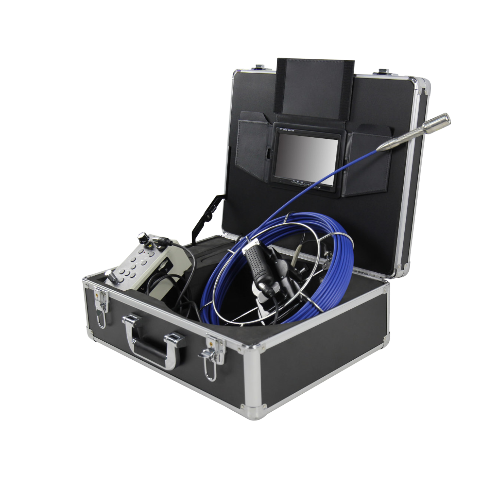
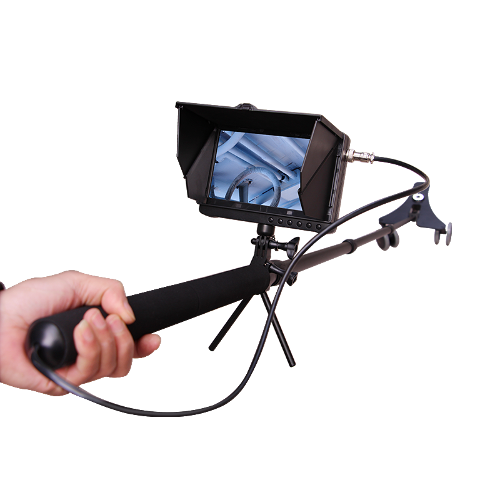
Corrosion inside wing spars, fuselage frames and sealed interlayer cavities cannot be reached by conventional detection tools. In most cases, borescopes are the only feasible non-destructive visual inspection solution for these hidden areas.
Landing Gear Bays and Hydraulic Pipeline Systems
Borescopes inspect pipeline joints, sealing rings, leakage points and corrosion zones without removing hydraulic tubing, eliminating a large volume of unnecessary pipeline disassembly work.
How to Select an Industrial Borescope for Aviation MRO
It is critical to clarify that simply purchasing a borescope cannot automatically cut maintenance costs; mismatched equipment will instead bring extra rework and efficiency loss.
Excessively thick probes cannot pass through standard engine inspection ports; insufficient insertion length fails to reach target detection zones; limited articulation creates inspection blind spots; low image resolution leads to inaccurate defect judgment. These common equipment mismatches eventually result in repeated inspection rework or idle underutilized instruments.
When selecting borescopes dedicated to aviation MRO scenarios, prioritize evaluating the following core indicators:
- Probe outer diameter and compatibility with standard aircraft inspection ports
- Sufficient effective insertion working length matching detection depth requirements
- Full articulation performance, preferably 360° omnidirectional steering with maximum bending angle over 180°
- High-definition imaging capability and optional quantitative 3D measurement function
- Industrial durability adapting to harsh MRO environments, including oil pollution resistance and high-temperature tolerance
Conclusion
Industrial borescopes should not be treated as ordinary auxiliary inspection hardware — they represent a cost-control strategic investment for MRO enterprises.
The core value of borescopes is not reflected in parameter lists on product datasheets, but in continuous labor hour savings by avoiding redundant disassembly, and massive economic losses prevented through early AOG risk warning.
As cost pressure keeps rising across the whole aviation MRO industry, deploying standardized borescope inspection workflows is no longer merely an operational optimization measure, but an indispensable core method to control maintenance expenditure and boost workshop processing efficiency.
If you are screening matched industrial borescope solutions for aviation MRO business, please contact our team to obtain customized technical parameter sheets and targeted application guidance according to your unique inspection demands.