
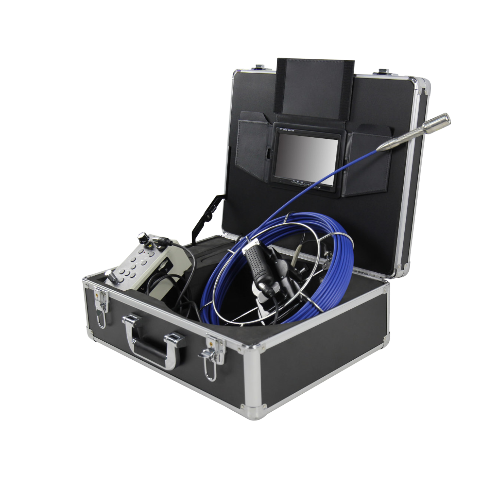
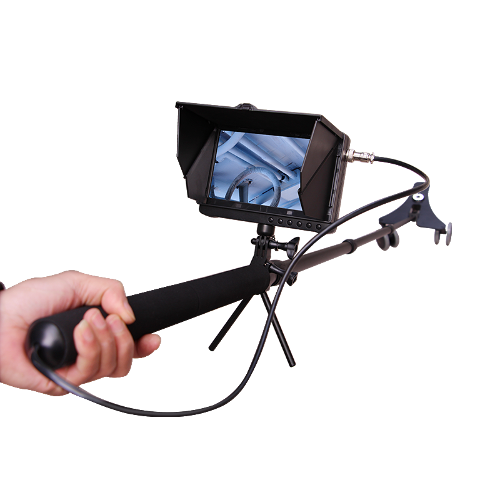
Nondestructive Testing (NDT) is a core technology for guaranteeing aviation flight safety. This article sorts out mainstream NDT technologies widely adopted in the aerospace industry, including ultrasonic, eddy current, magnetic particle, radiographic, visual and penetrant testing. It elaborates on matching core equipment, detection principles and typical application scenarios for various aircraft components.
The following is a detailed introduction to mainstream NDT equipment and their aviation inspection applications.
Ultrasonic Testing (UT)
Common UT Equipment
Ultrasonic flaw detectors, ultrasonic thickness gauges, Phased Array Ultrasonic Testing (PAUT) instruments, ultrasonic imaging scanners
Working Principle
High-frequency ultrasonic signals propagate inside aircraft structural materials. When encountering defects such as cracks, pores and material inclusions, ultrasonic waves produce reflected and refracted echoes. The equipment analyzes echo waveforms to judge the exact position, size and depth of internal defects, with detection precision up to 0.5 mm, fully satisfying high-standard aerospace inspection requirements.
Aircraft Inspection Applications
It is mainly used to detect internal hidden defects of aircraft metal structures and dense composite parts. Key inspection objects include aero-engine blades, wing spars, thick fuselage metal parts, landing gear metal substrates, welded joints and forged components. It can effectively identify internal fatigue cracks, composite delamination, shrinkage cavities, inclusions and incomplete fusion welds. Ultrasonic testing serves as a standard inspection means for aircraft load-bearing structures and core power components, and it is not applicable to porous composite materials.
Visual Testing (VT)
Common VT Equipment
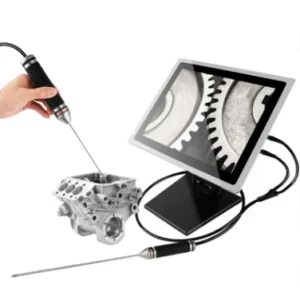
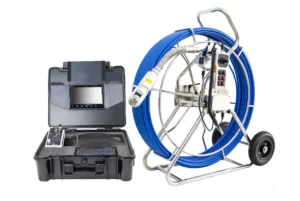
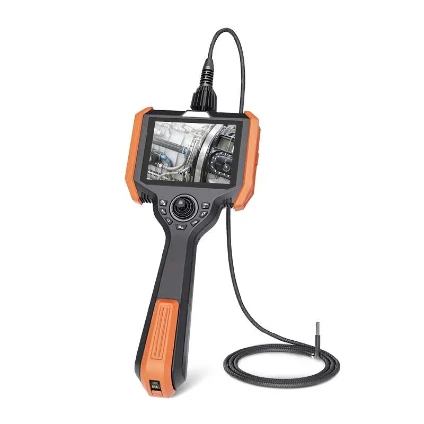
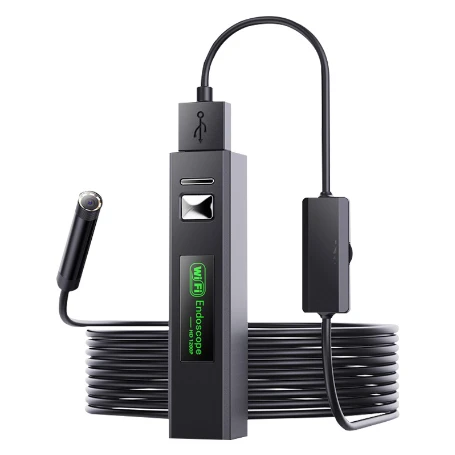
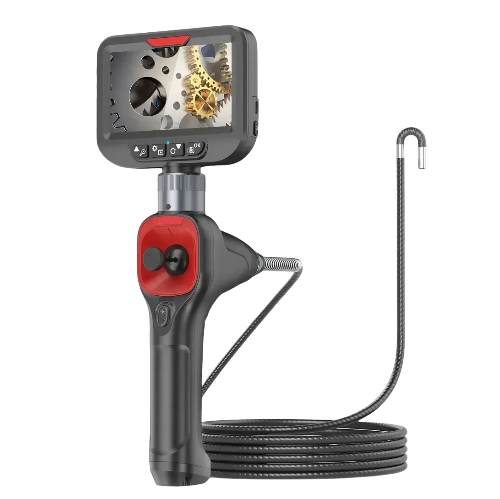
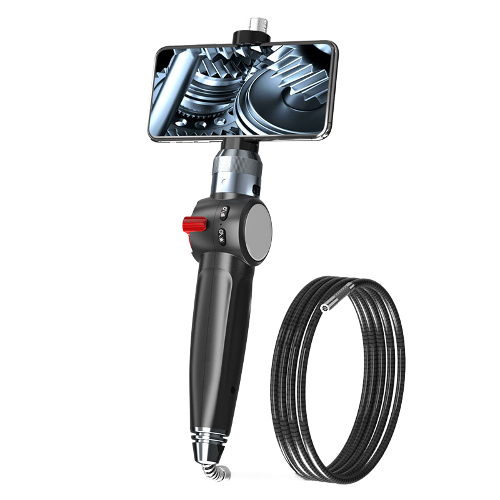
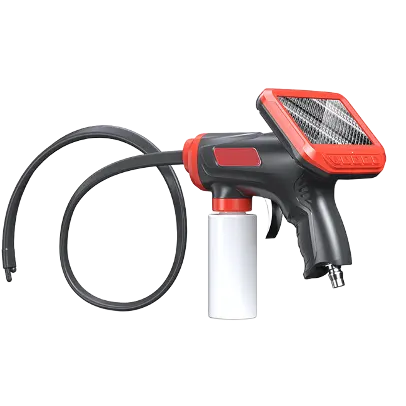
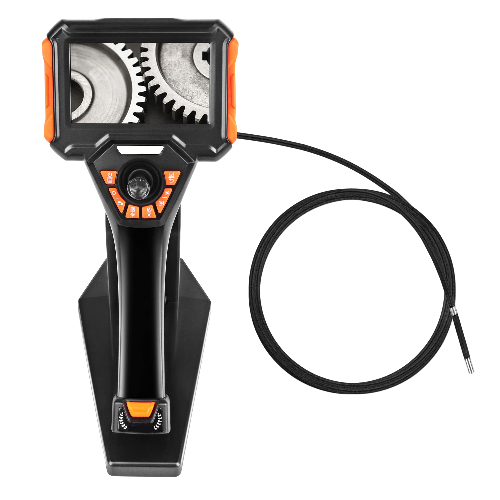
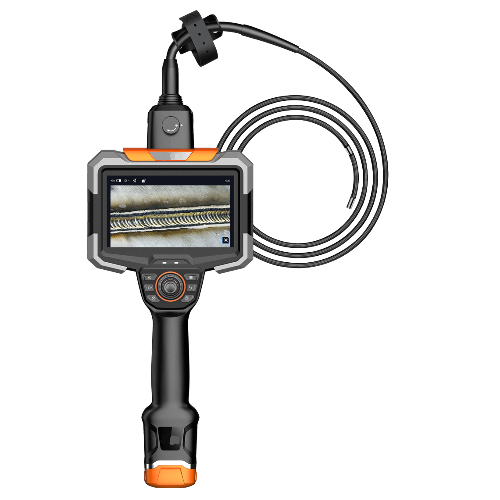
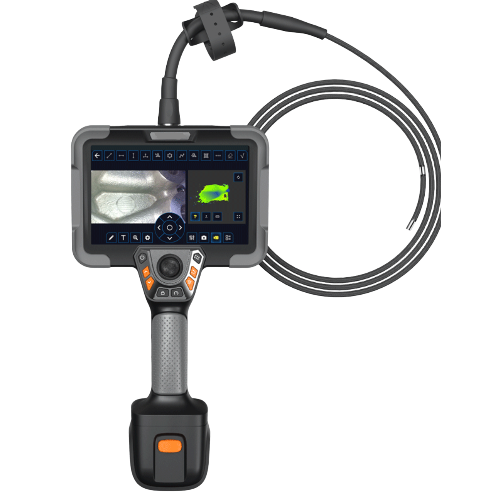
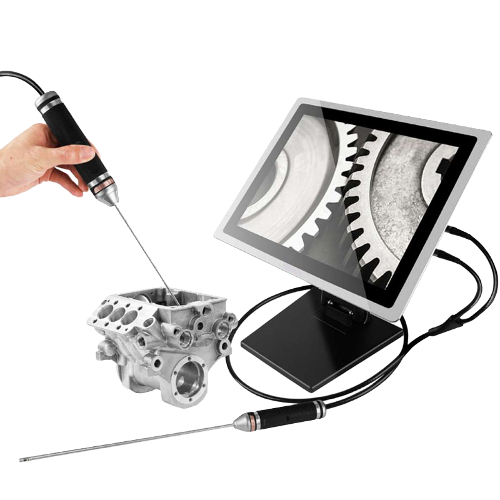
Industrial borescopes, video borescopes, motorized steering borescopes, 3D measurement borescopes
Working Principle
The equipment is equipped with slim flexible probes and high-definition optical lenses, which can stretch into narrow cavities, internal pipelines and sealed structures inaccessible to naked eyes. Real-time high-definition images are transmitted to the display for direct observation of internal conditions. Measuring models support precise dimensional calculation of defects. The whole inspection process requires no equipment disassembly and causes zero damage to aircraft structures.
Aircraft Inspection Applications
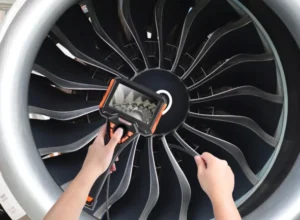
An irreplaceable NDT technology in aviation, specially solving inspection difficulties of concealed, sealed and confined spaces. It runs through the full aircraft lifecycle covering manufacturing acceptance, routine maintenance and heavy overhaul.
Core inspection scenarios: aero-engine combustion chambers, turbine blade interiors, compressor cavities; aircraft fuel tanks, air-conditioning ducts, hydraulic pipelines and vent tubes; fuselage lap joints, landing gear inner cavities, sealed avionics compartments; internal welds of aviation pipelines.
Detectable defects: internal cracks, corrosion pits, carbon accumulation, weld defects, foreign object debris (FOD), component wear, peeling coating and aging materials.
Eddy Current Testing (ET)
Common ET Equipment
Eddy current flaw detectors, eddy current array (ECA) instruments, eddy current conductivity testers, crack depth measuring instruments
Working Principle
Based on electromagnetic induction theory, the probe generates alternating magnetic fields to induce eddy currents on the surface of conductive workpieces. Defects will disrupt the uniform distribution of eddy currents, and the equipment captures abnormal electrical signal changes to judge defect status.
Aircraft Inspection Applications
Applicable to all conductive metal aviation materials, suitable for high-efficiency batch inspection of thin-walled pipelines, sheet metal and coated components. Key detection parts: aircraft hydraulic pipelines, fuel delivery tubes, thin aluminum fuselage skins and coated metal parts. It rapidly identifies surface and shallow subsurface cracks, corrosion thinning and material inhomogeneity. Multi-frequency eddy current equipment can shield interference from surface coatings and impurities to improve inspection accuracy.

Radiographic Testing (RT)
Common RT Equipment
X-ray flaw detectors, X-ray fluorescence analyzers (XRF), industrial CT scanners, Digital Radiography (DR) / Computed Radiography (CR) systems
Working Principle
X-ray or gamma rays penetrate aircraft components. Different absorption rates between base materials and defective areas form intuitive images or 3D models, clearly presenting the morphological characteristics of internal defects.
Aircraft Inspection Applications
Focused on internal defect detection of aviation castings, weldments and ultra-precision parts. Typical detection objects: aircraft pipeline welded joints, precision aero-engine castings, high-precision airborne metal parts, additive manufacturing aerospace components. It detects shrinkage cavities, pores, inclusions, internal voids and weld cracks. Industrial CT supports full 3D reconstruction and high-precision dimensional measurement of defects, meeting high-end precision inspection demands in aerospace.
Magnetic Particle Testing (MT)
Common MT Equipment
Magnetic particle flaw detectors, portable magnetic particle inspection units, demagnetizers, ultraviolet inspection lamps
Working Principle
Ferromagnetic aircraft components are magnetized. Surface and near-surface defects generate leakage magnetic fields, which adsorb magnetic particles to form clear visible traces for defect positioning and identification.
Aircraft Inspection Applications
Only applicable to ferromagnetic aviation materials such as carbon steel and alloy steel. Key inspection targets: high-strength aircraft bolts, engine shaft parts, landing gear surface layers and ferromagnetic fuselage connectors. It mainly detects surface and shallow subsurface defects including fatigue cracks, forging cracks and grinding cracks. With high efficiency and low cost, it is a conventional screening method for aircraft fasteners and transmission parts. It cannot be used for aluminum alloy, titanium alloy and composite materials.
Penetrant Testing (PT)
Common PT Equipment
Fluorescent penetrant inspection systems, developers, emulsifiers
Working Principle
Relying on capillary action, penetrant liquid infiltrates into surface-open defects of workpieces. After cleaning and developing treatment, defect traces are amplified to make tiny flaws visible to inspectors.
Aircraft Inspection Applications
Suitable for all dense non-porous materials including aluminum alloy, titanium alloy, stainless steel, ceramics and composite materials, making up for the material limitation of magnetic particle testing. Widely used to detect surface-open cracks, sand holes, pinholes and corrosion notches on fuselage skins, aluminum aviation parts, composite components and non-ferromagnetic engine accessories. It is a universal surface defect inspection solution for the whole aircraft.
How to Select the Right NDT Method
In actual aircraft maintenance, the selection of NDT technologies depends on product design standards, component material types, part shapes and on-site maintenance conditions:
- Internal confined space visual inspection: Industrial borescope is the first choice, especially for non-disassemblable core components such as aero-engines.
- Surface defects of conductive metals: Eddy current testing features high efficiency and sensitivity.
- Ferromagnetic parts (landing gear, bolts, etc.): Magnetic particle testing is the optimal scheme.
- Surface-open defects of non-ferromagnetic dense materials: Penetrant testing with simple equipment and low comprehensive cost.
- Internal hidden defects of composite materials: Ultrasonic testing has prominent advantages.
- High-precision internal 3D reconstruction and measurement: Industrial CT delivers the highest detection accuracy.
Different NDT technologies match distinct aerospace materials and inspection scenarios. Reasonable selection of supporting NDT equipment guarantees accurate defect identification of aircraft components. This guide helps aerospace inspection and maintenance practitioners select matching testing tools to efficiently complete aircraft flaw detection and overhaul work.
FAQ
What are the mainstream testing methods for aircraft non-destructive testing?
The six mainstream aircraft NDT technologies include ultrasonic testing, visual testing, eddy current testing, radiographic testing, magnetic particle testing and penetrant testing. Each technology is equipped with dedicated instruments to adapt to different aviation materials, structural forms and defect types.
Which NDT instrument is preferred for inspecting narrow and sealed cavities of aircraft?
Industrial borescope belonging to visual testing equipment is the first choice. Its slim flexible probe can enter engine inner cavities, hydraulic pipelines, fuselage interlayers and other areas. Without aircraft disassembly, it can visually inspect internal corrosion, carbon accumulation, foreign objects, cracks and other defects.
Can ultrasonic testing detect flaws on all aircraft composite materials?
Ultrasonic testing is not suitable for all composite materials. It can accurately detect internal defects of dense composite materials but fails for porous composite materials. It is mainly applied to internal flaw inspection of aircraft metal structures, engine blades, landing gear and other load-bearing components.
How to select NDT technologies according to materials during aircraft maintenance?
Select corresponding testing technologies based on component materials: adopt magnetic particle testing for ferromagnetic metals; penetrant testing for non-ferromagnetic dense materials; eddy current testing for thin-walled conductive metals; ultrasonic testing for internal defects of composite materials and thick-walled metal structures.