
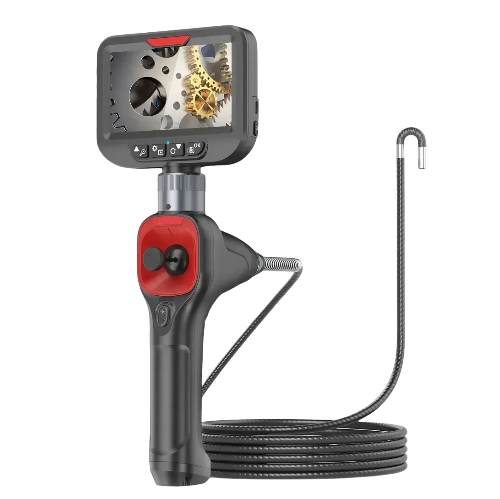
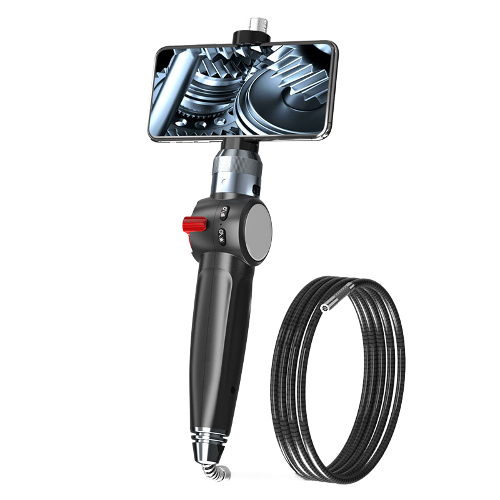
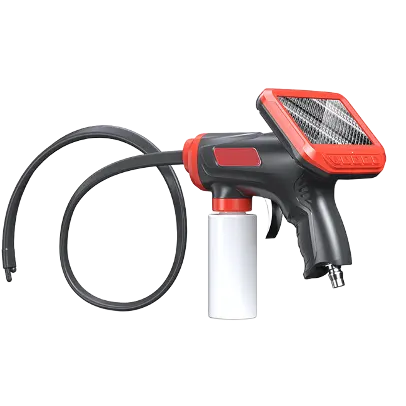
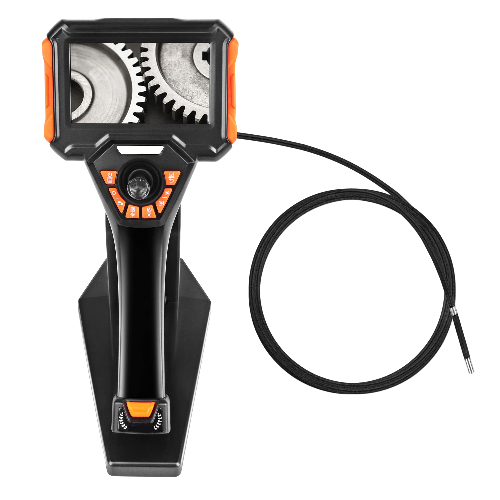
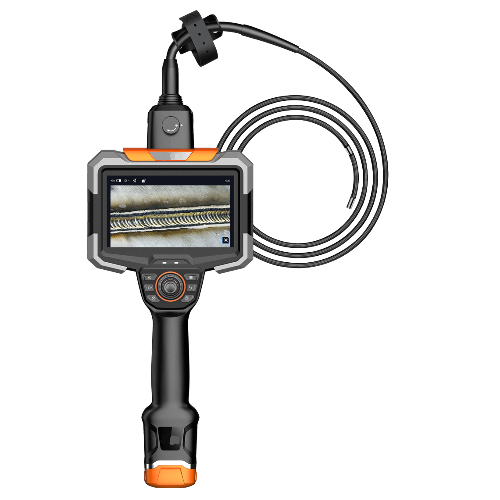
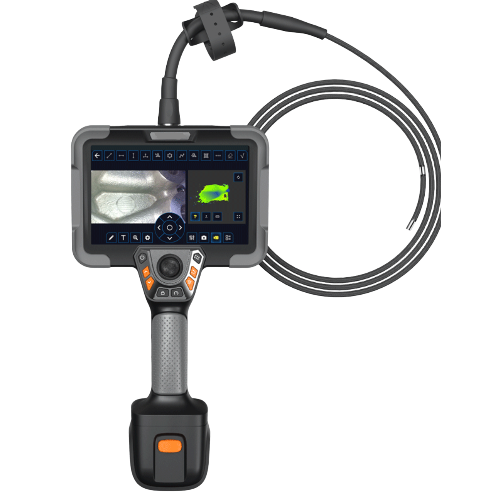
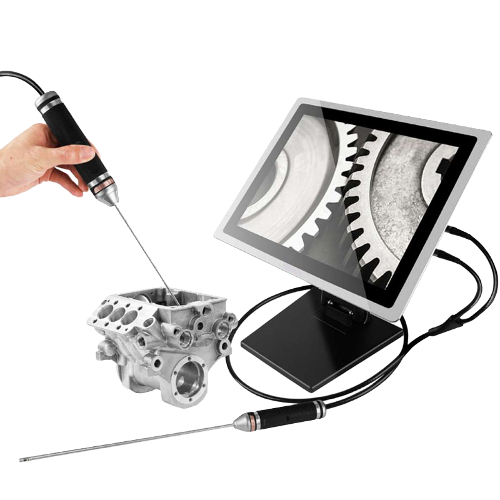
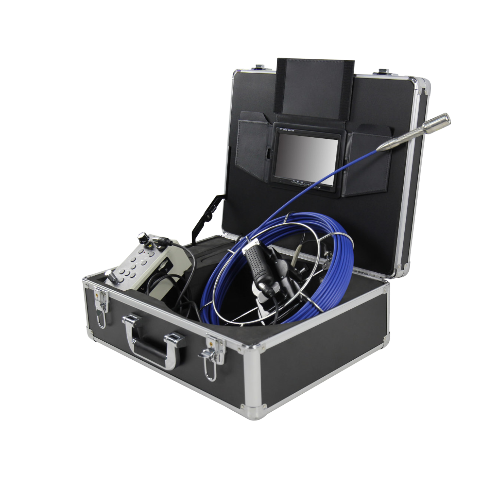
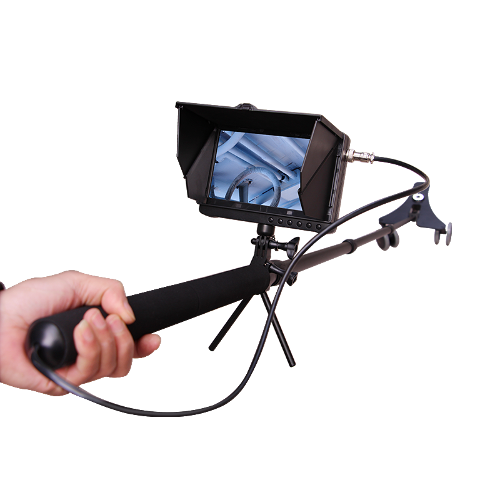
Anyone tracking the UAV sector will notice its explosive growth over the past two years. However, one critical industry pain point is often overlooked: the sharp expansion of UAV fleets brings mounting pressure on standardized maintenance and flight safety assurance. Industrial borescopes have emerged as core inspection equipment to solve this challenge. This article systematically introduces the application scenarios and inspection values of industrial borescopes across the full UAV industrial chain, providing practical references for UAV operators, maintenance technicians and inspection equipment manufacturers.
Different UAV Types Have Distinct Inspection Priorities
A common misconception is that all UAVs share identical structural design standards. In fact, four mainstream UAV categories feature vastly different internal layouts and power systems, which put forward differentiated performance requirements for industrial borescopes.
Multirotor UAVs
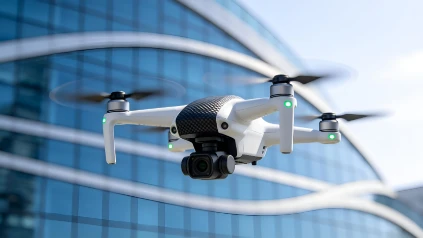
The most widely deployed UAV type, including quadcopters and hexacopters from DJI, Skydio, Parrot and other brands. Featuring vertical takeoff and landing, stable hovering and simple operation, they dominate consumer aerial photography and industrial routine patrol missions. Core inspection targets:
- Fatigue cracks and insulation aging inside drive motors
- Circuit board damage and loose connectors of electronic speed controllers (ESC)
- Defective welding and riveting joints between rotor arms and central fuselage
- Corroded terminals and damaged internal wiring inside battery compartments
Fixed-Wing UAVs
Similar to manned aircraft in aerodynamic layout, fixed-wing UAVs generate lift via wings with long endurance and fast cruising speed, ideal for large-area aerial mapping and long-distance border patrol. Classic models include General Atomics Predator, Northrop Grumman Global Hawk and Airbus Zephyr. Key inspection objects:
- Internal components of piston or turbine power engines
- Internal corrosion and hidden leakage risks of fuel pipeline systems
- Debonding and bubble defects inside composite wing adhesive layers
- Structural damage inside landing gear cabins
Unmanned Helicopters
Outstanding in maneuverability with vertical takeoff and stable hovering, yet complex mechanical structures lead to high maintenance costs and ultra-strict reliability standards. Critical inspection areas:
- Worn gears and damaged bearings inside main reduction gearboxes
- Surface cracks and abrasion on rotor transmission shafts
- Aging hydraulic pipelines and failed sealing components
- Internal ablation and microcracks of engine combustion chambers and turbine blades
VTOL Fixed-Wing UAVs
The fastest-growing UAV segment in recent years, combining the vertical takeoff advantage of multirotors and long-endurance merit of fixed-wing aircraft. Its inspection scope covers all key checkpoints of the above two categories, requiring industrial borescopes with excellent flexible steering performance.
Core Application Scenarios of Industrial Borescopes for UAVs
Power System Inspection
The power system is the core “heart” of UAVs and the highest-frequency source of flight failures. Industrial borescopes have achieved mature large-scale application in this module.
Electric UAV Motor Inspection
- Check uniform gap clearance between motor stators and rotors
- Detect carbonization and breakdown damage of winding insulation layers
- Screen tiny metal foreign debris trapped inside narrow motor cavities
- Identify micro fatigue cracks on motor transmission shafts
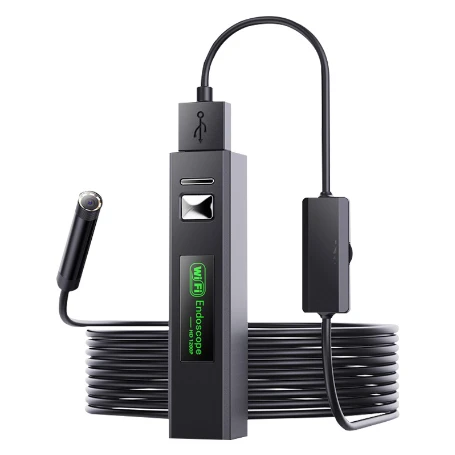
Most industrial UAV motors are equipped with tiny internal chambers; ultra-thin borescopes with 2.0mm–4.0mm diameter probes are the optimal choice for this inspection work.
Fuel-Powered UAV Engine Inspection
Turbine engines: Inspect turbine blade microcracks, thermal coating peeling, high-temperature ablation and foreign object damage (FOD); assess integrity of combustion chambers, flame tubes and fuel atomizing nozzles.
Piston engines: Detect cylinder wall scratch marks, carbon accumulation on valve surfaces and excessive wear of piston rings.
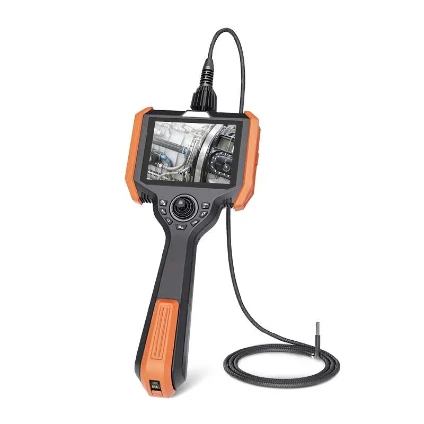
High-end borescopes equipped with 3D stereo measurement modules can accurately quantify crack length, depth and damaged area, providing objective quantitative data to judge component replacement necessity. This function is vital for aviation-grade UAVs, as misjudgment of component conditions may trigger catastrophic flight accidents.
Fluid Pipeline System Inspection
Fuel leakage and hydraulic system failure rank top among UAV crash root causes. Traditional pressure testing can only detect existing leakage points, unable to pre-judge hidden internal pipeline corrosion and blockage risks.
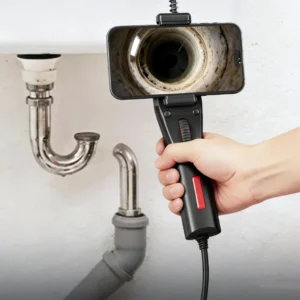
Borescope probes can directly extend into pipeline interiors to observe the following hidden defects:
- Corrosion pits and weld cracks on pipeline inner walls
- Residual sediment and foreign debris accumulated inside fuel pipelines
- Inner wall scratches and aging sealing rings of hydraulic pipelines
- Scale deposition and partial blockage of cooling circulation pipelines
Fuselage & Composite Material Structure Inspection
Modern UAVs widely adopt lightweight high-strength carbon fiber composite materials, which have a fatal hidden risk: internal structural damage cannot be identified by naked eyes. After collision impact, the UAV exterior may remain intact, while internal adhesive layers have suffered serious delamination, easily triggering mid-air structural fracture accidents.
Through reserved airframe inspection ports, borescopes penetrate composite sandwich layers to check:
- Adhesive defects including insufficient glue coating, interlayer delamination and air bubbles
- Layer separation and fiber fracture of carbon fiber materials
- Deformation and fatigue cracks of internal reinforcing frames and ribs
- Damaged welding and riveting joints of load-bearing structural parts
Transmission System Inspection
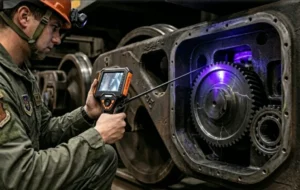
Transmission assemblies are major inspection pain points for unmanned helicopters and large fixed-wing UAVs. Gearboxes, drive shafts and bearings are deeply embedded inside the fuselage, inaccessible to conventional detection tools.
Industrial borescopes smoothly enter gearbox interiors to inspect:
- Surface abrasion, spalling and pitting corrosion of gear teeth
- Damage of bearing rolling bodies and retainers
- Deformation and transverse cracks on transmission shafts
- Metal abrasive debris deposition in lubricating oil chambers
Electronic Equipment Bay Inspection
The electronic cabin serves as the UAV’s “brain”, densely arranged with circuit boards, sensors and connecting terminals. Long-term vibration, humidity and temperature fluctuation easily cause connector loosening, circuit board corrosion and component burnout.
Without disassembling the sealed electronic cabin, borescopes complete rapid screening of hidden faults:
- Burn marks and short-circuit traces on circuit boards
- Loose, oxidized and corroded wiring connectors
- Offset and improperly fixed sensors
- Extrusion damage and breakage of internal wiring harnesses
Full-Lifecycle Coverage: R&D, Manufacturing & Daily Maintenance
The application value of industrial borescopes runs through the whole UAV service cycle instead of only post-failure maintenance. During R&D and mass production, they detect casting defects, assembly clearance errors and welding quality of core parts. In daily routine line maintenance, they support rapid cavity visual inspection; during major overhauls, the optional 3D measurement function completes precision quantitative damage assessment, covering every stage from factory delivery to retirement.
Why Industrial Borescopes Become Indispensable for the UAV Industry
Expanding UAV Fleet Drives Surge in Standardized Maintenance Demand
The continuous growth of global UAV ownership requires regular periodic inspection for every aircraft. Core components such as power engines and fluid pipelines need frequent health checks. Traditional full-disassembly inspection cannot match the high-throughput maintenance demand of the industry, and industrial borescopes’ disassembly-free non-destructive testing advantage fills this efficiency gap.
Adapt to Highly Integrated Miniature UAV Cavities
Current UAV products adopt highly integrated compact design, with millimeter-level narrow spaces inside engine pipelines and composite interlayers. Conventional detection tools cannot reach these confined areas, while the slim, flexible probe of industrial borescopes becomes the only feasible inspection solution.
Greatly Improve Overall Inspection Efficiency
A full UAV structural inspection via traditional disassembly methods takes 2–4 hours, while industrial borescopes shorten the whole inspection process to less than 30 minutes. For commercial UAV fleet operators, saved inspection time directly translates into increased flight operation hours and higher operating revenue.
Low-Altitude Economy Boom Stimulates Mandatory Safety Inspection Standards
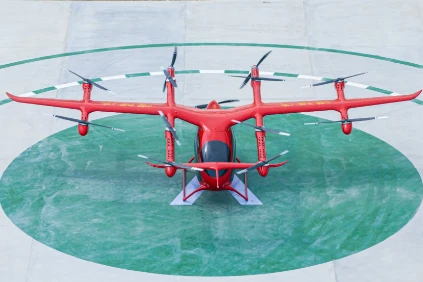
Driven by the rapid development of the low-altitude economy, the commercialization of UAVs and eVTOLs accelerates at scale, bringing rigid and growing demand for standardized flight safety testing. As core NDT equipment, industrial borescopes form an irreplaceable key link in the whole UAV industrial chain.
Industrial borescopes are essential inspection hardware for UAV operation and maintenance teams. They expose invisible hidden hazards covering power cores, airframe structures, from R&D production to daily patrol maintenance. With UAVs widely applied in logistics distribution, industrial inspection and emergency rescue scenarios, flight safety control will rely increasingly on non-destructive visual detection technology. Industrial borescopes are no longer regarded as pure operating costs, but as value-creating assets. In the fierce competition of the low-altitude economy, operators that fully deploy standardized borescope inspection workflows will gain core advantages in equipment maintenance and flight risk control.
FAQ
1. What UAV components can industrial borescopes inspect?
It covers six major core systems: electric/fuel power propulsion (motor windings, turbine blades); fluid pipelines (internal corrosion and blockage); carbon fiber composite structures (delamination and adhesive defects); transmission assemblies including helicopter gearboxes and bearings; electronic equipment cabins (circuit boards and connectors); landing gear and rotor arm structural weld integrity.
2. What probe diameter is suitable for UAV inspection?
Ultra-thin industrial borescopes with a 2.0–4.0mm probe diameter are the preferred option. UAV motors, narrow pipelines and composite interlayer gaps have compact internal spaces, and thick probes cannot penetrate smoothly. This specification matches all miniature cavities of multirotor and VTOL UAVs for non-destructive inspection.
3. Which fixed-wing UAV parts require borescope inspection?
Four key inspection areas: internal structure of turbine/piston engines, corroded and leaking fuel pipelines, internal adhesive layers of composite wings, landing gear cabin structures. It rapidly identifies blade ablation, pipeline scaling and composite interlayer delamination risks.
4. What engine faults of fuel-powered UAVs can borescopes detect?
Turbine UAV engines: blade microcracks, coating peeling and combustion chamber ablation. Piston UAV engines: cylinder inner wall scratches, valve carbon deposition and piston ring wear. 3D measuring borescopes quantify damage dimensions to judge whether component replacement is required.
5. Why are industrial borescopes essential under low-altitude economy development?
The booming low-altitude economy brings large-scale commercial UAV operation and stricter safety supervision requirements. Borescopes realize fast non-destructive inspection, eliminate potential flight faults and reduce crash risks, acting as core NDT equipment to guarantee UAV flight safety.