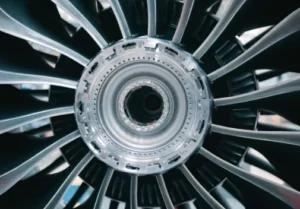

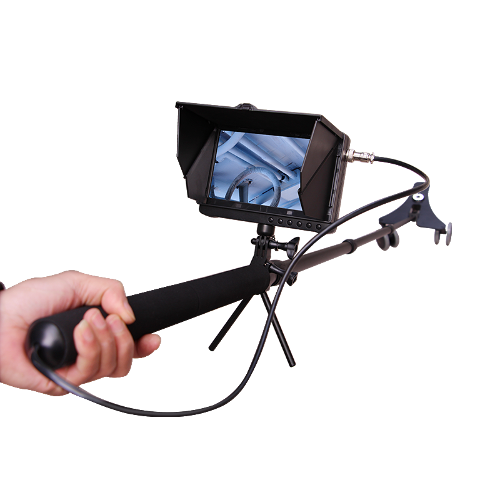
If the main aircraft engine is the heart that delivers flight thrust, the tail-mounted Auxiliary Power Unit (APU) acts as the aircraft’s vital pacemaker. While it does not provide flight propulsion, the APU undertakes irreplaceable core tasks. On the ground, it starts main engines, supplies cabin electricity and air conditioning. In emergencies such as in-flight main engine faults, it instantly outputs backup power, serving as a critical safety guarantee system. Nevertheless, the APU features intricate internal structures with narrow, fully enclosed cavities and flow passages. Traditional complete disassembly maintenance is time-consuming and labor-intensive, and repeated disassembly and assembly easily cause secondary damage to precision parts. Benefiting from unique non-destructive visual testing strengths, industrial borescopes greatly elevate the efficiency and inspection quality of APU routine maintenance and troubleshooting.
Core Application Scenarios of Industrial Borescopes in APU Maintenance
Equipped with high-definition imaging and professional NDT performance, industrial borescopes cover the full lifecycle workflows of APU systems, including periodic routine inspection, abnormal fault diagnosis and overhaul acceptance. They perfectly address the inspection difficulties of confined cavities and hidden core components, with detailed application scenarios listed below:
Precision Inspection of Key Core Components
Carry out thorough flaw detection on critical APU parts, including load compressors, main compressors, guide vanes, first/second-stage turbine blades and combustion chambers.
- Compressor System Inspection: Check diffuser blades, compressor blade leading edges, trailing edges and blade tips for corrosion, scratches, rough surface texture, oxidation discoloration, welding cracks, tip bending, impeller-shroud wear, material deposition and diffuser corrosion. Inspect guide vanes for leading-edge scratches and oxidative discoloration.
- Combustion Chamber Parts Inspection: Detect liner discoloration, cooling hole blockage, surface spalling, high-temperature thermal barrier coating peeling and inter-hole cracks; verify the structural integrity of fuel nozzle protective covers.
- Turbine Blade Inspection: Check primary and secondary turbine flow channels for foreign object blockage; identify leading/trailing edge scratches, tip gouges and material loss damage.
The equipment comprehensively captures typical defects including carbon deposition, abrasion, cracks, corrosion, coating peeling and structural deformation, realizing early warning of component wear and lowering the risk of in-flight part failure.
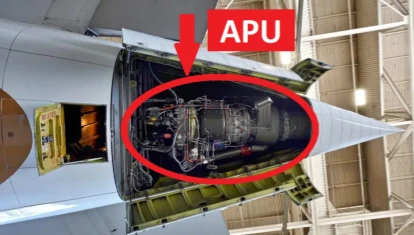
Internal Cavity & Pipeline Visual Inspection
Complete non-destructive visual scanning of narrow APU ducts, full-unit inner cavities, fuel pipelines and ventilation lines without component disassembly. Rapidly locate hidden hazards such as foreign blockages, cooling system failures, oil circuit clogging, pipeline aging, inner wall damage and residual debris accumulation inside cavities.
Rapid Fault Location & Damage Assessment
When the APU generates abnormal operating noise, parameter alarms or abnormal air/power supply output, borescope probes can directly reach the suspected fault area for real-time internal observation. Technicians accurately pinpoint wear, blockage, blade damage and other fault sources without full unit disassembly, drastically shortening troubleshooting time and cutting maintenance downtime costs.
Overhaul Assembly Quality Acceptance
Visual borescope inspection is mandatory for final acceptance after regular aircraft maintenance and APU overhauls. Two core inspection objectives are included: First, verify that blades, combustion chambers, pipelines and other components are fully assembled in place without assembly-induced damage; Second, check for residual foreign matter such as tool fragments and metal debris inside post-overhaul cavities. Full inspection ensures maintenance work complies with civil aviation standards and guarantees safe APU operation.
Core Advantages & Required Performance of Industrial Borescopes for APU Maintenance
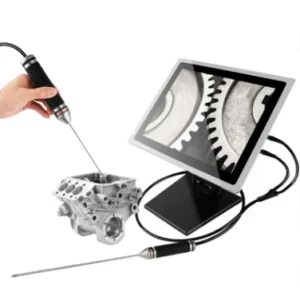
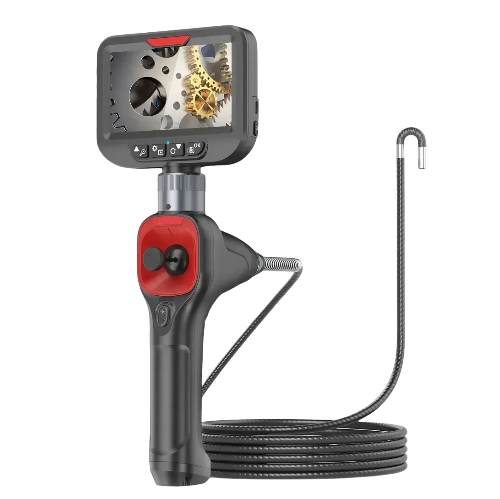
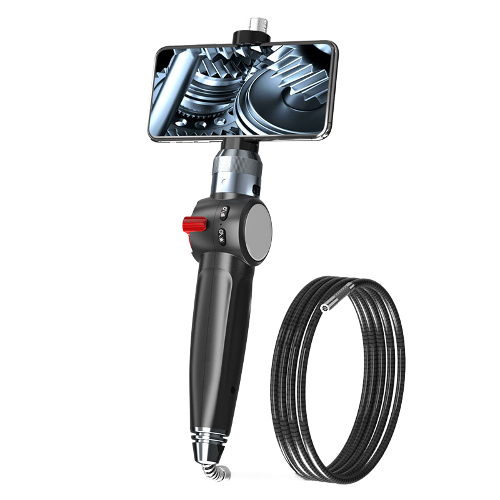
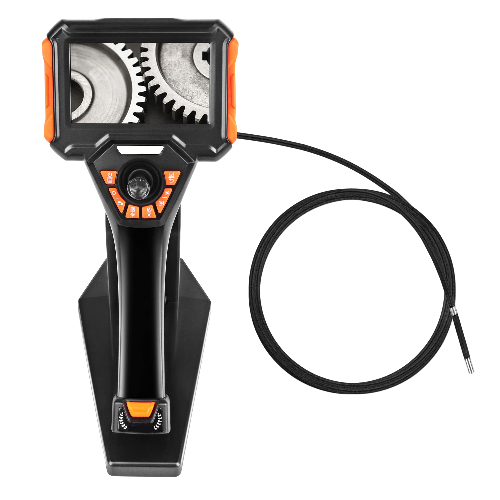
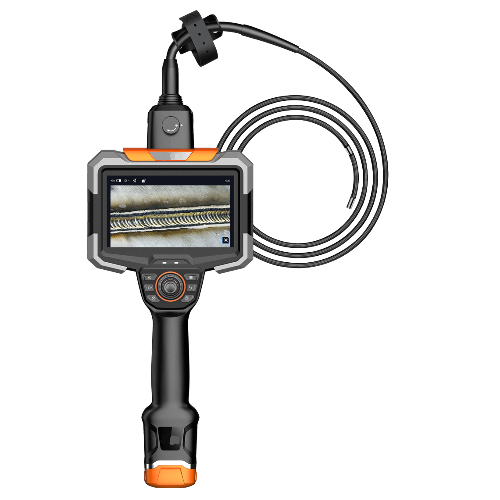
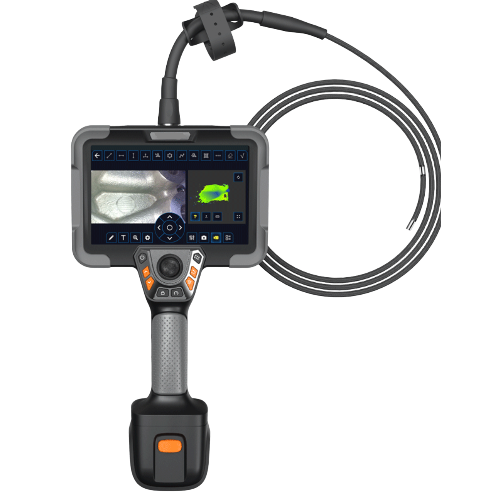
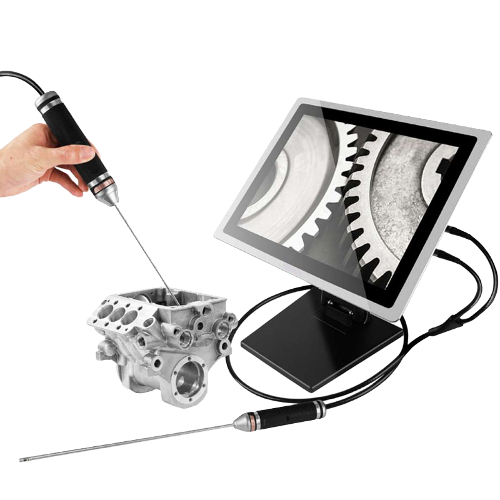
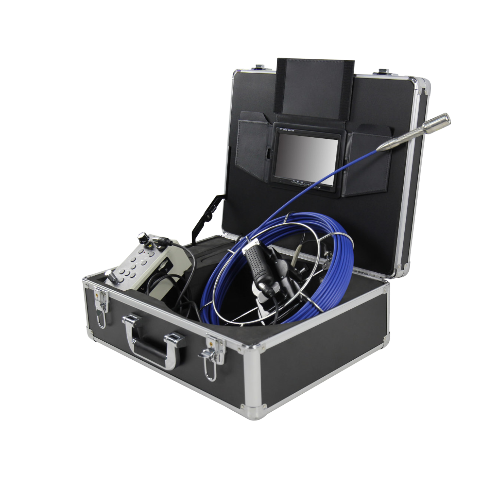
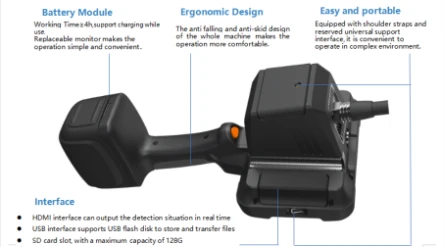
Industrial borescopes access APU internal core areas such as compressor blades, turbine disks and combustion chambers via reserved inspection ports. Real-time high-definition internal footage is displayed on the monitor without disassembly. However, general-purpose borescopes fail to meet aviation precision inspection standards; APU-dedicated industrial borescopes must possess the following key performance specifications:
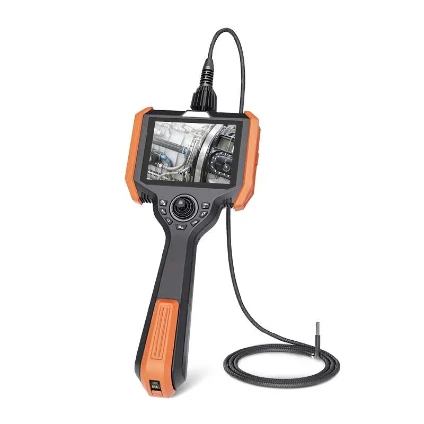
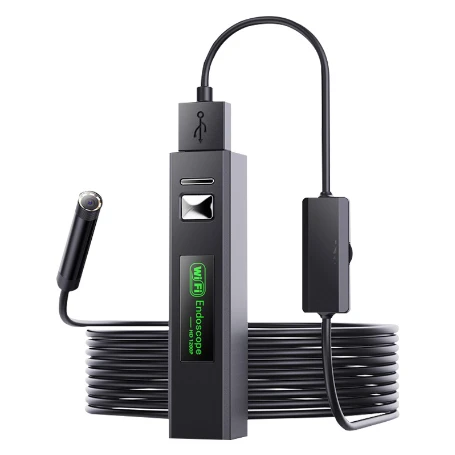
- Ultra High-Definition Imaging: Motor-driven industrial borescopes adopt high-resolution optical lenses with true color reproduction. Multi-size probes ranging from 1 mm to 8 mm adapt to narrow APU internal passages, matched with full 360° electric steering and multi-angle observation functions. Built-in cold LED light sources deliver bright uniform illumination in dim enclosed cavities to identify tiny internal defects accurately.
- Optional 3D Quantitative Measurement Module: The stereo measurement accessory precisely calculates crack length, depth and material loss area, supporting objective quantitative evaluation of damage severity.
- Intelligent Inspection Data Management: Support photo/video storage, real-time picture annotation, defect marking, comparative image review and standardized inspection report archiving, facilitating full equipment condition tracking and complete maintenance compliance filing.
- Industrial High Protection Grade: The whole machine reaches IP67 or above dustproof, oil-proof and waterproof rating, adapting to complex polluted environments in aviation maintenance workshops.
- Lightweight Handheld Ergonomic Design: Optimized portable body with large-capacity rechargeable batteries to support long-duration continuous on-site inspection.
Industry Outlook
As dedicated aviation NDT core equipment, APU-specific industrial borescopes solve prominent pain points of traditional overhaul modes: low inspection efficiency, high maintenance cost and high risk of secondary component damage. In the coming years, with the deep integration of AI automatic defect identification and robotic autonomous inspection technology, industrial borescopes will upgrade from simple handheld observation tools to all-in-one intelligent inspection systems. Such technological iteration will further boost the inspection precision and overall efficiency of APUs and all aircraft power assemblies, building a solid technical barrier to guarantee aviation flight safety.