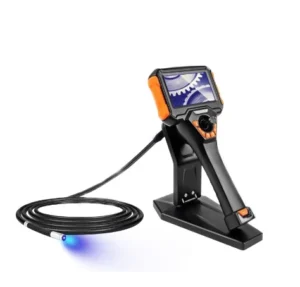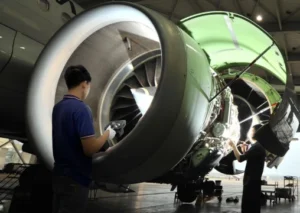

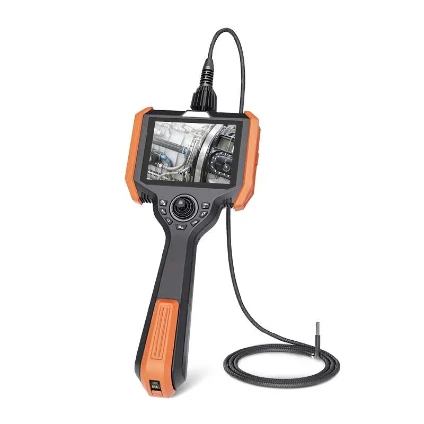
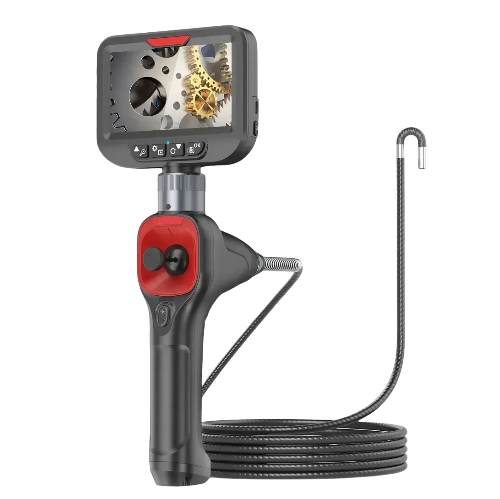
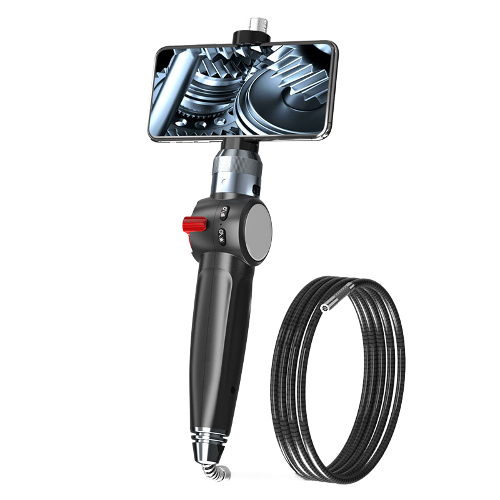
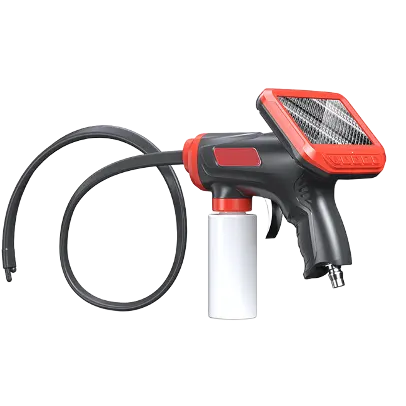
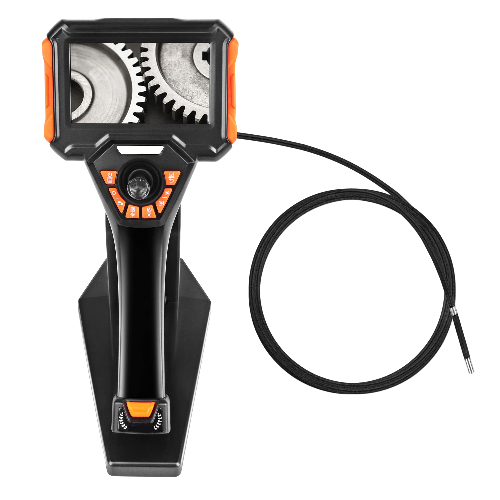
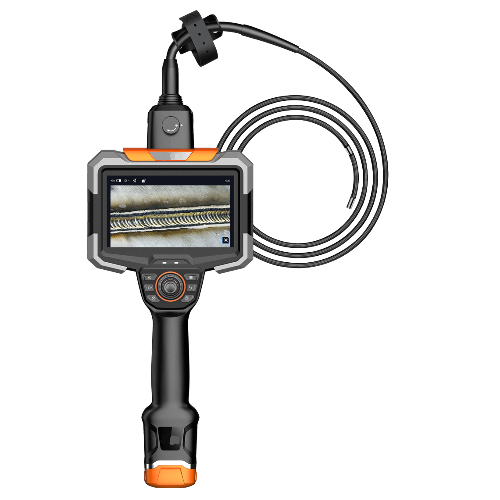
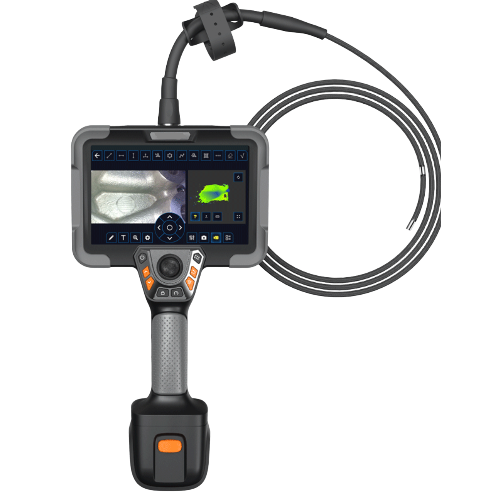
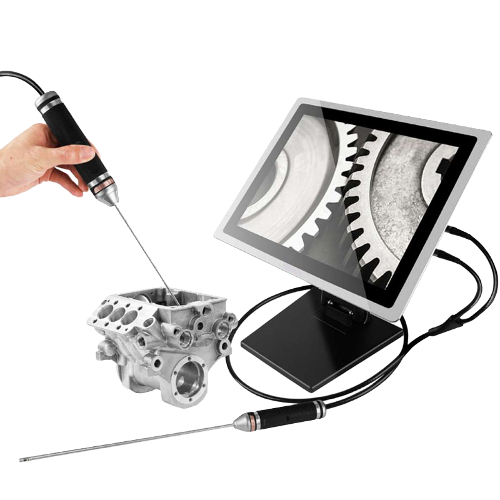
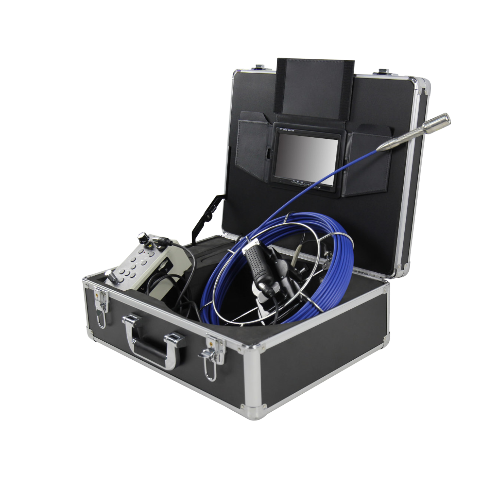
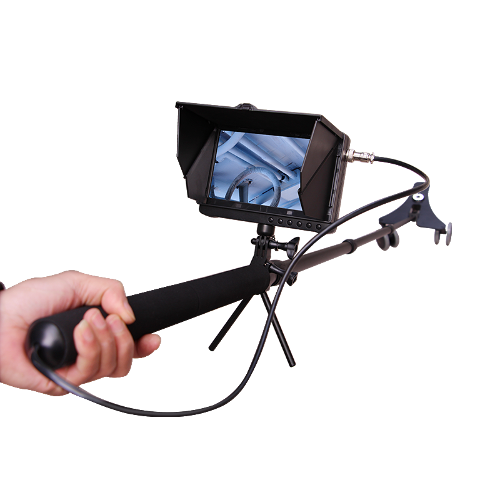
Aviation borescopes hold significant value to aircraft safety and efficiency. They are widely used to inspect turbine blades, combustion chamber cracks, and airframe structures of aircraft engines. Aircraft borescopes not only identify potential safety hazards directly and accurately, but also avoid engine disassembly and unnecessary aircraft downtime, effectively reducing maintenance costs.
The Key Factors for Choosing an Aviation Borescope
How to choose a high-precision aviation borescope? Key points are as follows:
Define Testing Requirements, Application Scenarios and Operating Environments
The first step in choosing an aviation borescope is to clarify specific application scenarios and testing demands — such as whether you need to inspect the engine interior or airframe structures, along with the size and material of the parts being tested. Aerospace environments often involve extreme temperatures, high pressure, strong radiation, severe corrosion, and other harsh conditions. Only by fully understanding these working conditions can you select the most suitable industrial endoscope.
High Resolution and Imaging Quality
In the aerospace industry, even tiny defects can lead to serious safety hazards. For this reason, high resolution is a primary consideration when selecting aviation endoscopes. To detect micron-level defects such as cracks on aviation turbine blades, a device with 4K resolution paired with 3D measurement capabilities is essential.
Ultra-high-definition optical lenses with brightness ≥500cd/m² ensure clear visibility even in high-glare environments. Advanced image enhancement technology further improves image quality and clarity in complex working environments.
Probe and Tube System
Aerospace equipment features highly complex internal structures. Probe diameters typically range from 1–4mm, with ultra-thin probes of 2.8mm or even 1mm being widely used. The insertion tube must offer excellent flexible steering capabilities.
Motor-driven articulation and a viewing angle ≥ 120° make a product more suitable for high-precision, complex environments. For aerospace applications, a modular tube system design is highly recommended to adapt to diverse inspection scenarios.
Light Source
An integrated adjustable LED cold light source is standard. Ultra-thin probes often use rear fiber optic guidance to deliver uniform, sufficient illumination for dark, enclosed inspection spaces.
Intelligent Functions
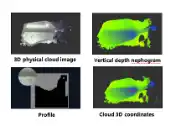
Aviation endoscopes typically require micron-level accurate 3D measurement functions, including high-precision fast global scanning 3D point cloud imaging and multi-mode measurement: point-to-point, point-to-line, point-to-surface, depth measurement, and more.
For modern industrial applications, it is strongly recommended to select systems with data management, cloud collaboration, and automated inspection report generation functions.
The aerospace industry imposes strict performance standards on industrial endoscopes. The ideal aviation borescope should be selected based on full consideration of working conditions, resolution, probe flexibility, and intelligent functions. This helps boost inspection efficiency, lower maintenance costs, and ensure the safety of every single flight.