
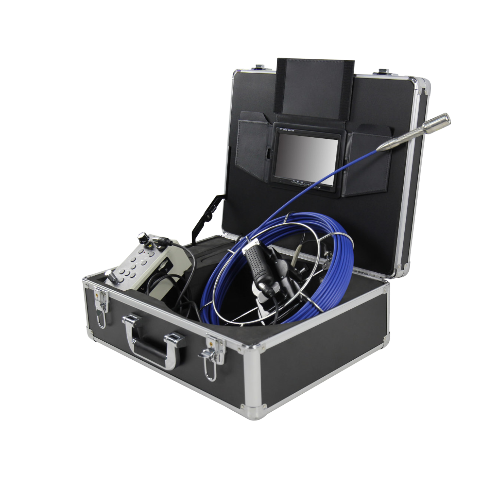
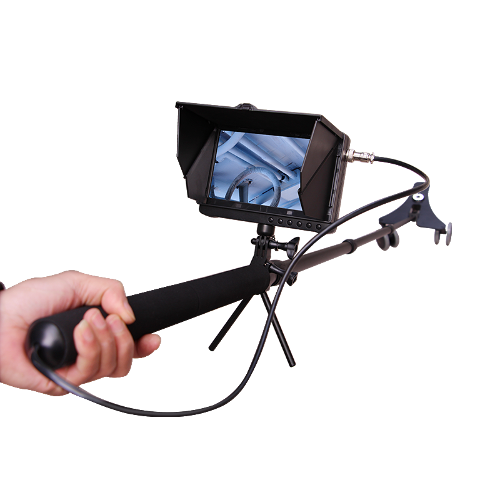
With the popularization of mechanization in modern agriculture, the use of tractors, harvesters, sprayers, and irrigation equipment has become increasingly prevalent. However, due to their complex structures and prolonged operation in harsh environments such as mud, dust, and heavy loads, their engines, hydraulic systems, and transmissions are highly susceptible to latent faults including carbon buildup, wear, blockages, and leaks.
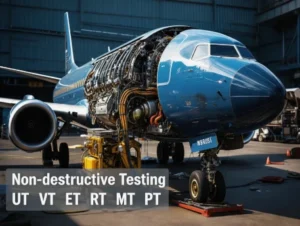
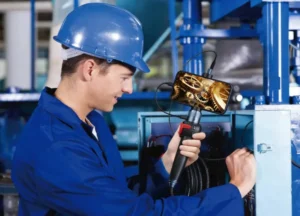
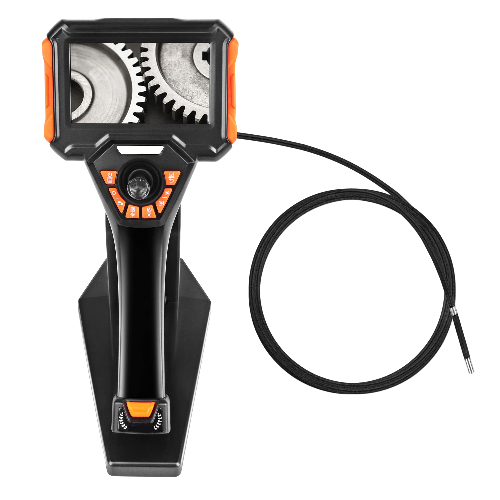
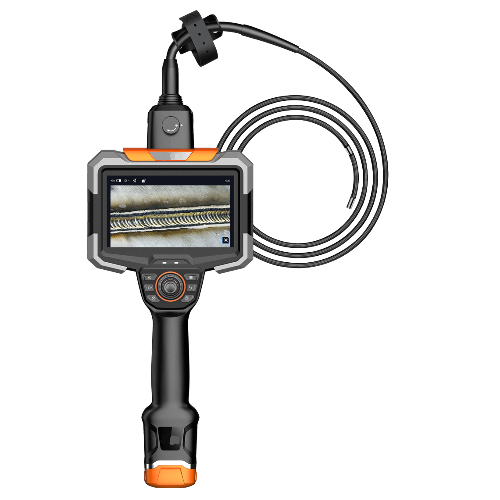
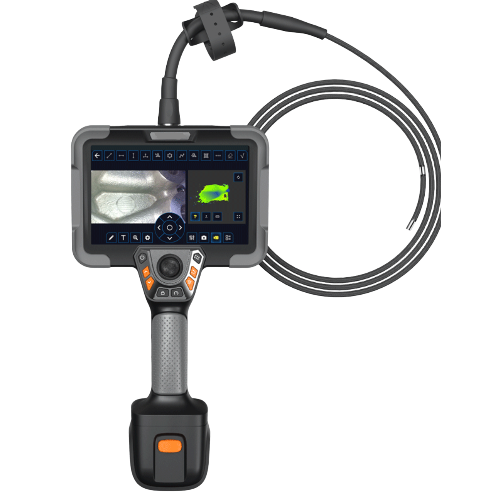
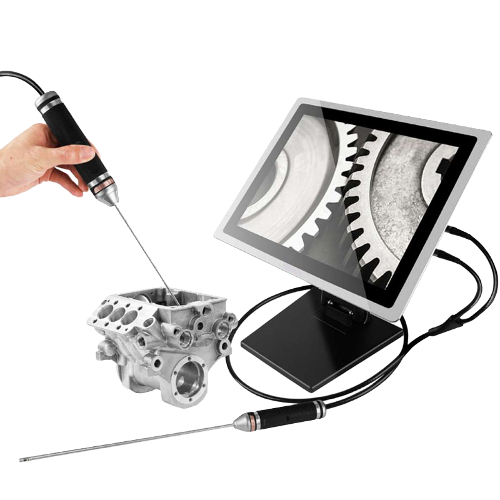
Traditional disassembly-based repair is not only costly but also time-consuming, which may cause farmers to miss critical windows during peak farming seasons. Industrial endoscopes, as advanced visual non-destructive testing tools, enable rapid fault localization without full disassembly, significantly improving agricultural machinery maintenance efficiency and helping safeguard agricultural production.
Key Applications and Benefits of Borescopes in Agricultural Machinery
Engine Diagnostics
The engine is the “heart” of farm equipment and also the component most affected by harsh working environments. Japanese agricultural machinery engines from brands such as Kubota, Yanmar, and Mitsubishi are famous for their compact structure, high power density, and excellent fuel efficiency. With highly sophisticated internal designs, these engines deliver exceptional stability and long service life, but are also more sensitive to carbon deposits and fuel impurities.
Industrial endoscopes can be inserted through injector ports or spark plug holes to reach critical internal parts of tractors and combine harvesters, including cylinders, combustion chambers, valves, and pistons. They can clearly detect carbon buildup, wear, foreign objects, and thermal erosion. This non-destructive testing method meets the high-precision maintenance requirements of Japanese-made equipment and avoids high costs caused by complete disassembly.
In regions with unstable fuel quality, such inspections are especially vital to prevent premature engine wear and extend engine service life.
Hydraulic Systems
Modern agricultural machinery such as seeders, rotary tillers, and harvesters rely heavily on hydraulic systems for steering, lifting, and actuator control. Industrial endoscopes support in-depth inspection of hydraulic cylinders, pipelines, control valves, and valve blocks to identify internal scratches, seal damage, internal leakage, spool wear, and clogged oil passages.
By quickly diagnosing hydraulic faults, the equipment helps avoid problems such as insufficient pressure or overheating, thus preventing critical failures during busy farming periods—for example, the inability of a harvester header to lift or lower normally.
Transmission and Gearbox
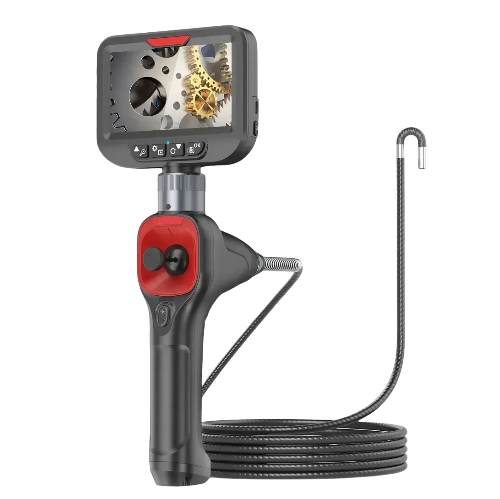
When tractors and other farm equipment operate under heavy loads in muddy fields, the transmission system is prone to mechanical failure. Industrial endoscopes with 360° articulation allow non-destructive inspection of gear wear, bearing damage, foreign debris, and corrosion inside gearboxes, rear axles, differentials, and crawler drive systems.
Without draining lubricant or dismantling casings, inspectors can predict gearbox service life, accurately locate hidden transmission risks, and greatly reduce maintenance downtime.
Chassis and Structural Integrity
Agricultural machinery often suffers impacts during field operations and is exposed to pesticides, fertilizers, and damp soil over long periods, making metal structures vulnerable to corrosion and stress cracks. The structural integrity of chassis and frames directly affects operational safety.
Industrial borescopes can reach hidden cavities and welds that are invisible to the naked eye, detecting hazards such as cracked welds, frame corrosion, and suspension deformation in a timely manner. This helps prevent structural failures or component detachment during operation, protecting both personnel and equipment.
Core Operating Components
Core working parts are critical to the performance of farm machinery, including enclosed structures such as harvester headers, threshing drums, rotary tiller shafts, and seeder metering devices. Endoscopes can penetrate deep into these components, which are in direct contact with crops and soil, to detect straw blockages, deformation, wear, and jamming.
By accurately identifying hidden faults, they prevent core component failure from disrupting important farming schedules.
Fuel, Intake, and Exhaust Systems Check
Farm machinery usually works in dusty and straw-filled environments, which easily cause failures in fuel, intake, and exhaust systems. Industrial endoscopes allow comprehensive inspection of fuel tanks, intake pipes, exhaust pipes, and mufflers to locate blockages, leaks, and dust buildup.
For modern agricultural machinery that must meet strict emission standards, inspectors can check the internal condition of Diesel Particulate Filters (DPFs) and the crystallization or clogging of urea injector nozzles. Extended low-speed operation often leads to heavy DPF soot accumulation, and endoscopes help check for ceramic substrate cracks or urea crystal deposits.
In regions with strict environmental regulations such as Japan, South Korea, Europe, and North America, such inspections are essential to avoid performance limitations such as speed or torque restrictions.
Key Points for Choosing a Borescope for Farm Machinery
When selecting an industrial endoscope for agricultural equipment, focus on the following factors:
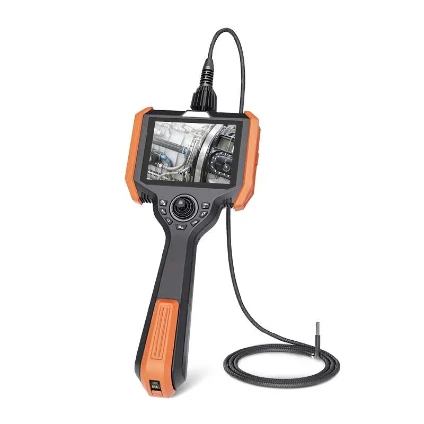
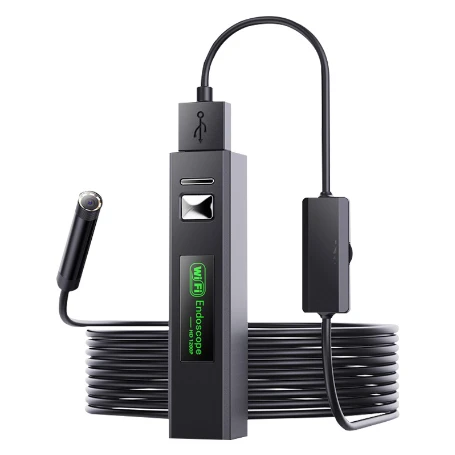
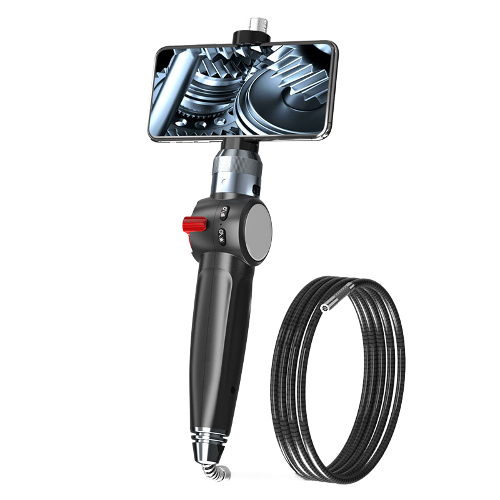
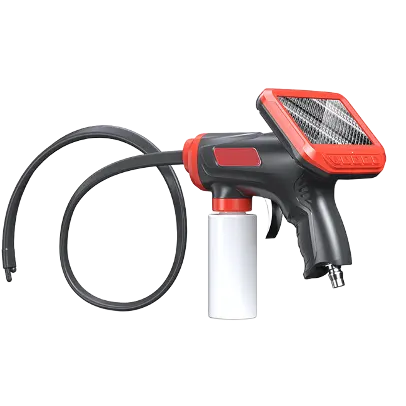
Choose the appropriate probe type and diameter based on the inspection target. Given the complex internal structure of agricultural machinery, prioritize endoscopes with high resolution, 360° articulation, and modular probe design to adapt to diverse and complicated working scenarios.
Since farm machinery operates in muddy and dusty environments, the insertion tube material determines service life. Tungsten or stainless steel braided tubes are recommended for high strength, wear resistance, and flexibility. The device should also have an IP67 or higher protection rating, as well as shock and vibration resistance for harsh outdoor conditions.
Most inspections take place outdoors in the field, so portability and long battery life are core requirements to ensure convenient and continuous on-site operation.
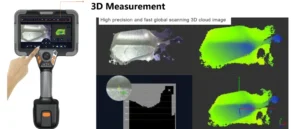
For practical fault diagnosis, additional functions such as precision measurement and image/video storage can be selected as needed to further improve inspection efficiency.
Conclusion
The application of industrial endoscopes in agricultural machinery maintenance is becoming increasingly widespread, driven by high-level agricultural mechanization, rising repair and labor costs, and growing demand for preventive maintenance among farm owners.
Using industrial borescopes not only reduces disassembly expenses but also prevents major mechanical accidents. By conducting a comprehensive internal inspection before busy farming seasons, farmers can effectively avoid unexpected equipment failures in the field and ensure that planting and harvesting tasks are completed on time.