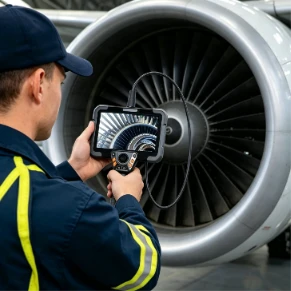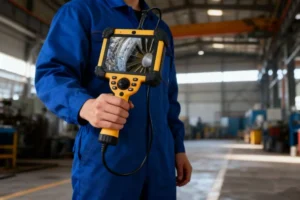

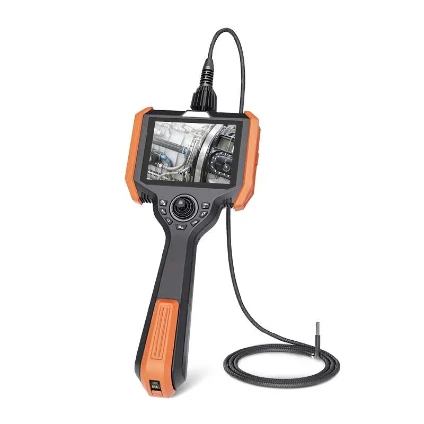
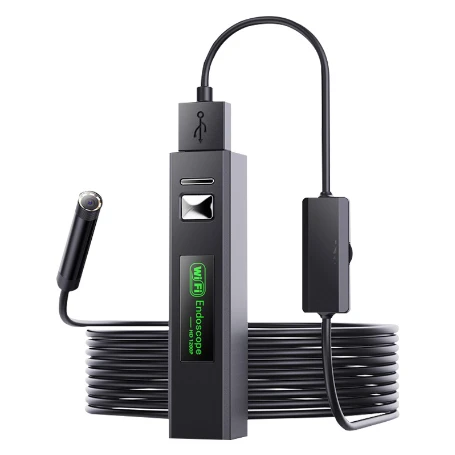
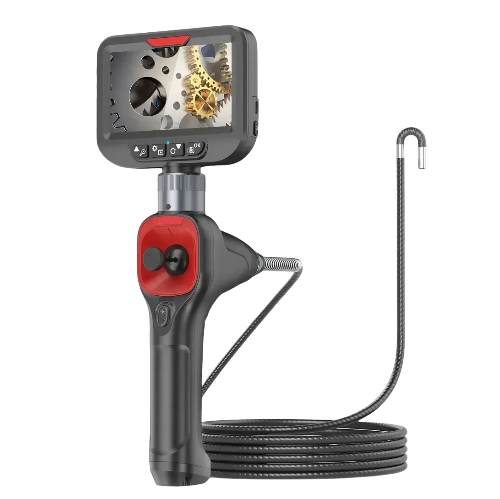
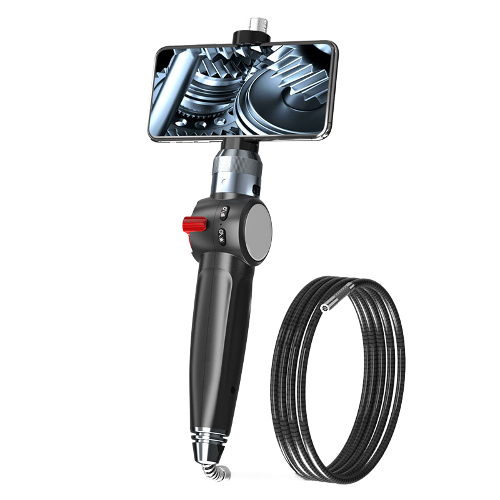
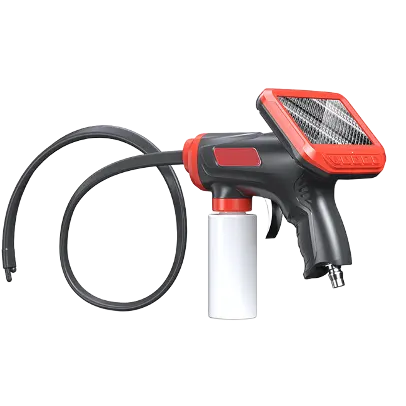
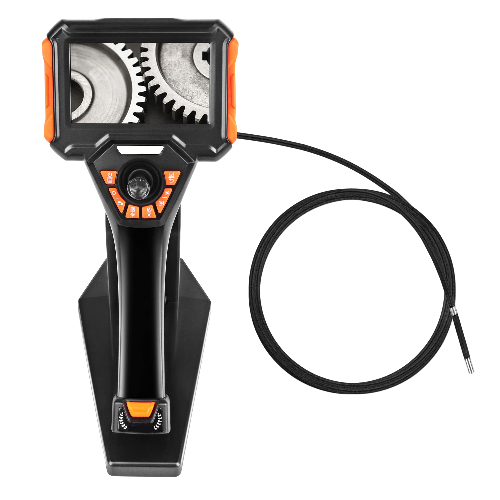
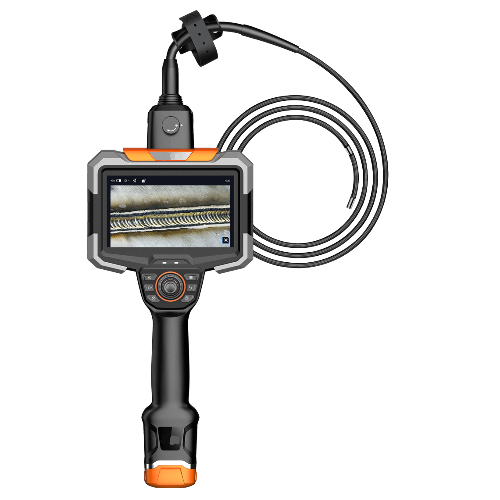
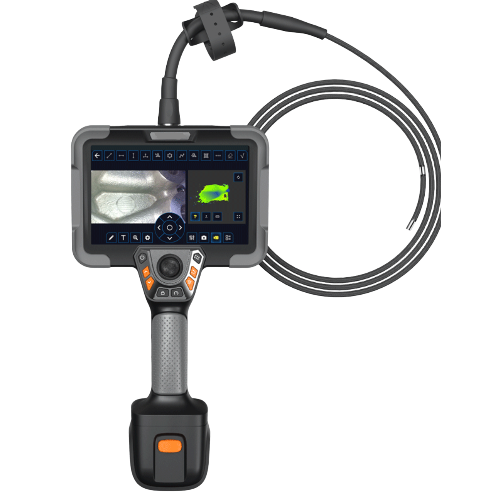
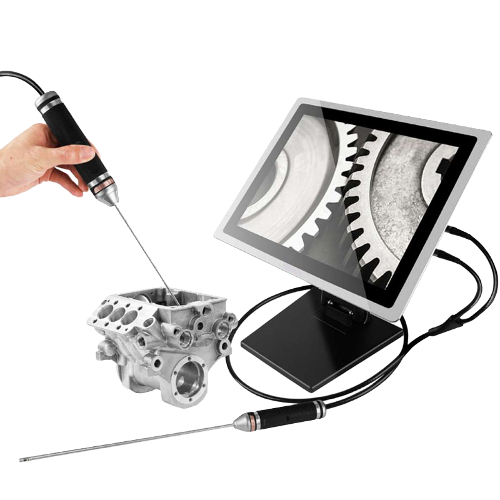
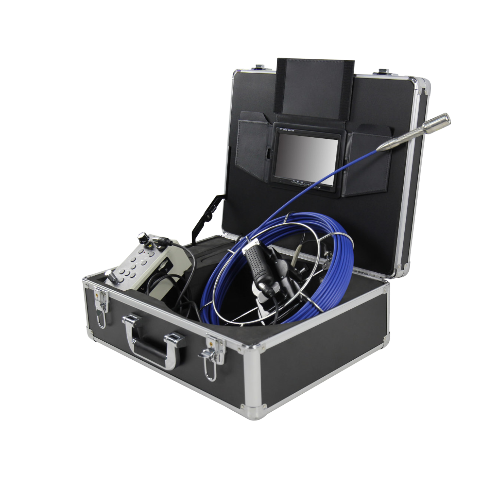
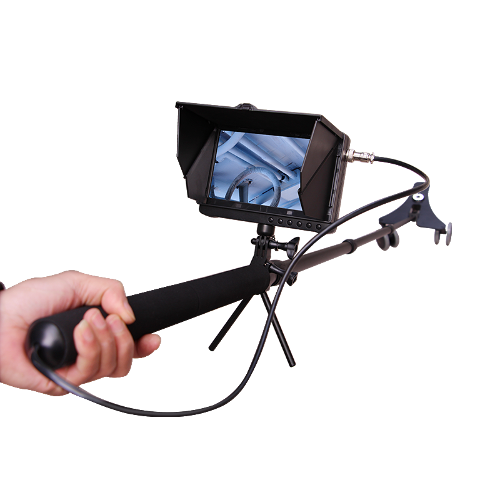
In the construction sector, construction vehicles serve as the core driving force for project execution. The stable operation of construction vehicles directly determines construction efficiency, safety, and cost. As a key tool in non-destructive testing (NDT), industrial borescopes feature slim, flexible probes and high-definition imaging, making them reliable for the operation, maintenance, and quality inspection of construction vehicles. This article elaborates on the application of industrial borescopes in the construction vehicle field.
Wide Compatibility of Industrial Borescopes with Various Construction Vehicles
Industrial borescopes work effectively on all construction vehicles equipped with engines, gearboxes, hydraulic systems, or enclosed structural components. They cover nearly all types of construction vehicles, especially the following categories:
| Vehicle Category | Typical Models | Intended Use |
|---|---|---|
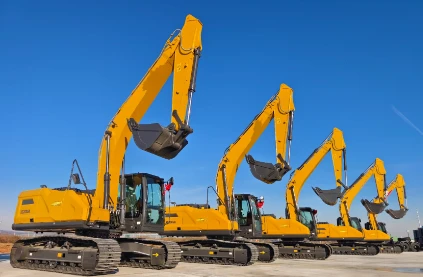
| Excavation Machinery | Excavators, trenchers, rotary drilling rigs, pile drivers | Earth excavation, foundation pit construction, material handling |
| Earth-Moving Machinery | Loaders, bulldozers, scrapers | Site grading, short-distance material transport |
| Construction Lifting Machinery | Truck cranes, lorry-mounted cranes, tower cranes | Heavy load hoisting, component installation |
| Compaction Machinery | Road rollers, vibration rammers | Subgrade and pavement compaction, foundation reinforcement |
| Concrete Machinery | Concrete pump trucks, mixer trucks, spreaders | Concrete delivery, pouring, and mixing |
| Road Machinery | Pavers, milling machines, road sweepers | Pavement laying, damage repair, road cleaning |
| Piling Machinery | Pile drivers, drilling rigs, rotary drilling rigs | Pile foundation construction, foundation reinforcement |
| Mining Construction Machinery | Mining dump trucks, bolter miners, crushers | Construction site, mine, and plant operations |
Core Inspection Scenarios of Industrial Borescopes in Construction Vehicles
Engine System Inspection
The engine is the “heart” of a construction vehicle. Internal faults are often hidden and have significant impact, potentially leading to equipment shutdowns or even safety incidents. An industrial borescope can be inserted through spark plug holes, injector nozzles, or other entry points to clearly inspect the following issues deep inside the cylinder: cylinder wall scratches and corrosion, piston ring wear and carbon buildup, combustion chamber carbon deposits, injector clogging and wear, turbine blade cracks and wear, and valve seat wear.
Hydraulic System Inspection
The hydraulic system is the “power transmission hub” of construction vehicles, driving core actions like excavating, lifting, and tilting. It consists of pumps, cylinders, valves, pipes, and other components – mostly enclosed, making traditional inspection difficult. An industrial borescope can reach inside hydraulic cylinders, valve bodies, and pipes to detect: scratches and corrosion on cylinder inner walls, valve sticking, seal aging or damage, internal wear in pumps and motors, and pipe clogging or corrosion.
Drivetrain System Inspection
The drivetrain transmits engine power to the wheels, enabling normal operation and movement. It mainly includes the transmission, differential, drive shafts, etc. An industrial borescope can be inserted into the transmission to inspect: gear pitting, wear, or broken teeth; bearing wear and poor lubrication in the differential; and wear or looseness in universal joints of drive shafts.
Exhaust System Inspection
With increasingly strict environmental regulations, the exhaust systems of construction vehicles must meet emission standards. Exhaust system failures can lead to excessive emissions and affect engine performance. An industrial borescope can inspect the inside of exhaust pipes, catalytic converters, and diesel particulate filters (DPFs) to detect: catalytic converter clogging or carbon buildup, injector nozzle crystallization, and exhaust pipe corrosion or leaks. Timely detection ensures compliance, avoids fines for excess emissions, and maintains stable engine power output.
Other Critical Component Inspections
Beyond the core systems above, industrial borescopes are also used for other key parts of construction vehicles, including: internal wear and corrosion in steering systems (steering gear, steering shaft); internal clogging and wear in brake systems (brake cylinders, brake discs); internal clogging and scale in cooling systems (radiators, water pipes); as well as weld quality on vehicle frames and welding defects in pipes.
Core Application Value of Industrial Borescopes in Construction Vehicles
Reduce Maintenance Costs and Avoid Secondary Damage
Traditional construction vehicle maintenance requires extensive disassembly to inspect internal components, which is time-consuming, labor-intensive, and may cause secondary damage to precision parts, increasing repair costs. Industrial borescopes enable non-destructive inspection without disassembly, significantly shortening maintenance time, reducing labor costs, and preventing secondary damage from disassembly.
Improve Inspection Accuracy and Reduce Hidden Failures
Visual inspection and traditional methods struggle to detect tiny defects in enclosed, narrow spaces, leading to missed or misjudged issues that can escalate into equipment downtime and safety accidents. Equipped with high-definition cameras and flexible probes, industrial borescopes clearly display internal component details, detecting even tiny cracks and slight wear with a fault diagnosis accuracy rate of over 90%. They identify potential risks in advance, preventing minor issues from developing into major problems and reducing unplanned equipment downtime.
Extend Equipment Lifespan and Lower Replacement Costs
Construction vehicles involve high acquisition costs. Extending their service life greatly reduces equipment replacement expenses for enterprises. Industrial borescopes support preventive maintenance: regular inspections detect wear, corrosion, and other issues in a timely manner, allowing early maintenance or replacement to avoid equipment damage from excessive component wear and prolong service life.
Support Compliance Verification and Avoid Policy Risks
Amid tightening environmental regulations, countries are strengthening emission controls for construction projects. Illegal modifications and excessive emissions result in fines. Industrial borescopes verify the integrity of construction vehicle exhaust systems, detect illegal modifications and component damage, and provide visual evidence for emission compliance checks, helping enterprises avoid policy risks.
Conclusion
Stable operation of construction vehicles is the foundation for efficient construction. The application of industrial borescopes completely solves the pain points of traditional maintenance—unseen, unreachable, and unclear inspections—making them an essential tool for the operation, maintenance, and quality inspection of construction vehicles. Whether for excavation machinery, lifting machinery, concrete machinery, or road machinery, industrial borescopes offer flexible adaptation, cover core component inspection scenarios, and deliver non-destructive, efficient, and precise inspection.