
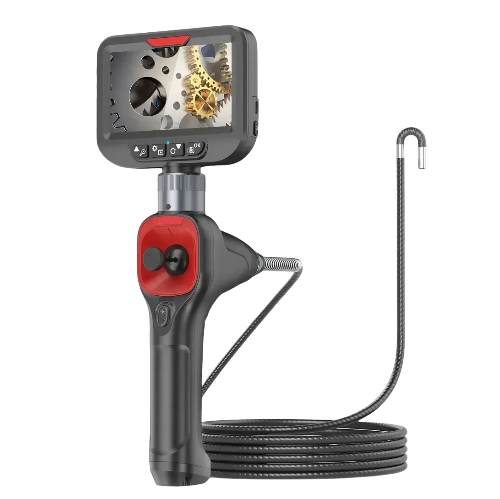
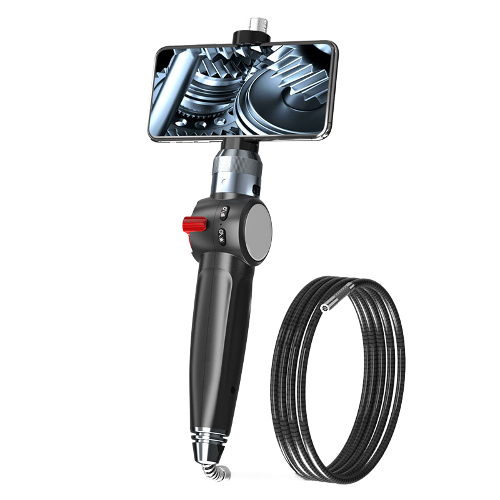
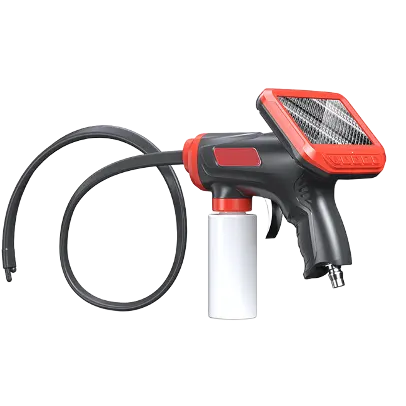
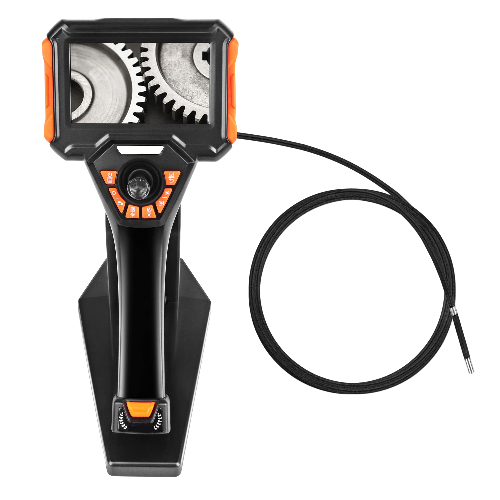
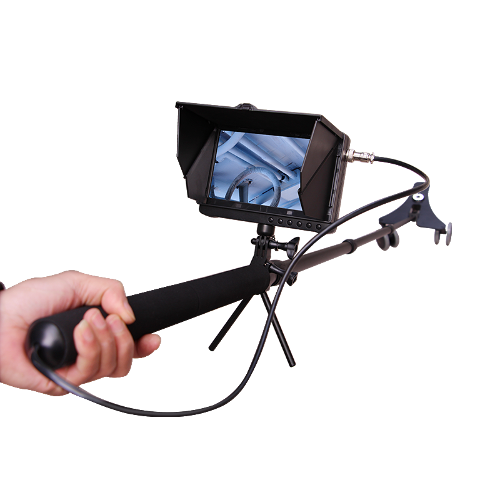
An off-road vehicle is not your average runaround. It fords rivers, crests sand dunes, battles through mud, and grinds up steep inclines under heavy loads in sweltering heat. That kind of use means the damage it sustains follows a completely different logic to that of an ordinary city car — many problems don’t announce themselves with a sudden bang, but instead lurk silently deep within the engine and critical components, building up bit by bit. By the time symptoms finally show themselves, the best window for doing something about it has usually already gone. That is the fundamental reason why industrial endoscopes are earning serious respect in off-road vehicle inspection.
The Hidden Damage Problem: Off-Road Faults Live Where You Can’t See Them
Compared to ordinary vehicles, off-road vehicles have a few very distinct characteristics. They spend long periods driving in genuinely hostile conditions — water crossings, mud, thick dust. They regularly push through high-load situations: grinding up long climbs, towing heavy loads, wrestling their way out of deep ruts. And they get modified at an extraordinarily high rate, with intake systems, exhausts, and chassis structures frequently given a thorough going-over.
All of this boils down to one central problem: internal engine corrosion, cylinder wear, gearbox gear damage — the truly serious stuff — is completely invisible from the outside.
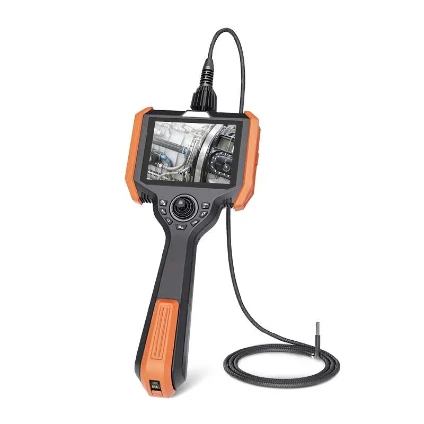
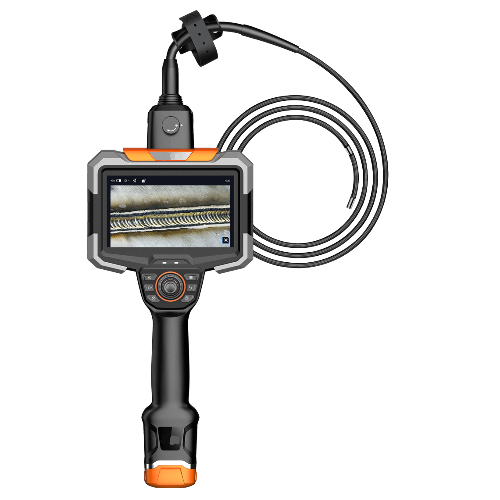
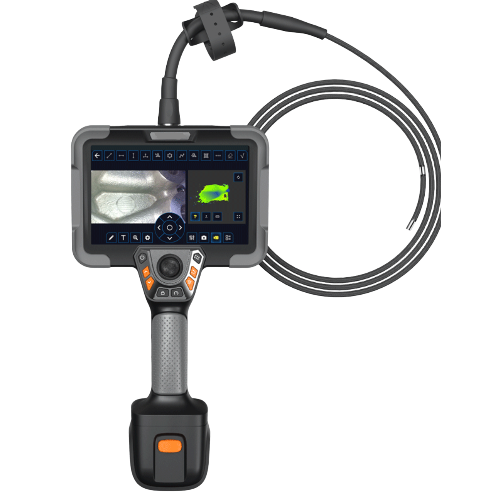
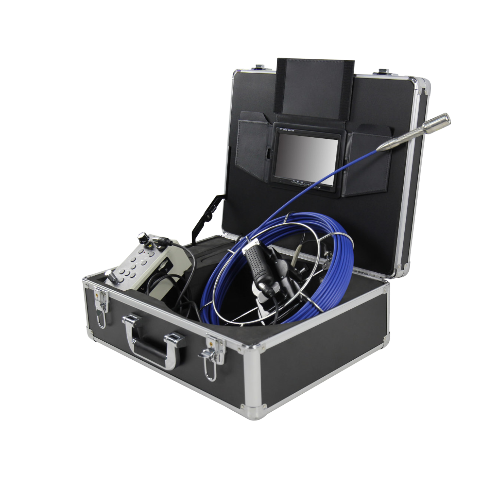
The traditional answer is to strip it down and inspect it. Thorough, yes — but expensive, time-consuming, and completely impractical as a routine measure. What an industrial endoscope offers is a different way of thinking about it entirely: don’t take the vehicle apart. Just look inside.
After a Water Crossing: Has the Combustion Chamber Been Left With a Watermark?
Water crossings are one of the most routine extreme conditions in off-road driving. Most owners follow the same logic: engine starts fine after the ford, everything seems normal, nothing to worry about. In practice, that’s a genuinely dangerous assumption.
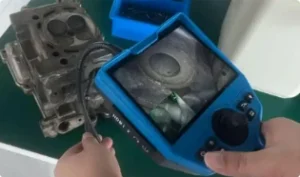
Residual moisture in the cylinders, minor corrosion in the combustion chamber, faint watermarks and deposits on piston surfaces — these early-stage injuries produce almost no outward symptoms whatsoever, yet they quietly chip away at engine life. An industrial endoscope can be fed through an inspection port directly into the engine, letting a technician see the actual condition of the combustion chamber and cylinder walls without touching a single component — and judge whether the water crossing has left any hidden damage behind.
Desert and Dust: The Particles That Got Through Are Quietly Scoring Your Cylinder Walls
When you’re driving in desert or high-dust conditions, the air filter is not an infallible line of defence. Once fine dust particles slip past the filter and get into the engine, they become abrasives in the high-temperature, high-pressure working environment — imperceptibly scratching cylinder walls, accelerating wear between pistons and bores, and laying down abnormal carbon deposits on internal surfaces.
The process is extraordinarily gradual. It is also irreversible. Regular inspection with an industrial endoscope gives a direct view of scratch patterns, wear distribution, and carbon build-up inside the cylinders — bringing the point of detection significantly earlier, and making it possible to assess and act before the damage has had a chance to spread.
High Heat and Heavy Load: Can the Gearbox and Differential Still Hold Up?
Prolonged hill climbing, heavy towing, repeated recovery operations — these conditions keep an off-road vehicle’s drivetrain working continuously right at the edge of its thermal and mechanical limits.
Gear wear and pitting in the gearbox, rapidly deteriorating lubrication, metal debris spreading through the oil — left undetected, these problems range from reduced transmission efficiency at best, to complete gear failure and a full breakdown at worst.
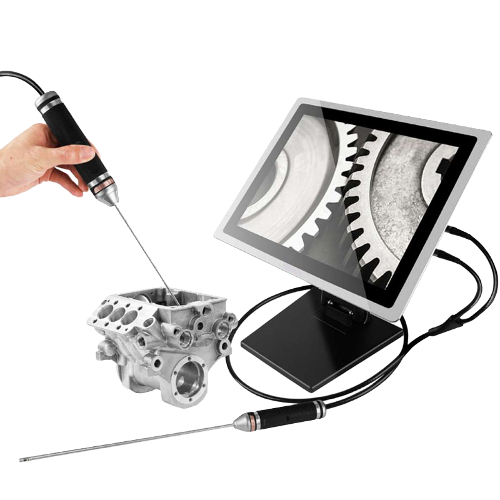
Confirming the internal condition of a gearbox or differential used to mean a complete strip-down, almost without exception. Industrial endoscopes have changed that. By inserting a probe through an inspection port, a technician can observe gear surface condition and the lubrication environment directly — no disassembly required — completing a solid preliminary assessment at a fraction of the traditional cost.
Modified Systems: The Water and Carbon in Your Pipework Are More Common Than You’d Think
Modification rates among off-road vehicles are extraordinarily high. Uprated intake systems, optimised exhausts, comprehensive power upgrades — these are standard practice in the off-road world. But modified systems tend to be more complex, follow more convoluted routes, and are far better at hiding faults: moisture left sitting in pipework after a water crossing, air leaks from poorly sealed joints, carbon build-up and blockages accumulating along modified pipe runs.
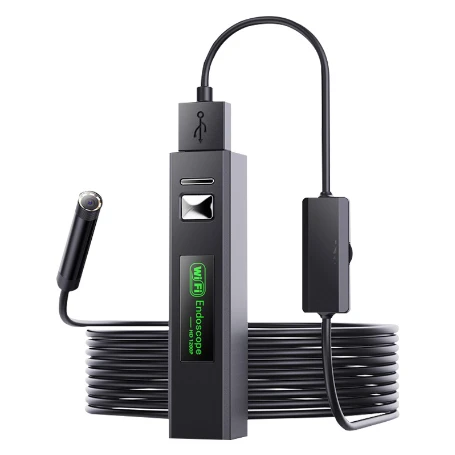
Because of how these systems are put together, none of it can be assessed from the outside. An industrial endoscope can work its way through even the most tortuous pipework, giving a direct view of cleanliness, blockages, and installation condition throughout the intake and exhaust systems — covering the blind spots that a conventional visual inspection simply cannot reach.
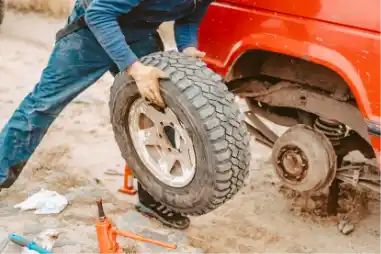
Chassis and Frame: The Cracks That the Naked Eye Will Never Find
What off-road driving puts a chassis and frame through goes far beyond the scrapes and dents you can see on the surface. The cumulative effect of repeated impacts and torsional loads leaves cracks and deformation in structurally concealed places — inside hollow frame sections, behind weld seams, within closed structural cavities. These are areas that can never be directly observed from the outside. And once structural vulnerabilities of this kind are overlooked, the consequences tend to be catastrophic.
An industrial endoscope can get into these hidden areas and carry out a systematic inspection of the internal condition of the chassis and frame — catching structural risks before they have any chance to develop into something far worse.
In Summary: Find the Problem Before It Finds You
The damage an off-road vehicle accumulates never arrives all at once. Corrosion from water crossings, wear from dust ingestion, the slow toll that heat and heavy loads take on the drivetrain, hazards quietly building up inside modified pipework — all of it is the product of prolonged use, stacking up gradually over time.
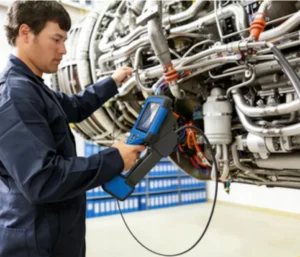
The core value of an industrial endoscope is precisely this: it lets a technician, without stripping the vehicle, get into the internal spaces that are physically beyond the reach of the naked eye — and see the true condition for themselves.
Earlier detection of internal engine problems. Rapid assessment of drivetrain health. Identification of hidden risks within modified systems. A genuine improvement in overall inspection efficiency.
In the high-intensity, high-stakes world of off-road vehicles, the ability to “spot the problem one step ahead” doesn’t just save you a repair bill — it might well save you from being completely stranded somewhere very remote, with absolutely no help in sight.