
With increasingly stringent global environmental policies, new energy vehicles (NEVs) are gradually replacing traditional fuel-powered cars and becoming a key development direction in the manufacturing sector.
In Southeast Asia—particularly in Vietnam—local NEV manufacturers represented by VinFast are rising rapidly. This growth is driving the rapid expansion of vehicle assembly, battery production, and component supply chains across major industrial regions such as Hải Phòng, Bắc Ninh, and Bình Dương.
Against this backdrop, NEV manufacturers are not only facing increasing pressure to scale up production, but are also required to meet both export standards and strict quality control requirements.
How to detect internal defects quickly and accurately—without damaging the product—has become a critical challenge for NEV factories in Vietnam.
This is precisely the key reason why industrial borescopes are experiencing rapid growth in the Vietnamese market.
What is an Industrial Borescope? Why Is It Becoming Increasingly Important in Vietnam?
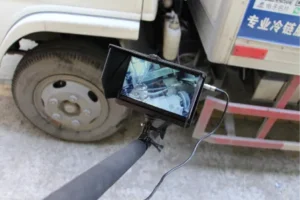
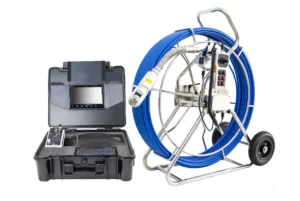
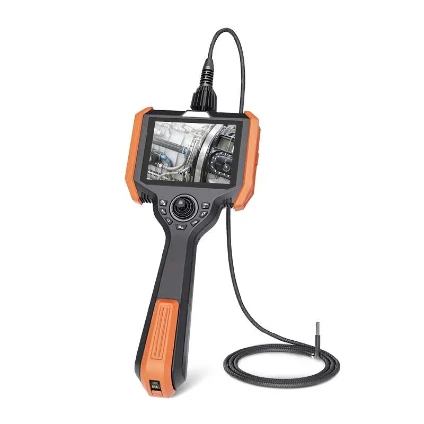
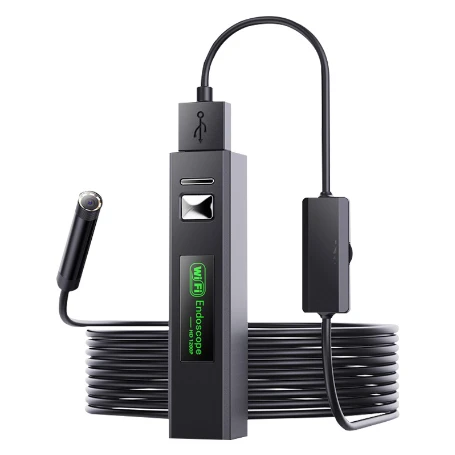
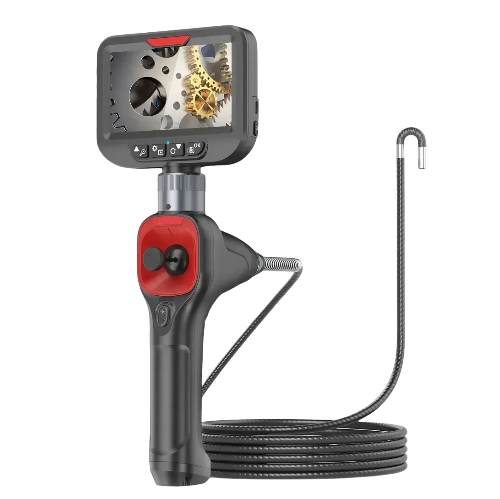
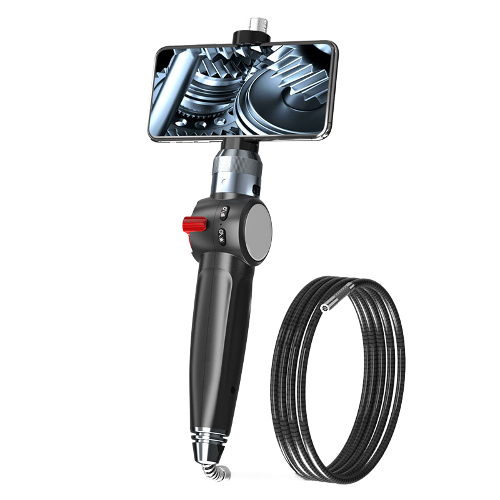
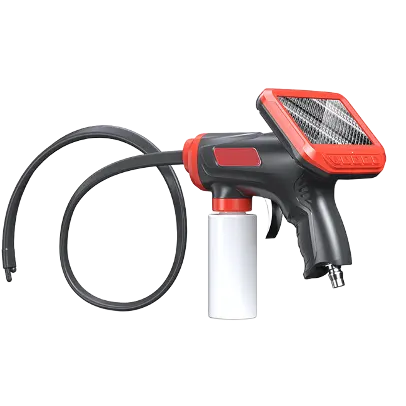
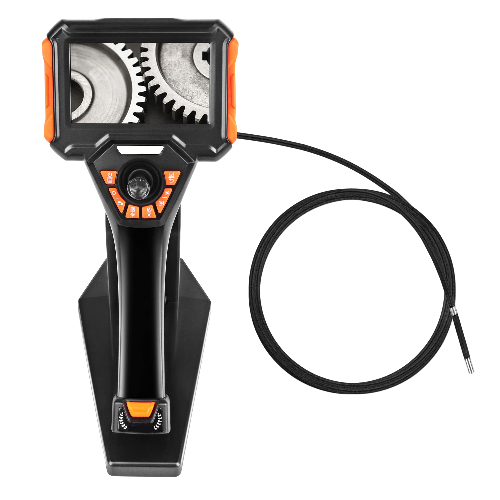
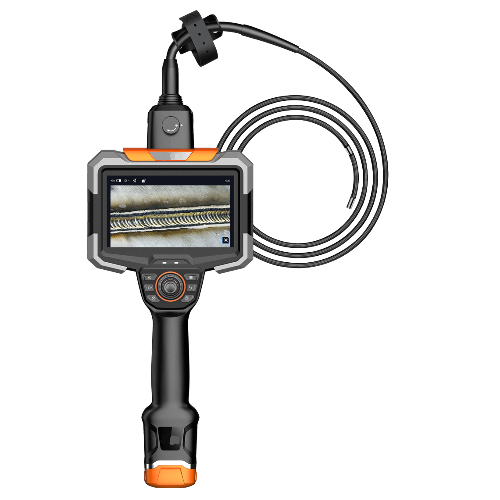
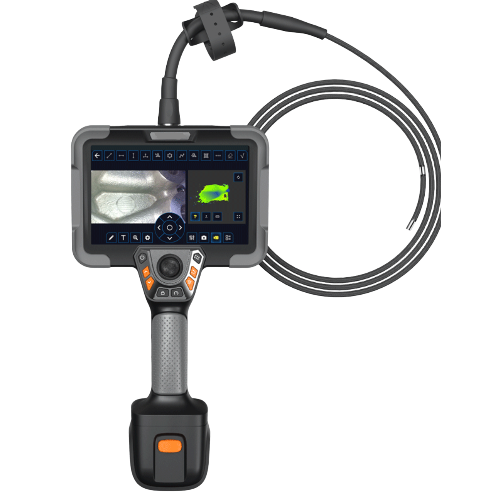
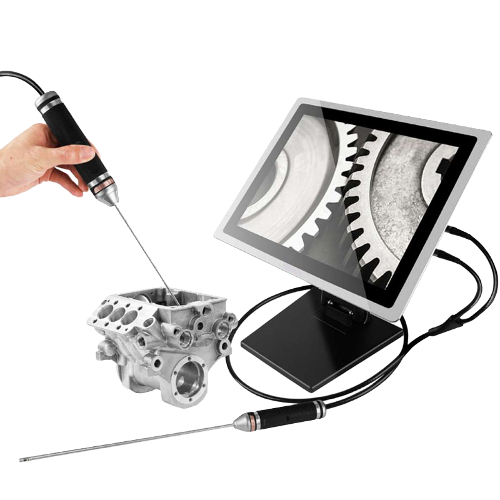
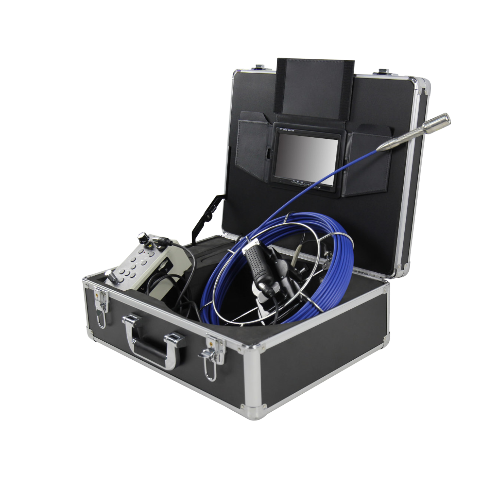
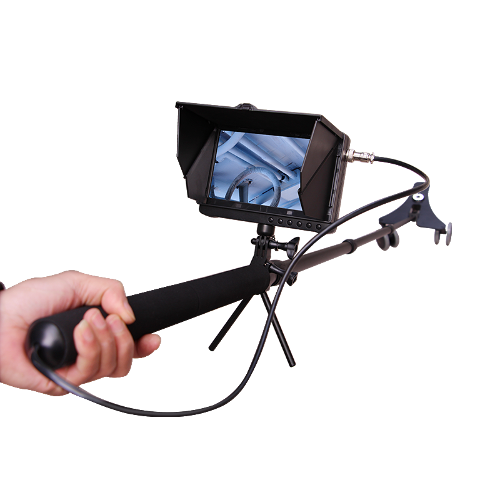
An industrial borescope (video borescope) is a tool that enables visual inspection inside equipment without disassembly or damage. It allows inspectors to access areas that are otherwise invisible to the naked eye and display real internal conditions clearly on a screen.
Compared with traditional inspection methods, it offers the following key advantages:
- Avoids damage caused by disassembly
- Enables direct and realistic internal observation
- Supports image capture, video recording, and analysis
- Improves inspection efficiency and accuracy
- Reduces maintenance costs and safety risks
At a stage where Vietnam’s manufacturing industry is rapidly expanding, this “high efficiency + low cost” inspection approach is being adopted by an increasing number of factories.
As a result, industrial borescopes have become an indispensable inspection tool in modern automotive manufacturing, including NEVs.
Addressing Real Production Pain Points in Vietnamese Factories: New Standards for NEV Inspection
The core systems of NEVs are commonly referred to as the “three-electric system”:
Among these, the power battery (typically lithium-based) serves as the energy source and requires extremely high levels of safety and quality.
At the same time, NEVs differ significantly from traditional vehicles in terms of power transmission and structural design, which means:
- More complex internal structures
- A higher number of precision components
- Greater requirements for inspection accuracy
For local manufacturers in Vietnam, additional challenges include:
- Rising export quality standards (particularly for Europe and North America)
- Increased risk of missed defects in mass production
- Insufficient efficiency in manual inspection
Therefore, traditional inspection methods are no longer sufficient. More advanced non-destructive testing (NDT) solutions—such as industrial borescopes—are essential.
Key Application Scenarios of Industrial Borescopes in NEVs (Based on Vietnamese Manufacturing Context)
Power Battery and Battery Pack Inspection
The power battery is the most critical component in NEVs, and its inspection spans R&D, production, and quality control—especially crucial in Vietnamese battery manufacturing plants.
Inspection scope includes:
- Internal battery pack structures (fans, air ducts, evaporators, thermal management systems, etc.)
- Surface defects inside battery cells and components
- Electrode alignment (top-bottom alignment)
- Burrs, scratches, dents, and other defects
- External battery pack issues (wrinkling, compression damage, breakage)
For critical safety points such as weld inspection:
Weld quality directly affects safety and lifespan. Common defects include:
- Porosity
- Cracks
- Lack of fusion
- Undercutting
Industrial borescopes can be used for:
- Rapid visual inspection of surface defects
- Welding quality verification
- Assisting AI-based defect recognition
In Vietnam’s mass production environment, this significantly reduces rework rates and safety risks.
High-Precision Inspection of EV Inverters and Similar Components
The inverter is a key component that converts DC to AC and controls motor operation.
Inspection focus:
- PCB solder joint quality
- Presence of foreign objects or residues
- Overall welding integrity
Common challenges in Vietnamese factories:
- Extremely narrow access channels (requiring ultra-thin probes, e.g., 2.2 mm)
- Large internal spaces with very small entry points
- Need for precise control and rapid positioning
- High lighting requirements (to avoid glare and halo effects)
Solutions:
- Ultra-thin flexible probes
- Adjustable lighting systems (scene-based modes)
- Wide viewing angles (e.g., 120°) to improve efficiency
Motor and Gearbox (Transmission System) Inspection
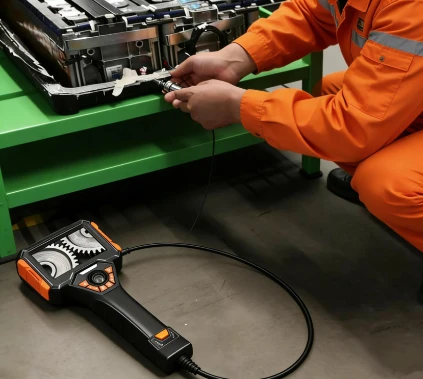
Used to detect:
- Gear cracks and corrosion
- Internal defects in transmission chambers
- Assembly quality of components
Advantages of different borescope types:
- Fibre borescopes: highly flexible, suitable for complex structures
- Video borescopes: clearer imaging, easier analysis
Engine and Power System Inspection
Although NEVs reduce reliance on traditional engines, some power system components still require inspection.
Inspection includes:
- Component integrity
- Wear and looseness
- Assembly quality
Supports real-time monitoring and process optimisation.
Fuel System Inspection (Hybrid or Special Vehicles)
Main inspection items:
- Pipe connections
- Sealing performance
- Corrosion and cracks
Ensures overall vehicle safety.
Chassis and Body Structure Inspection
Inspection includes:
- Welding quality
- Coating condition
- Cracks, peeling, and corrosion
Advantages:
- Access to narrow or hidden areas
- Suitable for complex structural inspection
Electronic Control System Inspection
As one of the core systems in NEVs, the electronic control system directly affects vehicle performance.
Inspection includes:
- Circuit board condition
- Connector integrity
- Short circuits or open circuits
Industrial borescopes help ensure system stability.
Die-Cast Parts and Component Defect Inspection
NEVs widely use die-cast structural components, which are very common in Vietnam’s manufacturing sector.
Typical defects:
- Air bubbles
- Porosity
- Cracks
- Inclusions
Industrial borescopes enable direct internal observation, improving product quality.
Inspection of Complex Structures (Typical Case)
For example, micro-hole structures in battery housings (e.g., 6 mm diameter):
Challenges:
- Extremely limited space
- Complex structures (cross welds + reinforcing ribs)
- Non-disassemblable
Solutions:
- Ultra-thin probes (6 mm)
- 360° articulation
- High-definition imaging (megapixel level)
- Defect enhancement algorithms
Enables precise detection of micro defects such as burrs and cracks, widely used in high-end manufacturing.
Vehicle Testing and Quality Verification
Industrial borescopes can also be used for:
- Vehicle sealing inspection
- NVH testing (visual assistance)
- Salt spray testing monitoring
- Coating and waxing quality inspection (hidden areas)
New Technologies in Industrial Borescopes Aligned with Vietnam’s Factory Upgrades
High-Definition Imaging
- High-resolution CCD (e.g., 1.2 megapixels)
- Digital zoom
- Variable viewing angles
3D Measurement Technology
- Based on 3D modelling
- Measures length, area, depth, and burr size
Intelligent Inspection
- Automatic defect recognition
- AI image analysis
- Automated comparison
Operational and Durability Enhancements
- Portable design
- Menu-driven interface
- Overload protection
- High wear resistance and waterproofing
Key Advantages of Industrial Borescopes
In the NEV industry, industrial borescopes offer irreplaceable advantages:
- Non-destructive testing (no disassembly, no damage)
- High precision (detects micro defects clearly)
- High efficiency (suitable for batch inspection)
- Real-time feedback (supports online inspection)
- Cost reduction (less rework and maintenance)
- Improved safety (early defect detection)
For rapidly growing manufacturers in Vietnam, these advantages directly impact product yield and export competitiveness.
Future Development Trends
As Vietnam’s NEV industry chain continues to mature, industrial borescopes will also evolve:
- Higher image resolution
- More advanced AI diagnostics
- Multi-functional integration (inspection + measurement + analysis)
- More compact and portable designs
- Wireless and remote operation support
They will evolve from “inspection tools” into “intelligent inspection systems”.
Conclusion
From batteries and inverters to motors, body structures, and complete vehicle inspection, industrial borescopes now play a role throughout the entire lifecycle of NEVs—from R&D and production to quality control and maintenance.
They not only solve the problem of “invisible areas”, but also help manufacturers to:
- Detect defects at an early stage
- Improve product quality
- Reduce production risks
- Promote high-quality industry development
As Vietnam’s NEV industry continues to rise, industrial borescopes are becoming a key tool in factory quality control systems.
Looking for Solutions in the Vietnamese Market?
- Need to inspect battery weld defects?
- Want to check inverter PCB soldering?
- Or require access to narrow internal spaces for inspection?
Feel free to get in touch. I can recommend the most suitable industrial borescope solution based on your specific application scenario, and provide real inspection cases and demonstrations.