
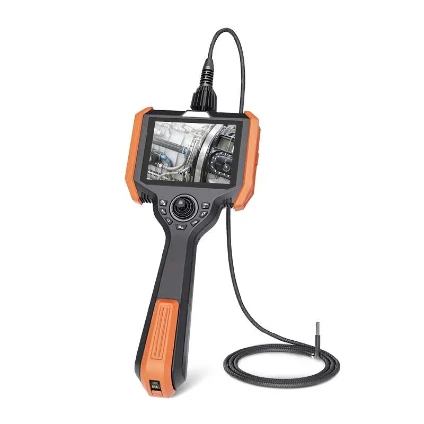
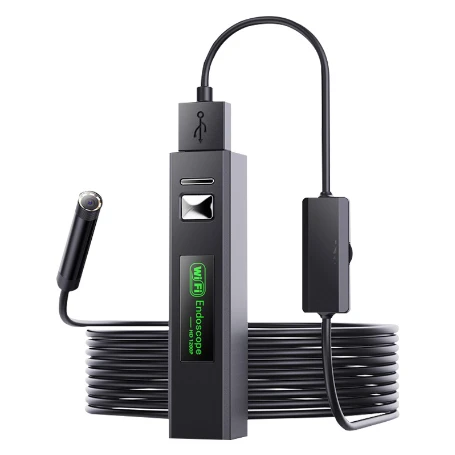
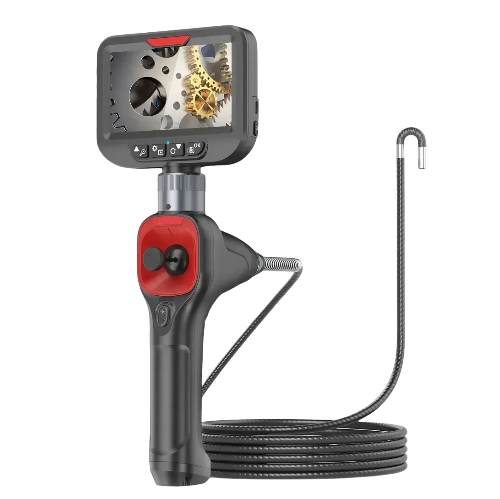
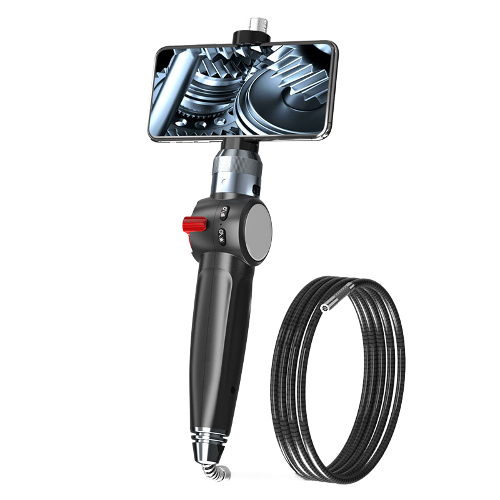
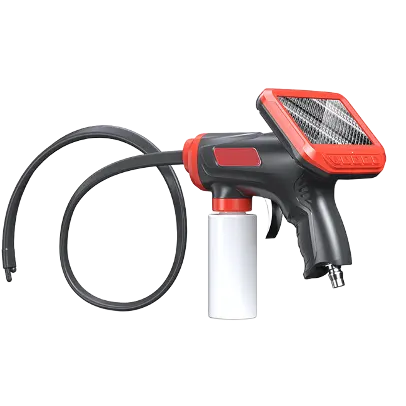
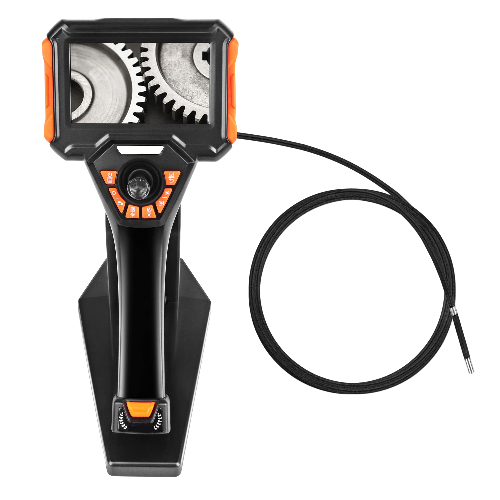
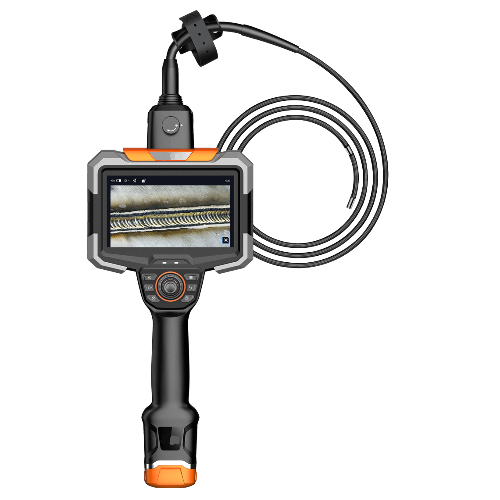
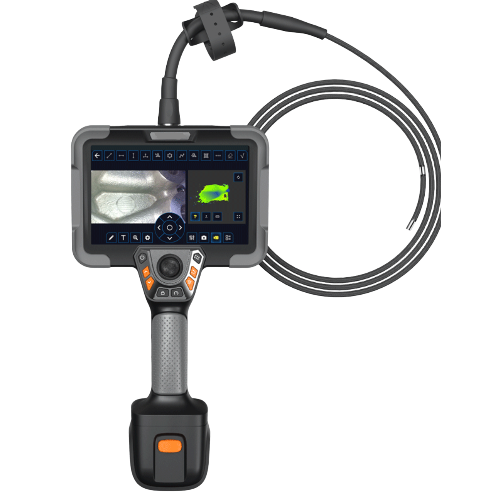
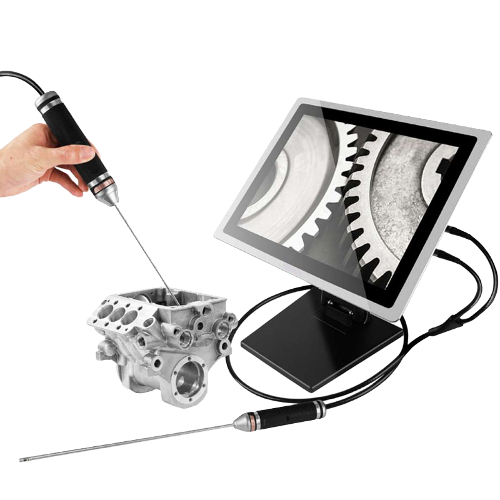
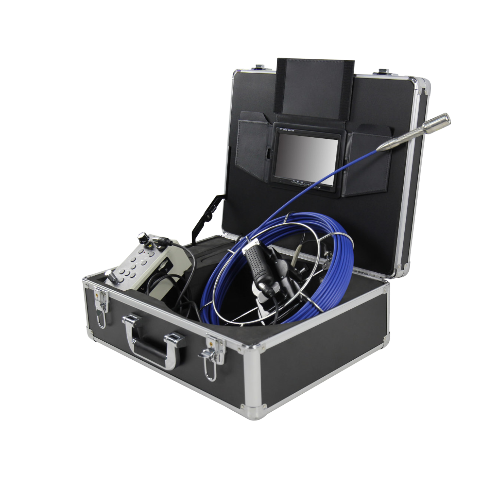
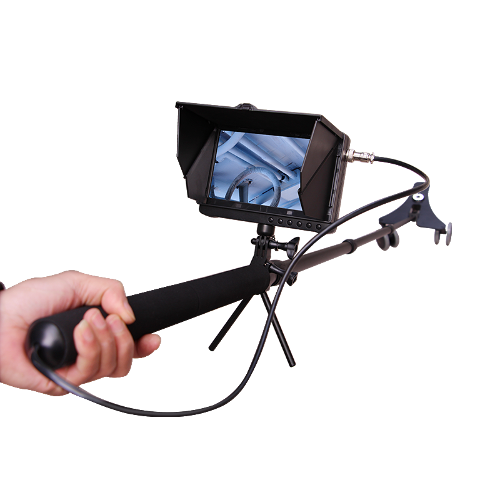
The engine is the core component of a vehicle. Operating continuously under high-temperature, high-pressure, and high-speed conditions, its critical internal parts—such as cylinders, pistons, and valves—are prone to carbon deposits, wear, scoring, and poor sealing. Equipped with a flexible, high-definition probe, an industrial borescope can reach deep inside the engine without disassembly through access points like spark plug holes and fuel injector ports, delivering clear real-time images to accurately locate the root cause of failures. It serves as a reliable tool for car owners to troubleshoot oil burning, rough idling, and carbon buildup, as well as a professional device for repair shops to achieve efficient diagnostics and transparent service, providing essential support for precise engine maintenance.
Why Industrial Borescope Inspection Is Necessary
To understand the value of borescope inspection, you first need to grasp the core structure and operating principles of an engine. A typical automotive engine consists of two mechanisms (crank-connecting rod mechanism, valve train) and five systems (ignition system, fuel supply system, cooling system, lubrication system, starting system). Its core working area lies inside the cylinders, including key components such as the cylinder block, piston, valve, combustion chamber, and fuel injector.
Simply put, an engine converts fuel chemical energy into mechanical energy through a four-stroke cycle: intake, compression, power, and exhaust. Fuel and air mix inside the cylinder, ignite via the spark plug, and explode to drive the piston and propel the vehicle. During this process, cylinders, pistons, valves, and other parts endure extreme heat and pressure, making them susceptible to wear, carbon deposits, and leaks—issues hidden inside the engine and invisible to the naked eye. This is where industrial borescopes play an irreplaceable role.
Engines are classified by fuel type (gasoline, diesel) and cooling method (water-cooled, air-cooled), but their core internal structures and vulnerable parts remain largely consistent, making borescope inspection universally applicable.

Common Engine Issues for Car Owners
Many drivers encounter abnormal engine symptoms in daily use. These are the primary targets of borescope diagnostics:
Oil Burning
Symptoms: Blue smoke from the exhaust, excessive oil consumption, pungent exhaust odor.
Car owner confusion: Is it worn valve seals, stuck piston rings, or scored cylinder walls? Repair costs and solutions vary drastically by cause.
Severe Engine Carbon Deposits
Symptoms: Hard cold starts, rough idle, weak acceleration, increased fuel consumption.
Car owner confusion: The shop recommends carbon cleaning—but do I really need it? How to prove before-and-after results?
Engine Noise and Vibration
Symptoms: Metallic knocking during operation or abnormal idle vibration.
Car owner confusion: Poor fuel quality, or mechanical damage to internal parts (pistons, connecting rods)?
Check Engine Light On
Symptoms: Illuminated check engine light with misfire trouble codes.
Car owner confusion: Faulty spark plugs, clogged injectors, or more serious low cylinder compression?
These common warning signs, if not diagnosed accurately, can lead to unnecessary engine teardowns, higher repair costs, and irreversible damage. The industrial borescope is the efficient solution to this pain point.
What Engine Problems Can Industrial Borescopes Detect?
With flexible probes and high-definition imaging, industrial borescopes access the engine interior without disassembly via spark plug or injector ports, transmitting real-time visuals to identify hidden failures across key vulnerable areas:
Accurately Identify Carbon Deposit Distribution
The most intuitive use: inspecting the combustion chamber to clearly view:
- Piston top carbon deposits: Check thickness and coverage. Heavy deposits alter chamber volume, raise compression ratio, and cause engine knocking.
- Intake valve back carbon deposits: A critical problem area for direct-injection engines. Borescopes reveal if carbon buildup prevents full valve closure and reduces intake efficiency.
Diagnose Cylinder Mechanical Damage
- Cylinder wall scoring: Slowly move the probe to inspect honing marks. Deep longitudinal grooves or excessive mirror-like wear indicate scoring—a common cause of severe oil burning that may require cylinder boring or block replacement.
- Pistons and piston rings: Check for piston top burning, erosion, or carbon jamming around piston edges.
Test Valve and Seat Sealing
- Valve sealing surfaces: Inspect for burning, pitting, or carbon deposits on valve heads and seats. Poor sealing causes low compression, misfires, and rough running.
Locate Foreign Objects and Hidden Risks
- Foreign object detection: The only reliable method to find dropped screws, gaskets, or carbon fragments inside cylinders during repairs. Prevents catastrophic engine failure from hydrolocking or component damage if started with debris inside.
Solutions After Borescope Inspection
The core value of industrial borescopes goes beyond finding problems—it provides precise data to avoid blind disassembly and reduce repair costs. Targeted solutions are based on inspection results:
Solution 1: Severe Carbon Deposits
Finding: Thick, wet carbon on piston tops and valve backs, with smooth, unscored cylinder walls.
Solution:
- Non-disassembly cleaning: Dry ice cleaning, walnut blasting, or chemical soaking.
- Result verification: Re-inspect with a borescope after cleaning. Side-by-side before/after visuals prove service quality and build customer trust.
Solution 2: Minor Scoring or Stuck Piston Rings
Finding: Light cylinder wall scoring or carbon-jammed piston rings without severe wear.
Solution:
- Non-invasive restoration: Use high-quality piston ring release agents with periodic borescope follow-ups.
- Transparent overhaul: If conditions worsen, borescope images justify necessary teardown and ring replacement, eliminating customer concerns about unnecessary repairs.
Solution 3: Severe Scoring or Burnt Valves
Finding: Deep, continuous cylinder grooves, burnt valve gaps, or unmaintainable compression.
Solution:
- Define overhaul scope: Images determine repair depth—single-cylinder fix, full engine replacement, cylinder boring, or new engine block.
- Accurate budgeting: Clear internal visuals let shops provide precise quotes and help owners make rational decisions.
Why Choose Industrial Borescopes? A Win-Win for Car Owners and Repair Shops
For car owners: No engine disassembly, fast root-cause diagnosis, avoidance of wasted money on unnecessary repairs, reduced secondary damage, and extended engine life.
For repair shops: Improved diagnostic efficiency, enhanced professionalism and credibility, fewer disputes, more customers, and stronger competitive advantage.
The engine is the heart of the vehicle. Industrial borescopes have revolutionized traditional engine repair. Next time your engine acts up, ask your technician: “Can you inspect it with a borescope?”