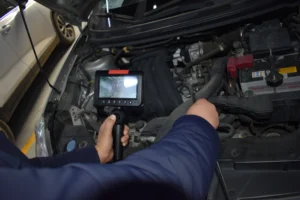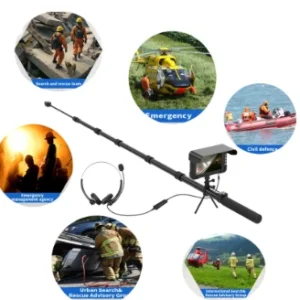

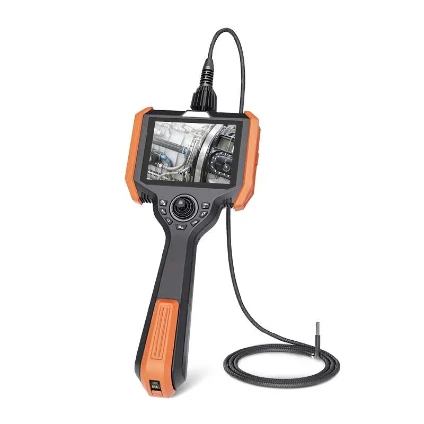
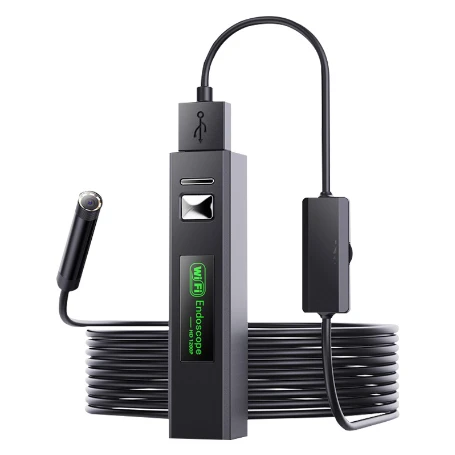
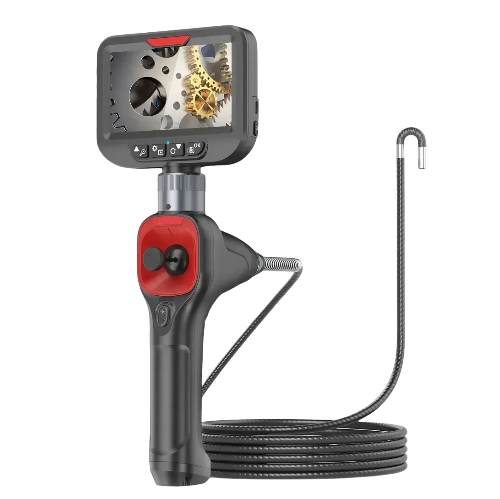
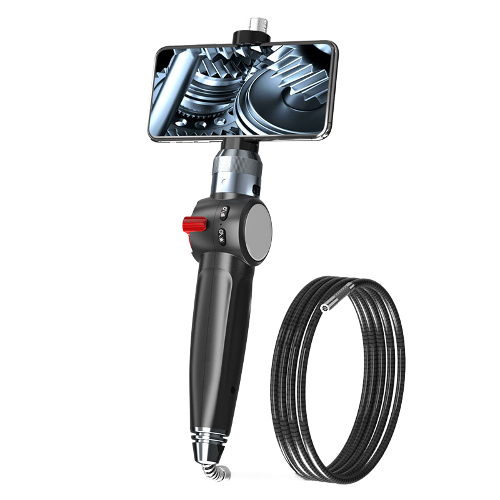
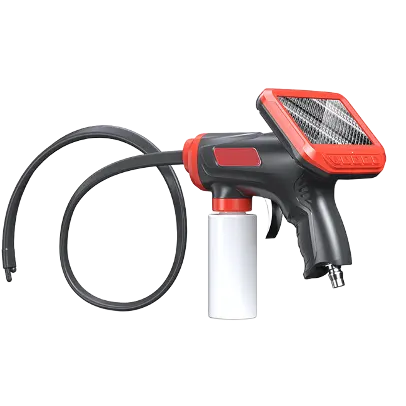
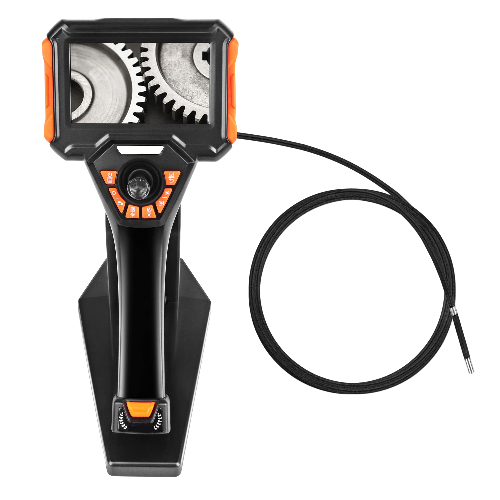
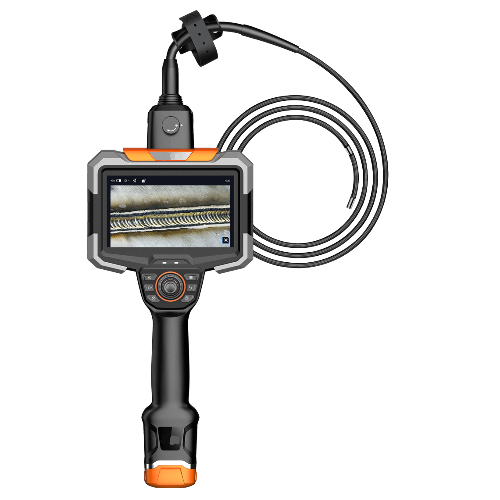
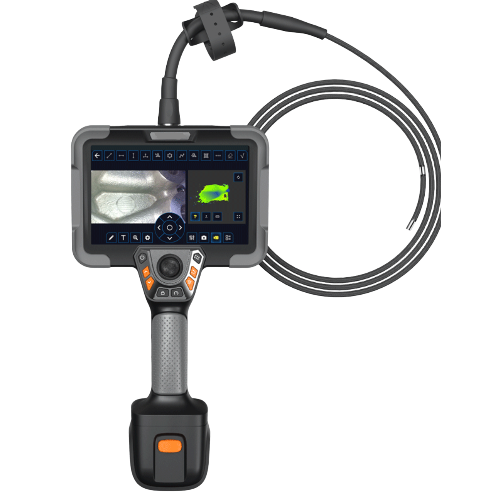
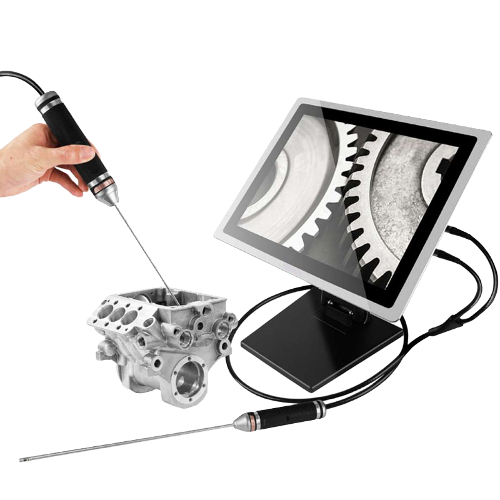
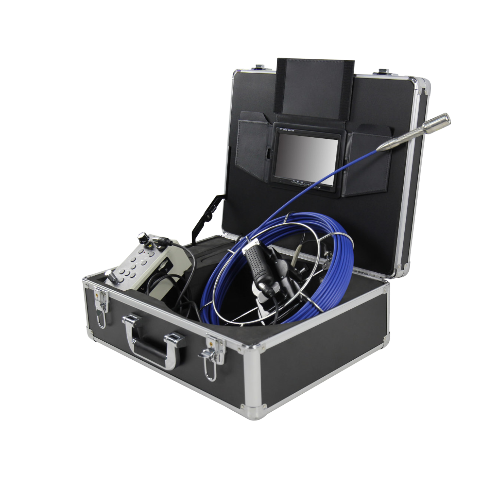
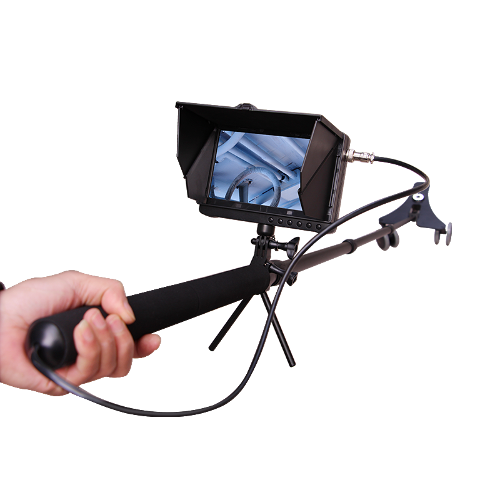
In industrial non-destructive testing, UV borescopes adopt ultraviolet fluorescence excitation technology to visualize subtle defects including microcracks and tiny pores. When purchasing this type of equipment, there is no need to blindly pursue high-end configurations. Matching equipment parameters with on-site working conditions and inspection requirements is the key to selecting cost-effective and practical solutions.
Confirm Hardware Configuration According to Actual Working Conditions
First evaluate the internal space and operating environment of test workpieces to determine suitable insertion tube specifications and guarantee smooth probe access. Common optional probe diameters cover 2mm, 4mm, 6mm and 8mm. Models equipped with 360° omnidirectional articulation are strongly recommended to effectively eliminate observation blind zones.
Select insertion tube length according to real inspection depth requirements. Normally the length should not exceed 10 meters; excessively long tubes will reduce maneuverability and degrade imaging clarity. Available viewing angle types include front view, side view and dual view, which can be configured flexibly based on inspection scenarios. Most devices adopt 3.5–7 inch high-definition display screens.
Industrial sites often face humidity, oil contamination and dust. Prioritize industrial-grade UV borescopes with reliable dustproof and waterproof ratings to sustain stable operation and consistent inspection accuracy under harsh conditions.
Attach Importance to Core Performance to Guarantee Imaging Quality
The light source constitutes the core component of a UV borescope. For professional industrial inspection, 365nm UV light sources achieve optimal fluorescence excitation effects and deliver clearer defect imaging. Single UV light units have limited applicable scenarios. If budget permits, integrated UV-white dual-light configurations are the preferred choice, supporting one-click light mode switching to adapt to diversified inspection tasks and greatly improving overall practicability.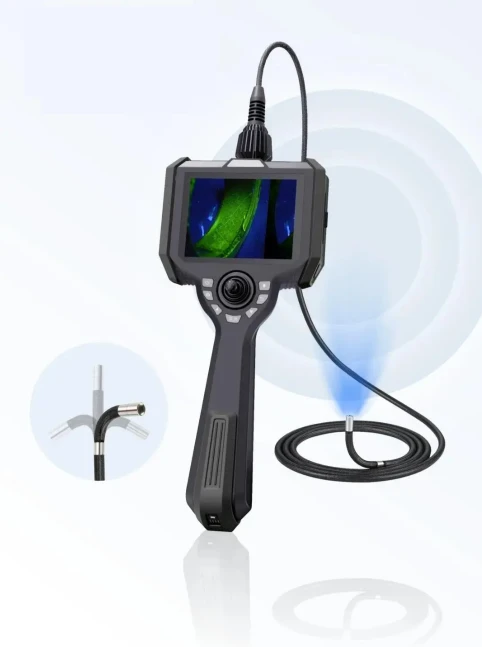
Select Practical Configurations and Avoid Redundant Functions
Reserve necessary hardware and optional accessories on demand:
- For microcrack inspection: Prioritize units equipped with a 365nm UV light source and 360° steerable probe;
- For leakage trace detection: Select UV-white dual-light integrated models;
- If inspection data archiving is required: Choose equipment supporting photo capture, video recording and data export;
- For large-scale outdoor field inspections: Focus on lightweight handheld design and long-cycle battery endurance.
Summary of Selection Principles
The core logic of UV borescope procurement is reasonable parameter matching. Define on-site working conditions clearly, prioritize key performance indicators, select auxiliary functions as required, and choose official qualified products with complete after-sales service support to obtain the most cost-effective industrial NDT solution.
As special precision testing equipment, UV borescopes carry relatively high procurement costs. They are recommended for scenarios requiring ultra-high detection sensitivity and micro-defect identification. Conventional white-light borescopes remain sufficient for ordinary routine visual inspection tasks.