
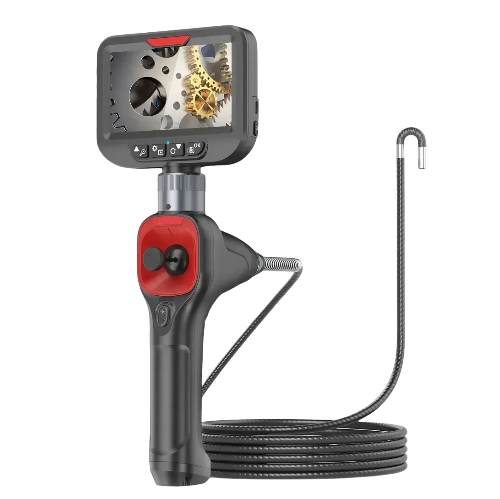
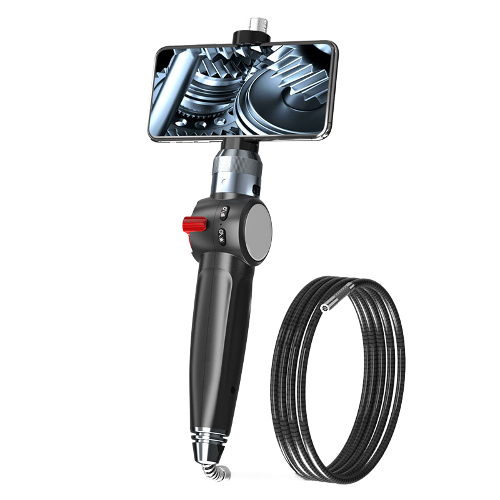
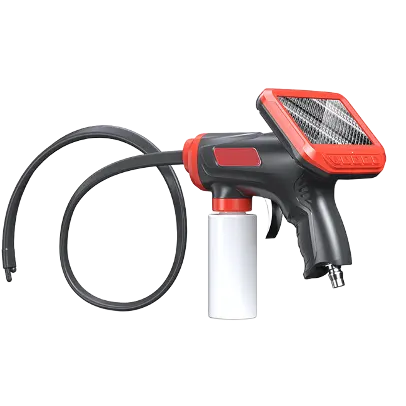
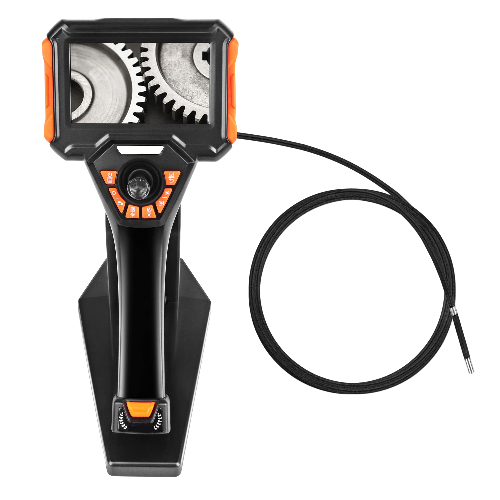
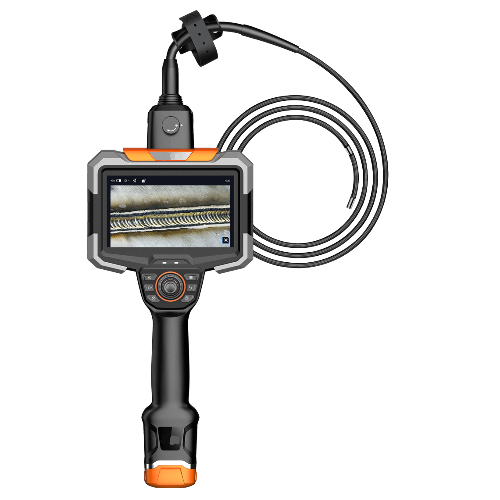
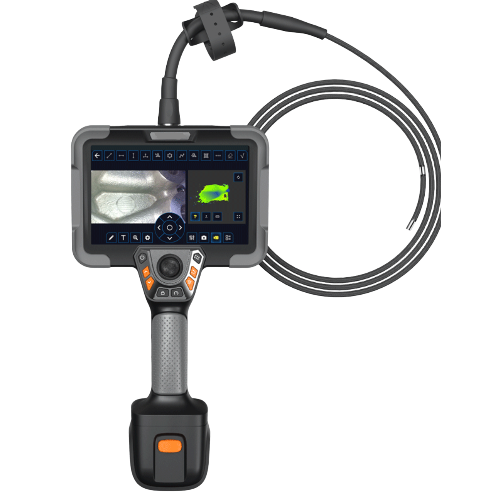
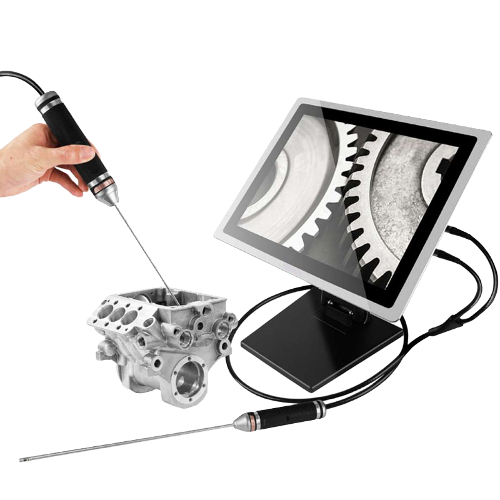
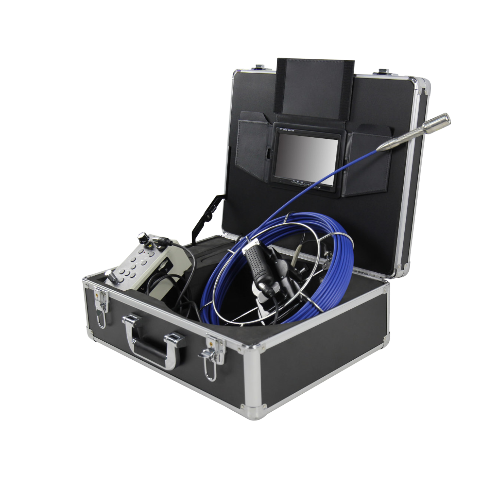
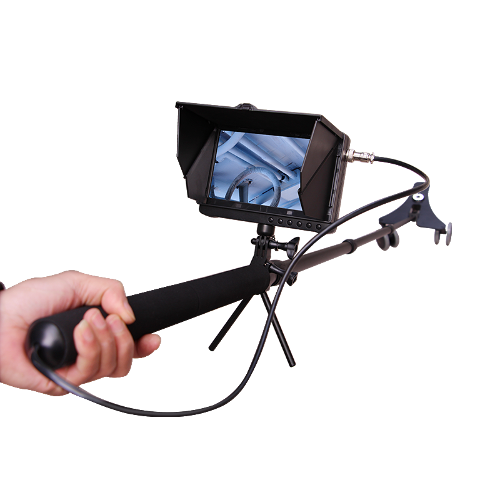
As vital equipment within industrial non-destructive testing (NDT), UV borescopes are stepping into a new development era alongside continuous innovation in light source, optical and intelligent technologies. Benefiting from the high sensitivity of fluorescence imaging, they enable accurate identification of micro-defects hard to capture via conventional inspection solutions and occupy an increasingly important position in high-end manufacturing and critical industrial scenarios. Currently, the whole industry carries out technical upgrading focusing on UV light source innovation, dual-light-source integration, AI empowerment and expansion into high-end application fields. Detection efficiency, inspection precision and intelligent level keep improving, making UV borescopes an important evolution direction for industrial NDT technology.
UV Light Source Technology Innovation
UV light sources achieve higher spectral purity and stability with optimized intelligent control technology, delivering superior excitation performance under lower power consumption. The 365nm monochromatic UV light source has become mainstream. It filters out 99% visible light interference and raises fluorescence contrast by three times. Pulsed UV light technology lowers thermal radiation, extends probe service life and prevents thermal damage to test specimens. Intelligent light intensity adjustment automatically adapts to varying detection distances and workpiece materials, cutting energy consumption by around 40%.
The whole fluorescence inspection workflow is being continuously optimized. For instance, mature built-in automatic fluorescent penetrant application modules boost inspection efficiency by 50% and reduce human operation errors. Automatic fluorescent residue identification technology avoids secondary contamination, satisfying strict cleanliness standards for food, pharmaceutical and related industries.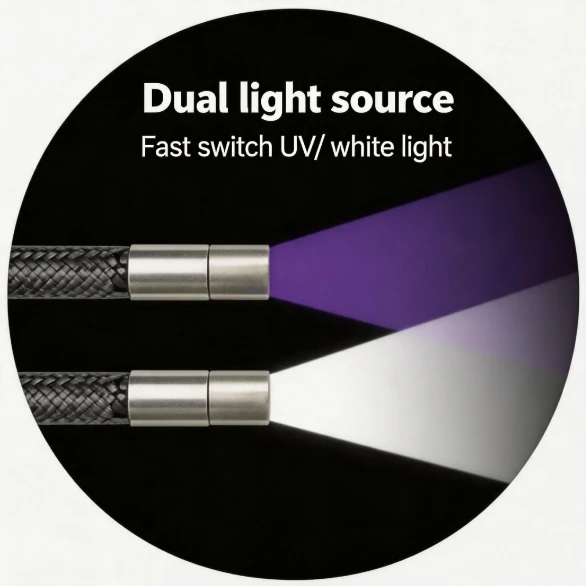
Dual-Light-Source Integration Becomes the Mainstream Hardware Trend
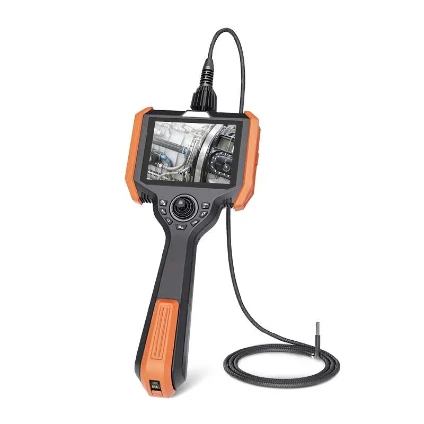
The most remarkable hardware evolution in the industry is integrated dual-light design, combining UV and white light within one single device and merging the strengths of two inspection modes. The core working logic is as follows: white light mode realizes rapid positioning of conventional defects including pipeline inner wall corrosion and mechanical part wear, offering intuitive macroscopic inspection references; UV mode precisely screens microcracks, leakage traces and contaminant residues invisible under ordinary visible light. One-click mode switching allows inspectors to finish the complete workflow of “rapid screening → precise positioning → detailed assessment” on one single device.
In-Depth Integration with Artificial Intelligence
A long-standing bottleneck of UV fluorescence inspection is that fluorescence signal interpretation heavily depends on inspector experience. Common challenges include judging whether fluorescent highlights correspond to genuine defects, quantitative evaluation of signal intensity, and unified judgment standards across different working conditions. AI systems are gradually solving these pain points.
Deep integration of AI algorithms and UV imaging lifts both inspection efficiency and accuracy, making such equipment preferred inspection tools for high-end markets. In the future, AI-powered UV industrial borescopes will automatically analyze the shape, area and intensity of fluorescence signals via image processing software to realize quantitative evaluation and auto-generate standardized defect reports, minimizing human misjudgment. Combined with optical measurement modules, AI can further analyze defect morphology and propagation trends, predict equipment remaining service life and provide objective scientific support for maintenance decision-making.
Market Expansion Driven by High-End Industrial Application Demand
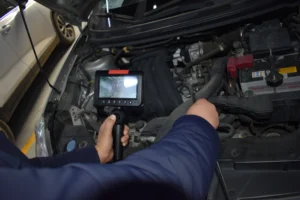
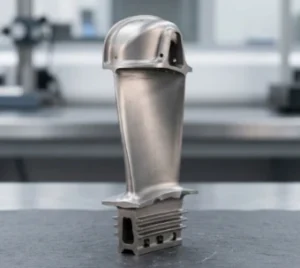
The penetration of UV industrial borescopes keeps rising alongside higher technical thresholds of high-end manufacturing. For high-risk sectors including aerospace, petrochemical engineering and nuclear power, maintaining equipment structural integrity is an unbreakable safety bottom line. Without equipment disassembly, UV fluorescence borescopes can reach complex internal structures, accurately locate microcracks, corrosion, contamination and foreign object inclusions, and progressively replace traditional white-light inspection in critical inspection links.
Advancements of Industry 4.0, widespread adoption of predictive maintenance, construction of smart factories, growing demand for high-resolution flaw detection and promotion of automated inspection workflows fuel market expansion. Especially for oil & gas and aerospace industries with stringent safety requirements, the irreplaceable advantages of UV inspection in preventive maintenance will continuously lift market penetration.
Summary
UV borescopes are evolving steadily toward purer light sources, richer integrated functions and higher intelligence. Dual-light-source architecture and deep AI integration effectively address major pain points of conventional inspection. Continuous demand from high-end industries drives sustained technical iteration. Moving forward, this type of equipment will create greater value in non-destructive testing and predictive maintenance, providing more reliable and efficient technical guarantees for industrial safety management and full-process quality control.