
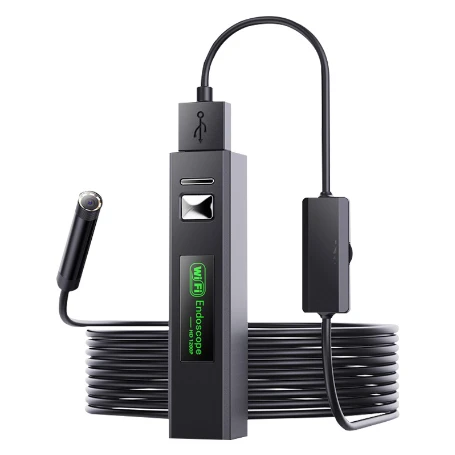
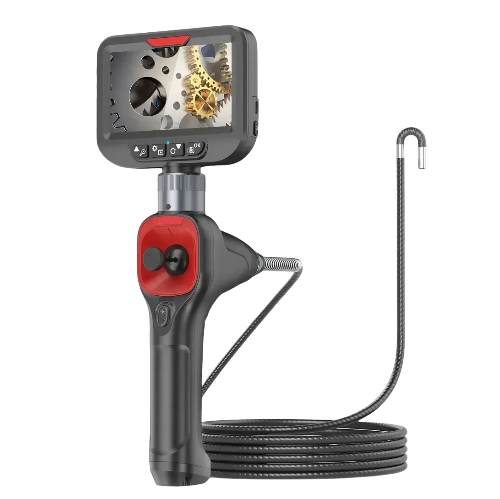
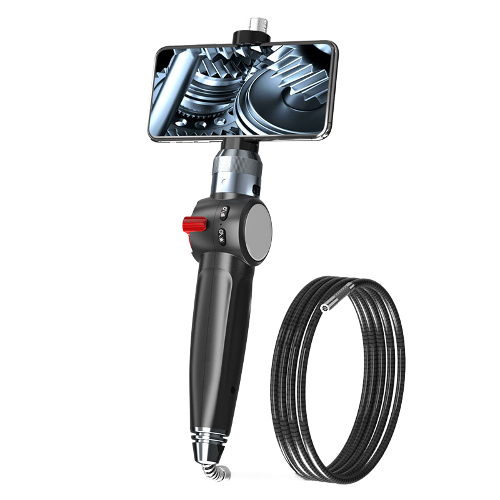
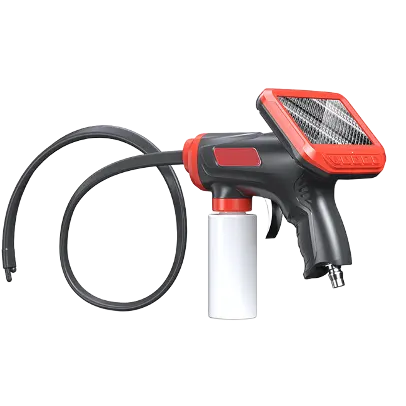
As sightseeing helicopters glide along coastlines and shuttle through urban skyline landscapes, passengers only enjoy panoramic beautiful views. However, behind every safe takeoff, turbine blades, combustor liners and all core internal engine components endure heavy wear caused by frequent flight cycles and harsh operating environments. Most internal defects are hidden in blind zones unreachable by naked eyes — and industrial borescopes become the core inspection tool to solve this problem.
What Is an Industrial Borescope, and How Does It “See” Inside an Engine?
Turboshaft engine core parts including turbine blades, combustors and nozzle guide vanes are completely enclosed inside the engine casing. Traditional full or partial engine disassembly inspection takes several days and brings hidden risks of assembly errors during reassembly. Industrial borescopes eliminate tedious disassembly work entirely: technicians can directly access the engine interior and observe all rotating components under real service operating conditions.
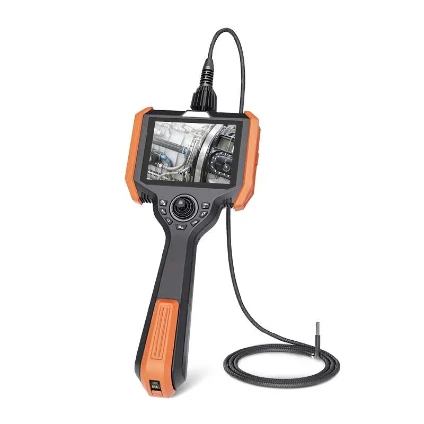
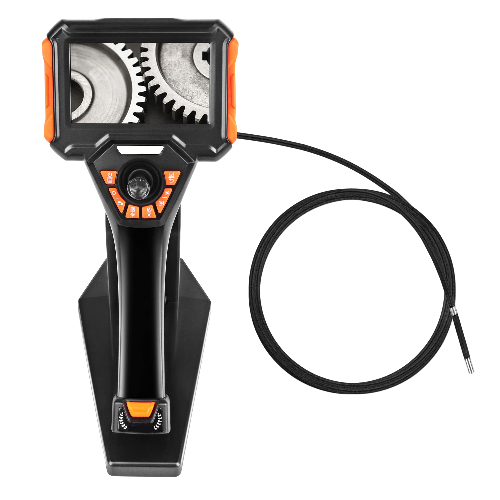
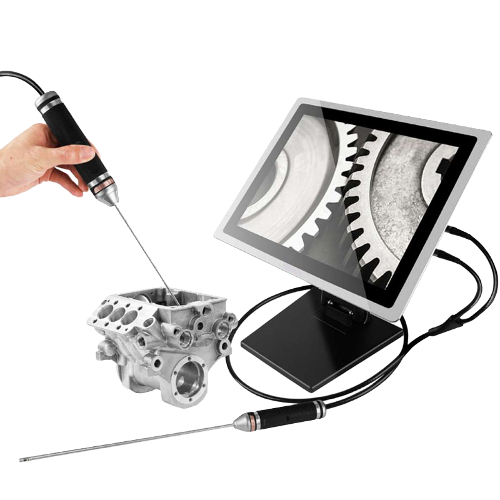
The core of the equipment is a flexible steerable probe that can go deep into engine gas passages. A miniature high-definition camera and cold light source are installed at the probe tip. The probe is inserted through dedicated borescope ports and advances stage by stage along the gas flow channel. Cold light sources play an irreplaceable role: inside narrow closed engine cavities, heat generated by ordinary lighting will change the surface appearance of metal parts and interfere with defect judgment, while cold light provides sufficient uniform illumination without thermal interference, truly restoring the original surface state of components.
The probe diameter determines the accessibility of narrow curved passages. Current aviation-grade mainstream probes reach a minimum diameter of 4mm, which can smoothly pass through standard engine inspection ports and reach turbine blade rows and combustor inner walls inaccessible to hand tools and conventional testing instruments. Thinner probes effectively reduce inspection blind spots, which is particularly important for sightseeing helicopters with compact engine compartments.
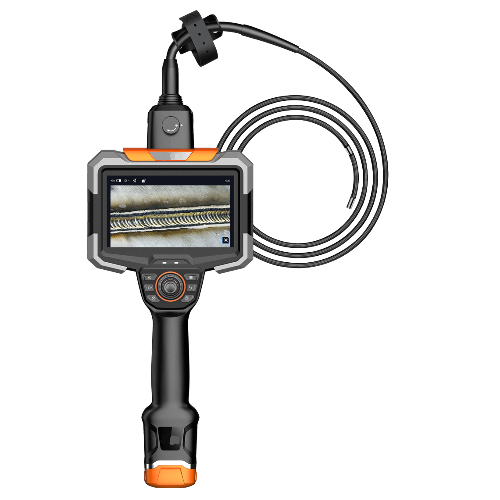
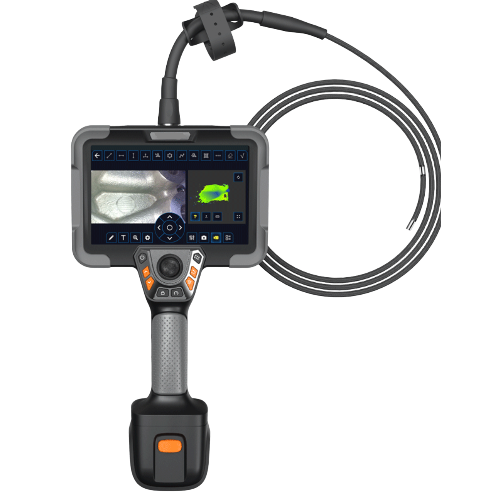
Simple visual observation of damage is far from enough; the core advantage of modern industrial borescopes over traditional optical endoscopes lies in built-in 3D quantitative measurement function. Once the probe captures tiny cracks, erosion traces or edge deformation on turbine blades, the system can directly calculate multiple dimensional indicators based on real-time images, including crack length, erosion depth and deformation range. Inspection results are no longer simple pass/fail judgments, but provide accurate damage severity data for maintenance teams to decide whether the helicopter needs to be grounded for overhaul.
Multi-angle probe articulation is equally critical. Engine blades are densely arranged in an annular structure, and defects often appear on the trailing edge, side surfaces and blade roots that cannot be captured by straight front viewing. Multi-directional steerable probes flexibly navigate narrow confined spaces, scan blade back surfaces and root areas prone to hidden faults, and greatly lower the risk of missed inspection.
The combination of slim probe diameter, cold light imaging, 3D measurement and full-range articulation enables industrial borescopes to realize nearly radiographic comprehensive internal detection without opening the engine casing. For sightseeing helicopter operators, this means more accurate and faster inspection, shortening aircraft ground waiting time and improving flight operation safety confidence.
Borescope Inspection Covers the Whole Operation Cycle of Sightseeing Helicopters
Different from large civil aviation fixed-wing aircraft, sightseeing helicopters rarely stay long-term at fully equipped professional maintenance bases. Most operators need to complete routine or emergency temporary inspections at temporary landing points, field hangars and remote scenic service stations. Therefore, equipment portability is an essential operational demand rather than an optional extra feature.
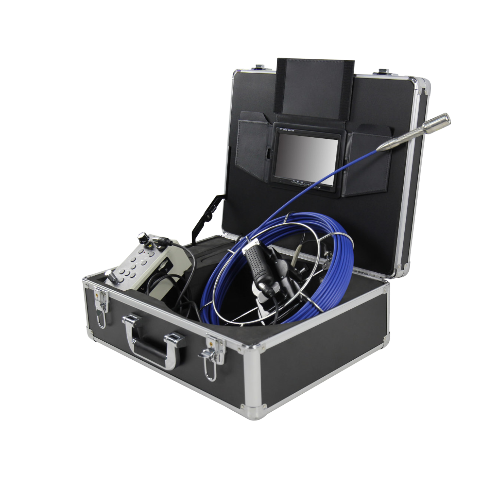
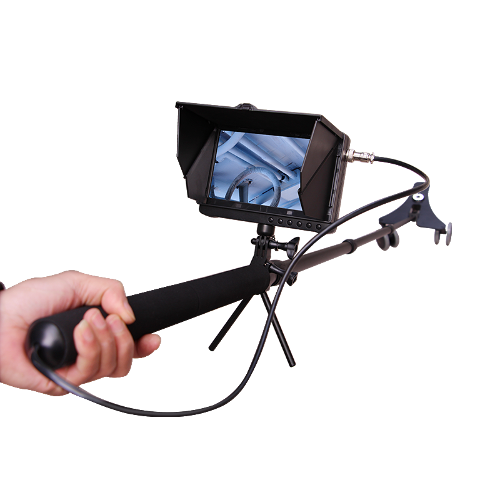
Industrial borescopes have been optimized for on-site field use: early fixed laboratory equipment connected to external light sources and power supplies has evolved into integrated battery-powered all-in-one devices that can be stored in portable carrying cases and work continuously for hours without external power. The probe, control host and display screen are integrated into one lightweight unit, allowing technicians to complete full engine borescope inspection on the apron, temporary hangar or any site without stable power supply.
Portability is also reflected in convenient data management. Inspection photos, videos and measured data are directly stored on the local device, and inspection reports can be exported on-site without separate recording equipment or waiting for delayed data transmission. For sightseeing fleets with tight flight turnover intervals, a complete internal inspection can be finished in the gap between two tourist flights, avoiding flight delays or long-term aircraft grounding for dedicated maintenance work. Borescope inspection covers every link of the helicopter service cycle: new aircraft incoming acceptance inspection, regular inter-flight routine check and field emergency fault troubleshooting.
Core Inspection Objects: Turboshaft Engine and Transmission System
During sightseeing helicopter operation, borescope inspection focuses on components most vulnerable to damage under frequent cyclic operation and complex atmospheric environments, which cannot be effectively checked from the exterior of the airframe.
Turboshaft Engine Hot Section Components (Primary Inspection Target)
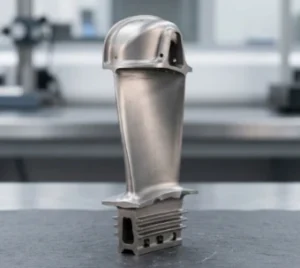
Turbine blades, nozzle guide vanes and combustor liners work under long-term high temperature and high pressure, where microcracks, surface erosion and thermal barrier coating peeling are most likely to occur in the early stage. Technicians send the slim probe through reserved ports to scan each row of blades one by one, capture early tiny defects and prevent fault expansion leading to serious flight risks.
Main Gearbox and Transmission System
The engine transmits power to the rotor through gearboxes and drive shafts. Long-term high-load operation easily causes gear tooth surface wear, bearing fatigue and metal abrasive particle accumulation. Borescopes enter the sealed gearbox cavity to observe gear meshing status, and combine metal debris inspection to predict potential transmission failures in advance.
Engine Inlet and Exhaust Ducts
This is a standard supplementary inspection item, especially for helicopters operating along coastal or dusty scenic routes. Salt fog corrosion and foreign object debris (FOD) inhalation will cause irreversible damage to the inner wall of pipelines, which needs regular visual monitoring.
Key Standards for Selecting a Suitable Industrial Borescope
A wide variety of industrial borescopes are available on the market. Operators and MRO workshops are recommended to sort out actual inspection demands first, and select matching equipment by referring to the following core indicators:
- Probe diameter and effective working length (priority index): Different turboshaft engine models are equipped with inspection ports of different sizes, so the probe diameter must match the port aperture. The working length determines whether the probe can pass through curved gas passages to reach all designated inspection areas and complete full coverage scanning.
- Imaging resolution and light output power: Engine internal spaces are narrow and dark, and clear images are the basic premise for identifying microcracks, erosion and deformation. Insufficient resolution or light intensity will lead to missed tiny defects. For high-standard inspection scenarios, optional UV auxiliary light, infrared detection and 3D measurement modules can be matched according to actual needs.
- 3D quantitative measurement function (distinguishes entry-level and professional aviation models): Simple visual observation and accurate numerical quantification are two completely different capabilities; only measured data can provide reliable objective basis for maintenance disposal decisions.
- Portability and battery endurance: Compared with other aviation industries, sightseeing fleets carry out more field off-base inspections, so independent battery power supply and lightweight carrying performance directly affect daily inspection efficiency and fleet turnover rate.
- Full-range tip articulation performance: Multi-directional 360° steerable probes can reach blade roots and back surfaces that cannot be observed by straight viewing angles, effectively eliminating inspection blind spots.
Comprehensive evaluation of all the above indicators instead of simply comparing prices and single parameter data is the correct way to select equipment matching the fleet scale and operating environment.
Conclusion
Industrial borescopes expose invisible hidden hazards ranging from microcracks on turbine blades to gearbox tooth surface wear that cannot be seen by naked eyes. They never appear in sightseeing helicopter promotional materials, but every safe takeoff and landing relies on meticulous internal inspection supported by this equipment. Its core value lies in fully guaranteeing the flight safety of all sightseeing passengers.
FAQ
How often does a sightseeing helicopter need a borescope inspection?
The inspection cycle is formulated based on the official engine maintenance manual, cumulative flight hours and actual operating environment. Helicopters operating on routes with frequent takeoff-landing cycles, heavy salt fog or dust pollution require shorter inspection intervals than standard fleets. All operations must strictly follow the official maintenance program corresponding to the aircraft model.
What is the difference between borescope inspection and traditional disassembly inspection?
Traditional disassembly inspection requires partial or complete engine teardown to observe internal components, which takes a long time and brings the risk of new faults caused by improper reassembly. Borescopes directly enter through dedicated inspection ports to observe the real state of internal parts without disassembly, greatly improving inspection efficiency and eliminating secondary damage risks brought by repeated disassembly and assembly.
Which parts of sightseeing helicopters are the most important for borescope inspection?
The primary inspection targets are hot-section components of turboshaft engines including turbine blades, combustors and nozzle guide vanes, as well as main gearboxes and transmission systems. These components work under long-term high temperature, high pressure or heavy mechanical load, and their internal defects cannot be detected through external visual inspection.
How long does a standard borescope inspection take?
The specific time depends on engine structure, quantity of inspection points and severity of found defects. In contrast to disassembly inspection that may take several days, a complete borescope inspection is usually finished within several hours, perfectly adapting to the short turnover window between sightseeing flights.