
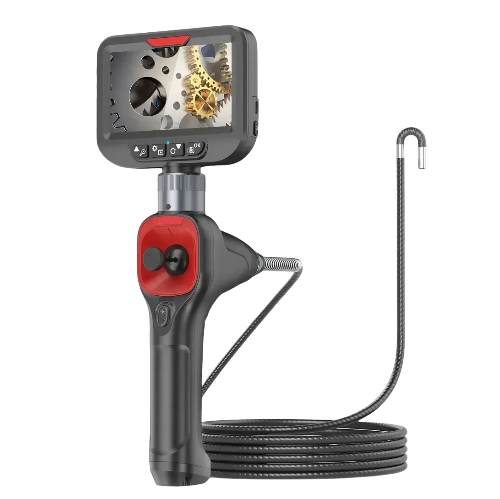
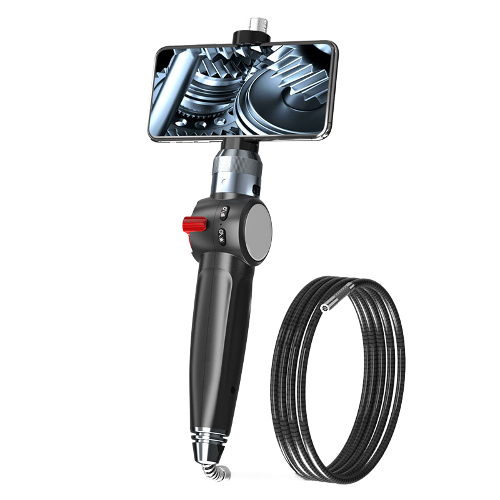
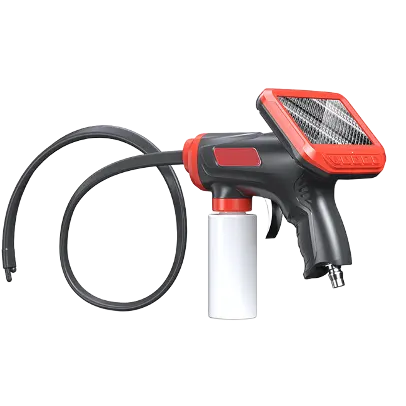
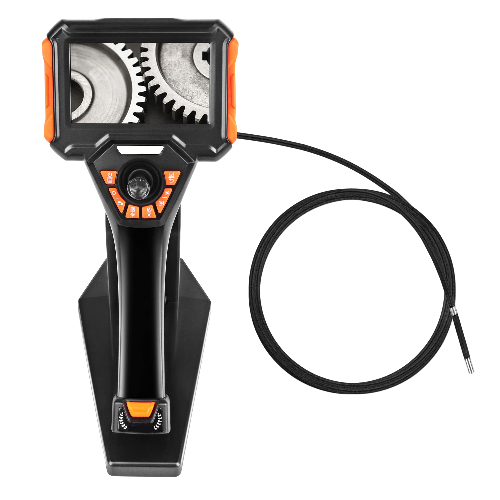
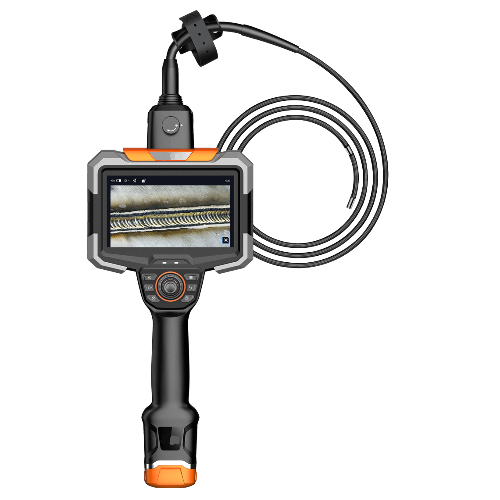
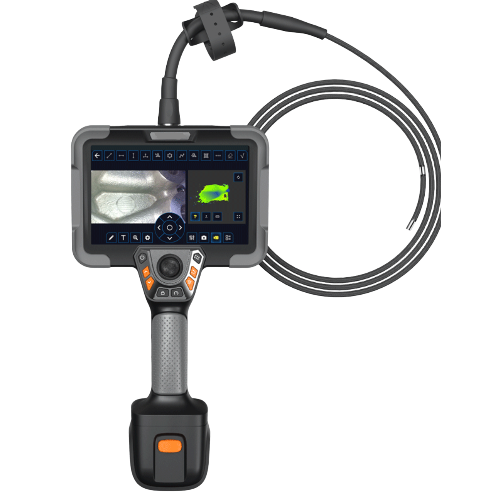
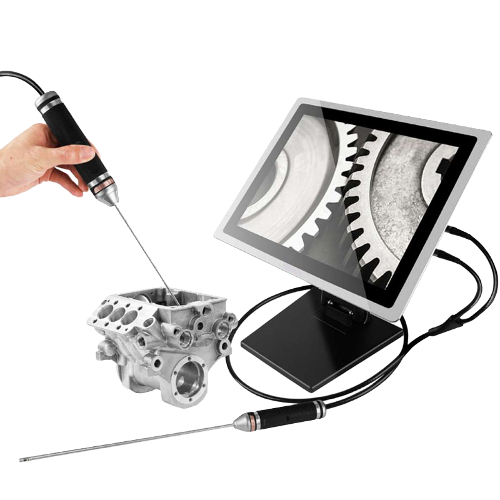
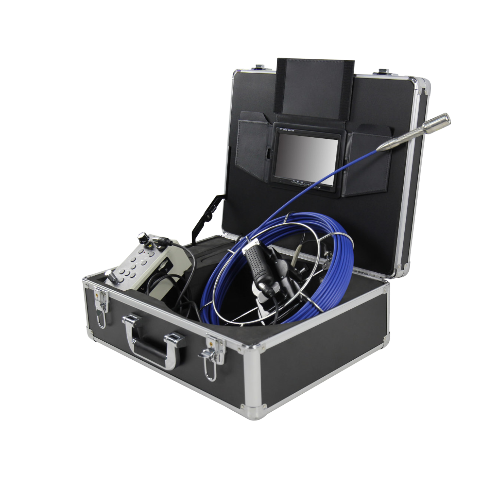
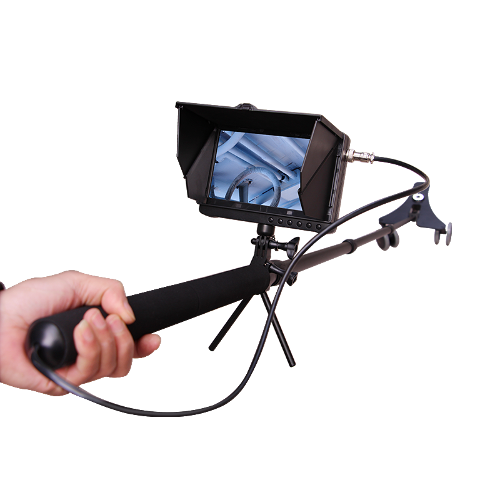
All aviation maintenance practitioners recognize industrial borescopes as indispensable NDT equipment for aircraft routine inspection. Whether checking tiny cracks on engine blades, combustion chamber erosion or turbine surface damage, the slim flexible probe can penetrate deep into confined inaccessible cavities to complete visual diagnosis. However, a core selection confusion always troubles procurement and maintenance teams: when purchasing aviation dedicated borescopes, should you pick motorized articulation models or manual steering versions?
Core Structural Differences Between Manual and Motorized Articulation Borescopes
Manual Articulation Borescope (Mechanical Steering)
It adopts full mechanical transmission architecture. The handle joystick pulls the probe tip directly through steel cables without intermediate electronic control components. Every slight movement of fingers is transmitted to the probe tip at a 1:1 force and angle ratio, realizing fully synchronous mechanical linkage.
Motorized Articulation Borescope (Electric Motor Steering)
It relies on electronic control circuits to drive miniature built-in motors, and the motor then pulls steel cables to adjust the probe tip angle. Joystick manipulation signals are first converted into electrical data, processed by the main control board, and finally drive the motor to bend the probe head. This electronic control layer supports multiple intelligent functions unavailable on manual equipment, including micro step fine-tuning, variable steering speed and one-click automatic tip reset.
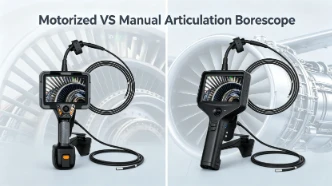
Comparison Table: Manual VS Motorized Articulation Borescopes
| Comparison Factor | Manual Articulation Borescope | Motorized Articulation Borescope |
|---|---|---|
| Control Driving Mode | Pure manual steel cable direct traction | Circuit-controlled motor drives cable steering |
| Operation Response | Zero delay, excellent hand-eye synchronization, intuitive operation feedback | Slight signal delay; negligible lag on mid-to-high-end aviation models |
| Long-term Operation Fatigue | Continuous force required, obvious wrist soreness after long working hours | Light-touch joystick, greatly reduces operator fatigue during full-day shifts |
| Fine Adjustment Precision | Natural intuitive operation, vulnerable to hand shake interference | Step micro-adjustment + angle locking function, ultra-stable static imaging precision |
| Reliability & Environmental Adaptability | All mechanical parts, low failure rate, resistant to oil, grease and dust pollution | More electronic components, relatively sensitive to severe polluted maintenance environments |
| Later Maintenance Cost | Simple structure, low repair and spare parts cost | Higher maintenance expense; motors and main control boards have expensive replacement costs |
| Initial Purchase Price | Lower overall equipment cost | Higher configuration and procurement cost |
| Built-in Intelligent Functions | Only basic image capture and lighting adjustment functions | Rich intelligent modules: one-click reset, speed switching, angle lock, 3D measurement, data archiving etc. |
| One-handed Operation Experience | Average; need constant holding force to fix probe angle | Excellent; lightweight joystick integrates multiple shortcut keys for one-handed operation |
| Applicable Scenarios | Short-time line inspection, budget-limited teams, high portability field work | Deep cavity detection, high-precision flaw measurement, mass high-efficiency maintenance operation |
Aviation Inspection Scenario Selection Guide
After sorting out technical differences, we match equipment selection standards with real aviation maintenance work scenarios for clear reference:
Choose Manual Articulation Borescope If The Following Conditions Apply
- You are engaged in aircraft line maintenance and AOG emergency troubleshooting: Field work requires rugged, portable equipment with instant zero-delay response for rapid emergency inspection without pre-operation preparation.
- Daily work mainly covers routine compressor blade full scanning: Wide-range quick surface screening does not demand ultra-fine static measurement, and manual mechanical steering delivers more natural, agile operating experience.
- Small-scale MRO workshop with low daily inspection volume: Limited procurement budget, low equipment usage frequency, manual models cut purchase and long-term maintenance overhead.
- For new inspector skill training: Direct mechanical tactile feedback helps novices quickly master probe resistance and angle control logic, shortening technical training cycles.
Choose Motorized Articulation Borescope If The Following Conditions Apply
- Carry out heavy base maintenance and C/D full heavy airframe checks: Long-duration continuous daily inspection; labor-saving electric joystick reduces fatigue, lowering human error rates and improving overall workshop throughput.
- High-precision turbine blade flaw detection tasks: Micro step adjustment and angle lock eliminate hand shake interference, capturing stable clear images of micro cracks, impact dents and coating peeling, supporting accurate 3D quantitative measurement.
- Deep curved combustion chamber inner cavity inspection: Complex multi-bend narrow passages demand large-angle tip deflection; motorized probes realize wider articulation range and smoother navigation in confined spaces.
- Standardized SOP full-process inspection management: Need complete formal inspection reports with defect annotation, measured data and image archiving; high-end motorized borescopes are equipped with complete supporting data processing software and measurement modules.
- Single equipment for multi-scenario mixed use: The same borescope undertakes engine hot-section inspection and long airframe pipeline detection; motorized models perform more stably with long insertion tubes under variable lighting conditions.
Both manual and motorized steering technologies are fully mature on the market. Innavi specializes in aviation-grade industrial borescopes, providing complete product lines of manual and motorized articulation equipment, all optimized and customized to adapt to the special harsh working conditions of aviation maintenance. If you are selecting borescopes for aviation inspection and cannot confirm the matching model, provide your main inspection scenarios, daily usage frequency and procurement budget, and we will deliver targeted, actionable equipment selection suggestions.
FAQ
1. What is the core difference between manual and motorized articulation borescopes for aviation inspection?
The core distinction lies in the probe steering transmission mode. Manual versions adopt pure physical steel wire direct drive with zero operation delay and no electronic control components. Motorized models use motor drive controlled by circuits, with slight signal delay but supporting micro step fine-tuning and angle locking. The two types have obvious gaps in durability, comprehensive cost and applicable maintenance scenarios.
2. Why are motorized borescopes recommended for all-day base heavy checks and precision turbine blade inspection?
The lightweight electric joystick effectively relieves wrist fatigue during long shifts. Step fine adjustment and angle lock functions avoid image blurring caused by hand tremor, capturing stable clear footage of micro cracks and coating defects. Built-in professional measurement software supports standardized aviation inspection report storage and archiving.
3. Which articulation borescope suits small low-frequency aviation MRO shops with tight budgets?
A manual articulation borescope is the preferred choice. It features lower upfront purchase cost, simple low-failure mechanical structure and minimal daily maintenance expenditure, fully meeting routine compressor blade inspection demands for small workshops with low daily inspection volume.
4. Should beginners pick motorized or manual borescopes first?
New technicians are recommended to start with manual articulation borescopes. Direct mechanical tactile feedback helps operators build intuitive control awareness of the probe and perceive internal resistance in narrow cavities. After mastering basic operation skills, you can decide whether to upgrade to a motorized model according to actual daily workload.
5. Which type performs better for long continuous inspection work: motorized or manual borescopes?
Motorized borescopes are more suitable for long-duration inspection tasks. Manual steering requires sustained manual pulling force, leading to severe wrist fatigue after hours of operation. Motorized joysticks need little operating force, greatly reducing inspector fatigue during full-day base heavy checks and lowering the probability of judgment errors caused by physical exhaustion.