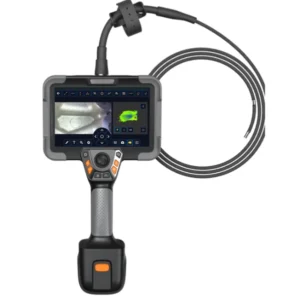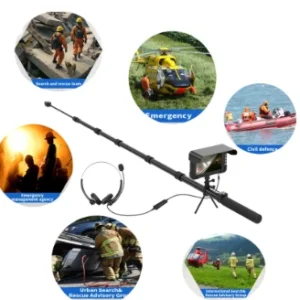

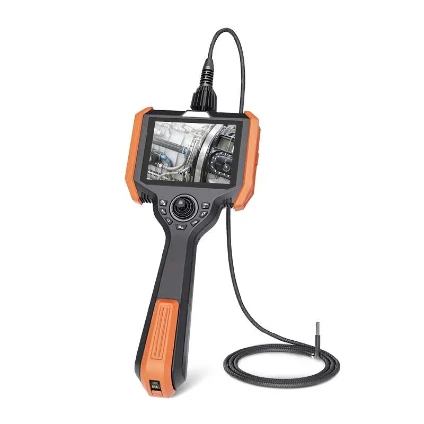
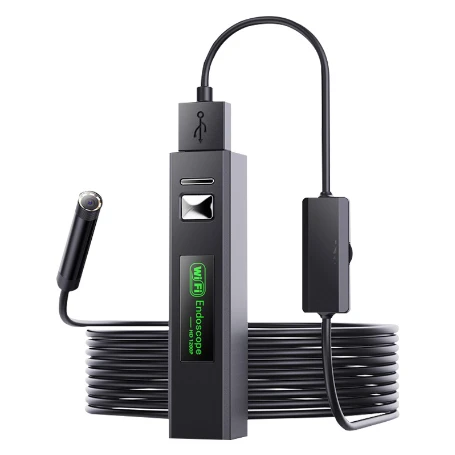
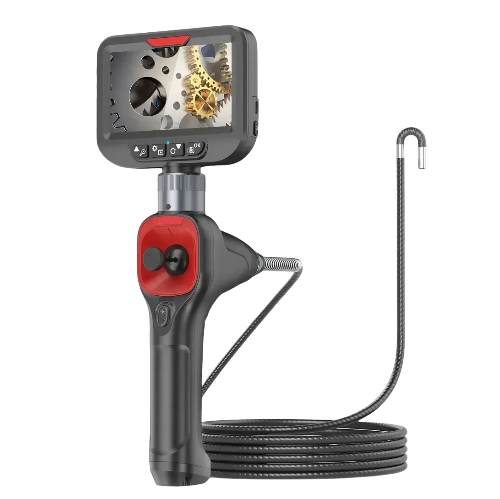
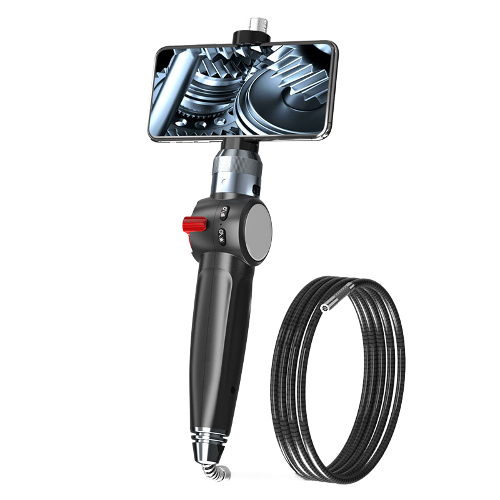
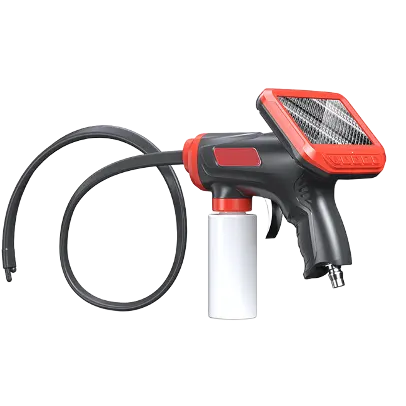
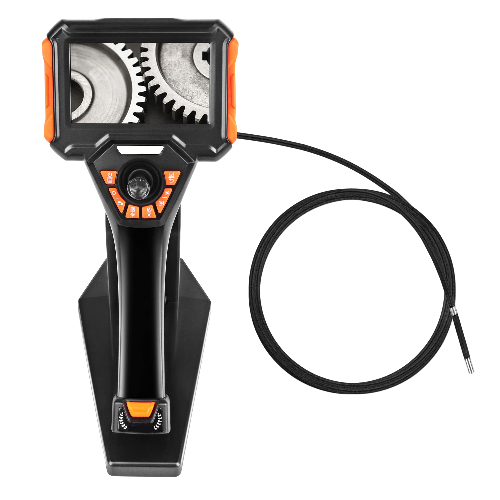
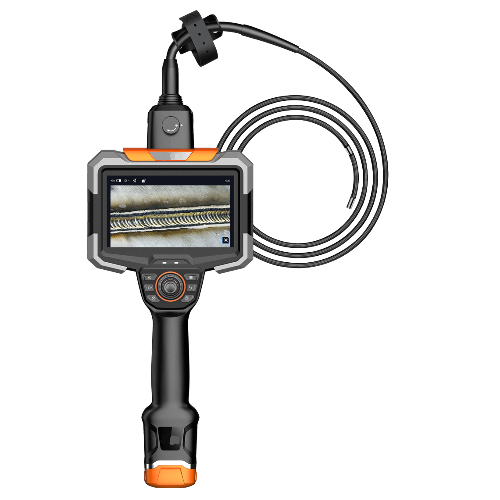
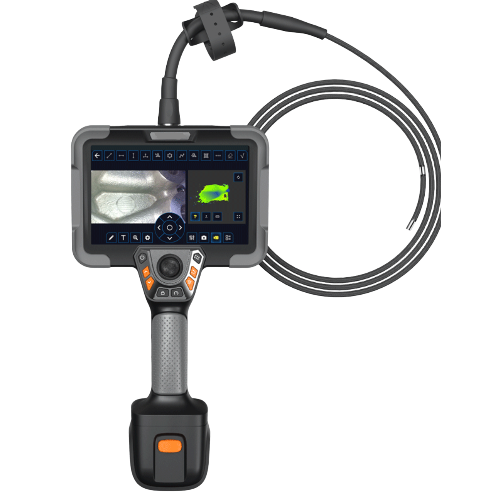
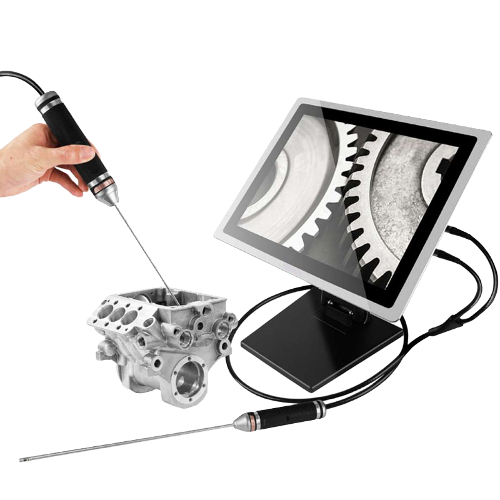
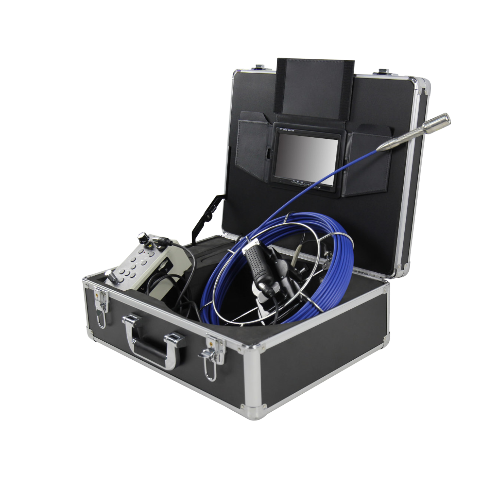
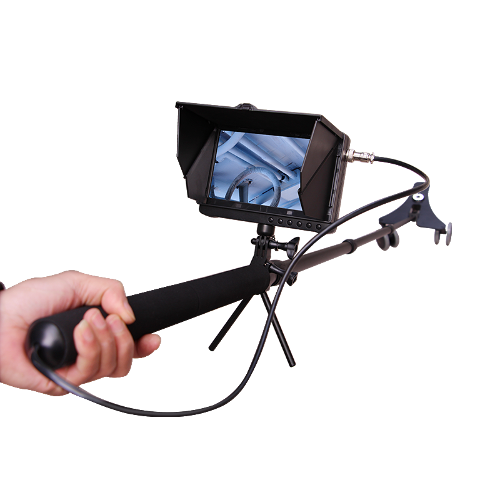
Telescopic inspection camera is a kind of portable visual detection tool that integrates a high-definition camera, telescopic pole, display screen and controller. As a powerful tool for inspecting hard-to-reach and elevated areas, it solves the common challenges of “unreachable and invisible blind spots”, while ensuring safe operation for on-site personnel.
The Key Factors for Choosing Telescopic Inspection Camera
Telescopic Pole
The telescopic pole solves the core challenge of reaching inaccessible areas. When selecting a telescopic camera, three factors should be prioritized: material, weight, and length. At present, telescopic poles are mainly available in three materials: aluminum alloy, stainless steel, and carbon fiber.
Aluminum alloy features light weight and cost-effectiveness, but has limited rigidity. Poles over 4 meters are prone to shaking or bending during operation.
Stainless steel provides high structural strength and excellent corrosion resistance, yet its heavy weight is not suitable for long-time handheld work.
Carbon fiber balances high strength and lightweight performance, perfectly suitable for frequent stretching and high-altitude inspection. It is the preferred material for high-end telescopic inspection equipment.
The extended length should match the actual height and depth of inspection scenarios. For daily conventional use, a 3-meter aviation-grade aluminum alloy pole fully meets general demands. For working heights over 4 meters, carbon fiber effectively ensures stability and anti-shake performance. Meanwhile, the folded size directly affects portability; compact storage size and fast modular assembly are also essential considerations.
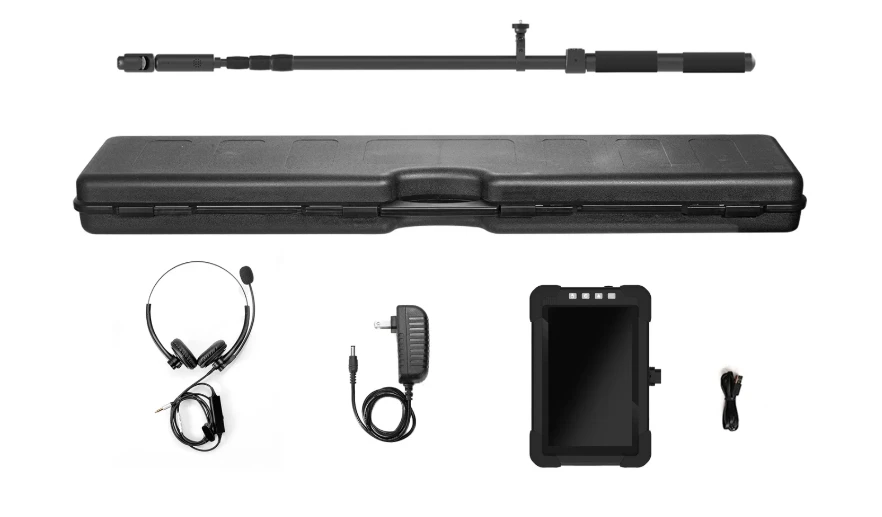
Camera Performance
The camera determines overall imaging clarity and solves the problem of unclear observation in complex environments. It is recommended to select a high-resolution camera with a wide viewing angle above 120°, which greatly reduces inspection blind spots.
Select functional lenses according to different application scenarios: for life rescue tasks, models with two-way voice intercom or infrared thermal imaging are highly practical; for anti-terrorism and hidden danger investigation, infrared night vision cameras ensure effective detection in dark spaces. In terms of durability, the lens shall reach IP67 waterproof and dustproof rating to adapt to harsh working conditions such as rain, humidity and dust.
Host and Display
The display host ensures real-time and clear visual feedback. A 7–10 inch widescreen is widely adopted in the industry, balancing viewing experience and handheld portability. Standard configurations include one-click photo capturing, video recording and real-time playback for on-site evidence recording and data storage.
Outdoor inspection requires strong anti-glare design, dustproof and waterproof housing to adapt to strong sunlight, rainy days and dusty construction sites. Multiple extended functions can be selected on demand to match customized inspection needs.
Power Supply System
Equipped with high-capacity rechargeable lithium batteries to support long-lasting continuous operation. Stable battery performance avoids sudden power failure during key inspection procedures and guarantees uninterrupted on-site tasks.
Conclusion
The core principle of purchasing a telescopic inspection camera is scenario-oriented matching. Fully evaluate actual working conditions, including operating height, ambient brightness, space limitations, environmental durability and detection accuracy requirements. Reasonable selection of pole material, camera configuration, display performance and battery capacity helps you obtain an efficient, reliable and safe telescopic inspection solution.