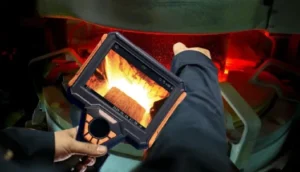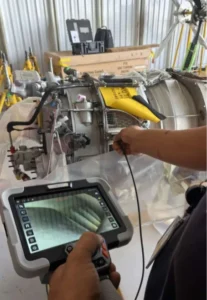

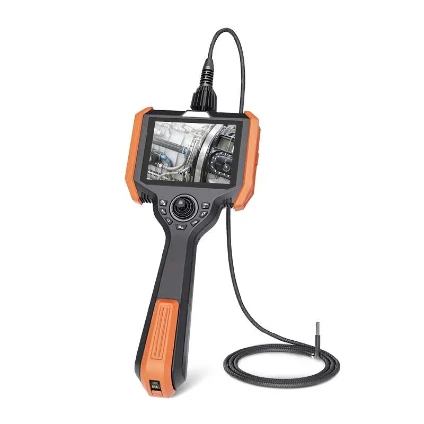
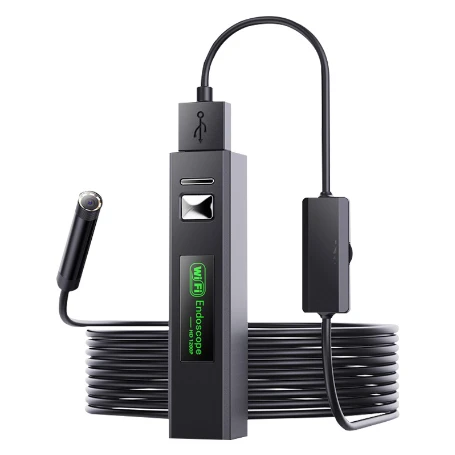
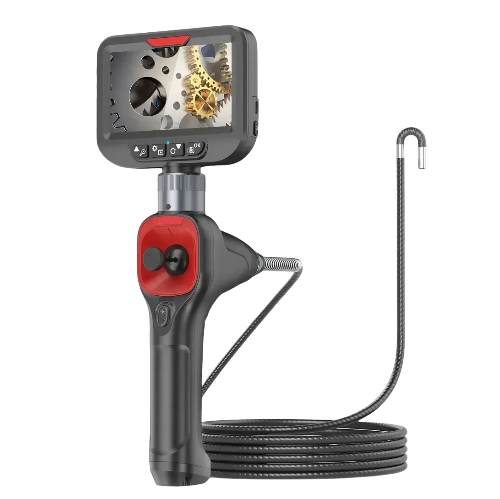
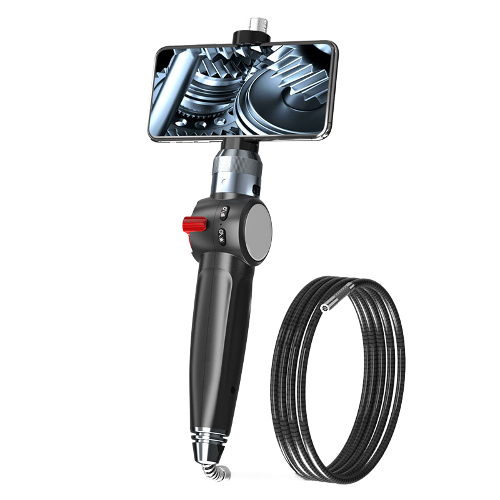
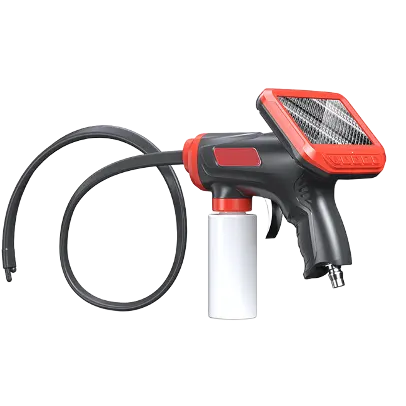
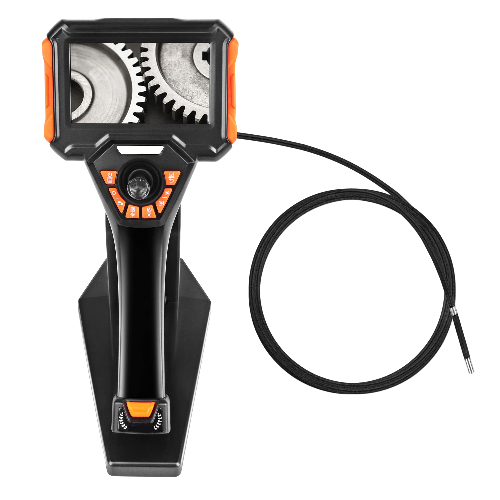
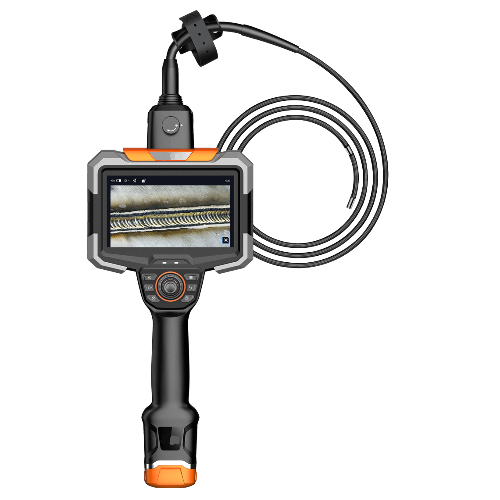
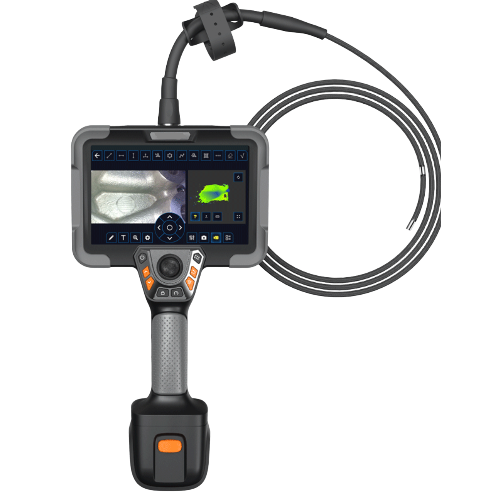
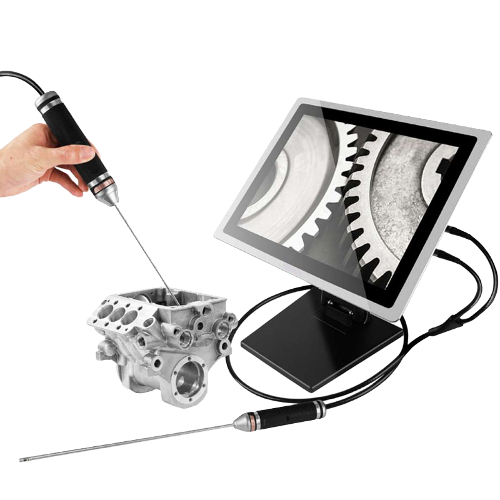
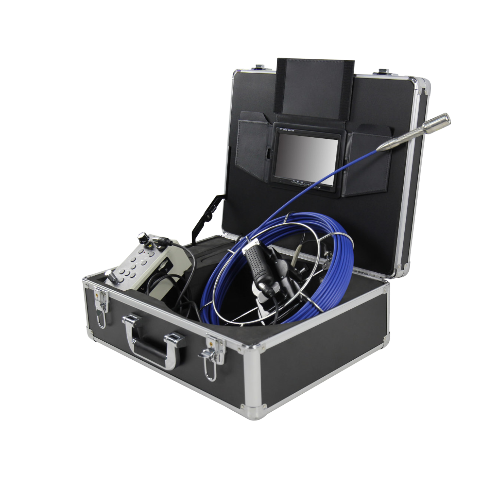
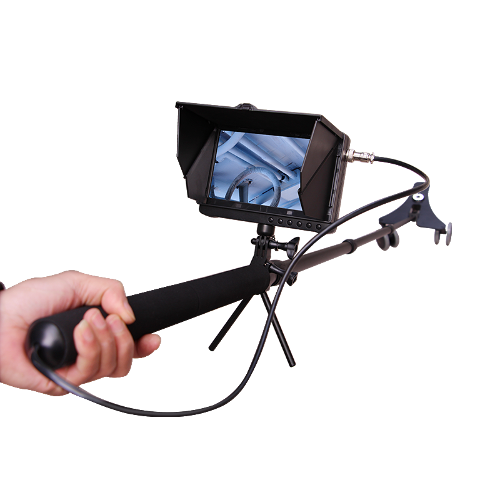
What value do telescopic cameras bring? As specialized tools designed to address “obstructed line of sight” issues, their core value extends far beyond simply “seeing blind spots.” It lies in the deep alignment of their technical characteristics with scenario-specific needs, enabling multi-dimensional optimization of safety, efficiency, cost, and accuracy, thereby providing crucial support for the upgrade of operational models across various industries.
Fortifying the Safety Line
Safety is the primary prerequisite for operations in all industries. One of the most critical values of telescopic inspection cameras is their ability to mitigate safety risks at the source in high-hazard scenarios through their “non-contact inspection” and “remote observation” features.
Safety Assurance in the Industrial Sector
In the industrial sector, for high-risk areas that traditionally require personnel to approach closely—such as internal cavities of equipment, deep pipelines, and around high-voltage equipment—telescopic cameras enable long-distance observation through telescopic adjustment. There is no need for personnel to enter confined spaces, climb heights, or get close to high-voltage/high-temperature equipment, effectively preventing safety accidents such as oxygen deficiency, falls, burns, and electric shocks.
Safety in Security Checks
During security inspections, for blind spots like vehicle undercarriages, luggage compartments, and corner crevices where hazardous items might be concealed, the inspection camera allows security personnel to conduct checks while maintaining a safe distance, reducing the probability of direct exposure to danger.
Safety in Construction Project Engineering
In construction project acceptance, for narrow and dim areas such as ceiling interiors and pipeline interlayers, inspections can be completed without damaging walls or ceilings, avoiding structural safety hazards and secondary risks caused by demolition work.
Safety Assurance in Life Rescue
In life rescue scenarios—such as disaster sites where the ruins structure is extremely unstable and prone to secondary collapse—telescopic pole cameras enable rescuers to remotely insert the lens into narrow gaps without venturing deep inside. This allows for accurate detection of signs of life, assessment of the internal environment and structural risks, thereby formulating the safest rescue plan. It avoids direct threats such as landslides and suffocation to rescuers, achieving dual safety protection for both trapped individuals and rescuers.
Improve Operational Efficiency
Traditional blind spot inspections often rely on cumbersome processes such as demolition, climbing, and setting up auxiliary facilities, which are not only time-consuming and labor-intensive but may also affect normal production and operation. Through its flexible telescopic adjustment and multi-angle observation design, telescopic cameras greatly simplify the inspection process and significantly improve operational efficiency. For example, in the automotive repair field, when troubleshooting undercarriage faults or gaps in the engine compartment, there is no need to lift the vehicle or disassemble components. Fault points can be quickly located just by adjusting the angle of the inspection camera, reducing the original several-hour demolition and inspection process to tens of minutes. In the maintenance of industrial production lines, for issues such as internal wear and foreign object blockages in assembly line equipment, “fast non-stop inspection” can be achieved, avoiding production line shutdowns caused by shutdown and demolition and ensuring production continuity. In property operation and maintenance, when inspecting gaps in elevator shafts, underground pipe network interfaces, and other areas, there is no need to set up scaffolding or use large-scale equipment—one person can complete the inspection work, greatly improving the response speed of operation and maintenance. This “lightweight and efficient” inspection mode makes the originally complex blind spot inspection simple and fast, effectively shortening the inspection cycle and gaining valuable time for subsequent maintenance and handling work.
Reduce Operational Costs
Cost control is a core requirement for enterprise operation and project management. Telescopic inspection cameras achieve significant cost optimization value by reducing the consumption of auxiliary resources, avoiding ineffective operations, and minimizing equipment wear and tear. In terms of direct costs, the auxiliary equipment (such as scaffolding, elevators, and demolition tools) and labor costs (multiple personnel collaborating to set up, dismantle, and inspect) required for traditional blind spot inspections can be greatly reduced through the single-person independent operation mode of telescopic inspection cameras. In terms of indirect costs, on the one hand, fast and accurate inspection can avoid “over-maintenance” caused by misjudgment—for example, there is no need for blind disassembly of components in automotive repair or disassembly of fault-free areas in industrial maintenance, reducing the wear and tear of parts and the waste of maintenance materials. On the other hand, the characteristics of non-stop inspection and rapid troubleshooting can reduce economic losses caused by production stagnation and operational interruptions. This cost-saving value is particularly prominent for scenarios with high continuity requirements, such as assembly line production and commercial operations. In addition, telescopic inspection cameras themselves have the advantages of simple structure, strong durability, and low maintenance costs. Compared with large-scale inspection equipment, they have lower purchase and use costs, making them more suitable for the needs of various entities such as small and medium-sized enterprises and grass-roots operation and maintenance teams.
Ensure Accurate Detection
The core value of inspection work is to provide accurate basis for subsequent operations. By optimizing observation performance, telescopic cameras ensure the accuracy and reliability of inspection results, providing strong support for scientific decision-making. High-quality telescopic inspection cameras are usually equipped with high-definition lenses and adjustable light sources. Even in dim and narrow blind spot environments, they can clearly present details, helping inspectors accurately identify key information such as fault points, hidden danger locations, and the degree of component wear. For example, in industrial equipment inspection, they can accurately judge the wear status of bearings and the corrosion degree of pipeline inner walls; in construction acceptance, they can clearly observe the layout of internal pipelines in walls and the integrity of waterproof layers; in the field of cultural relic protection, they can carefully check subtle damages on the surface of cultural relics without touching them. This accurate detection capability can avoid misjudgments and omissions caused by blurred observation, reduce secondary problems caused by “incorrect repairs” and “missed repairs”, and provide reliable data support for the formulation of maintenance plans, risk level assessment, and equipment life prediction. This makes subsequent operations more targeted and scientific, improving the overall quality of work.
Expand Application Boundaries
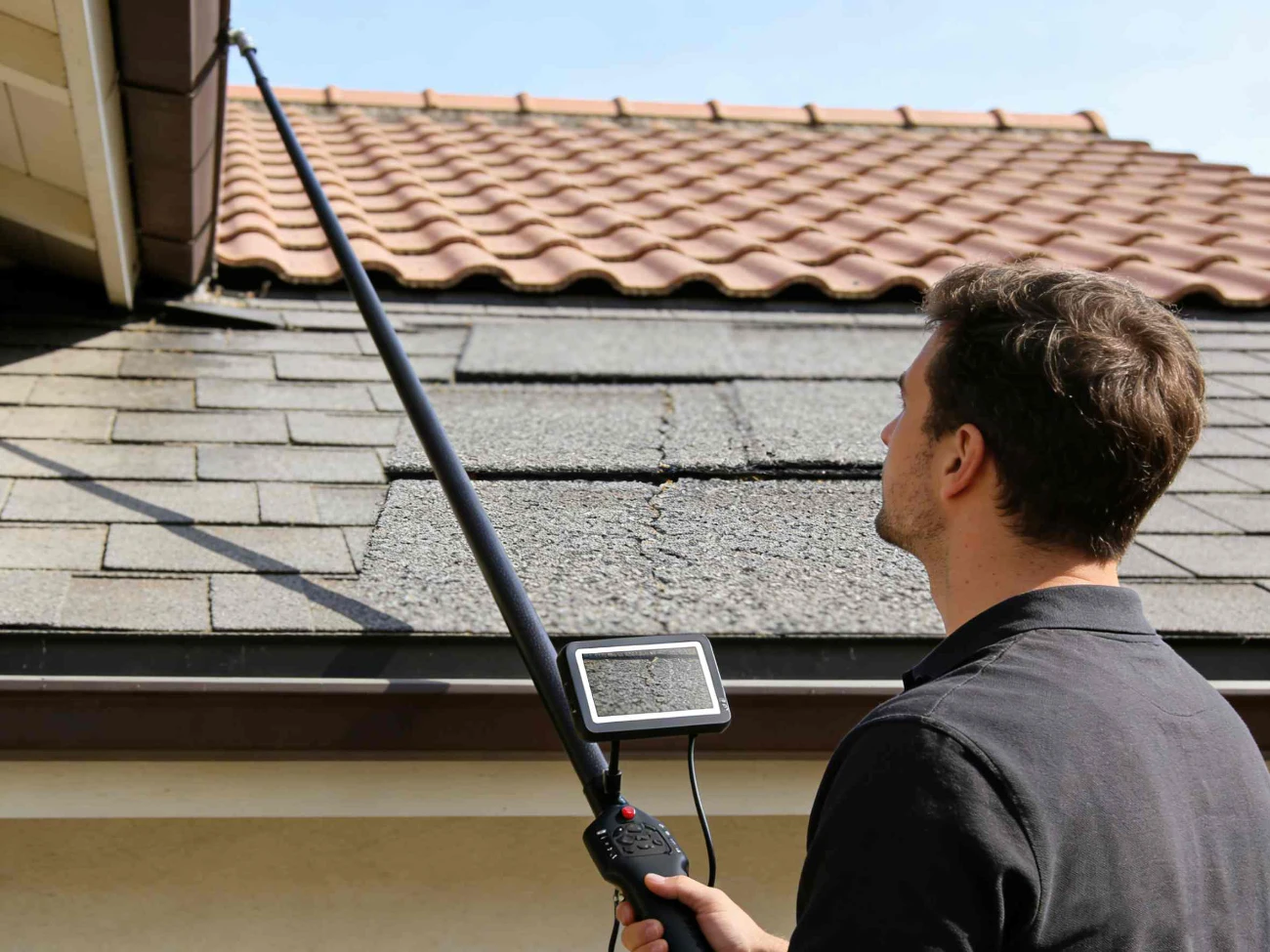
The telescopic and multi-angle adjustment characteristics of pole cameras enable them to break through the scenario limitations of traditional inspection tools, adapt to the differentiated needs of various industries, and further expand the application boundaries of inspection work. In addition to mainstream fields such as industry, automotive, security, rescue, and construction, they can also play unique values in multiple niche scenarios: in the agricultural sector, they can be used to detect pests and diseases inside fruit trees and gaps in greenhouse frameworks; in railway operation and maintenance, they can inspect wear in hard-to-observe areas such as the bottom of railway tracks and bridge supports; In daily household life, it can be used to locate sewer blockages, foreign objects under furniture, and conduct roof inspections, among other tasks. This wide scenario adaptability allows them to provide targeted inspection solutions for different industries and scenarios, becoming a practical tool with both versatility and professionalism.
Summary
In summary, the application value of telescopic cameras is not limited to the “usage functions of the tool itself”. Instead, through the comprehensive optimization of safety, efficiency, cost, and accuracy, they are deeply integrated into the entire operational process of various industries, becoming a key enabling tool for improving work quality, reducing operational risks, and promoting the upgrading of operational models.