
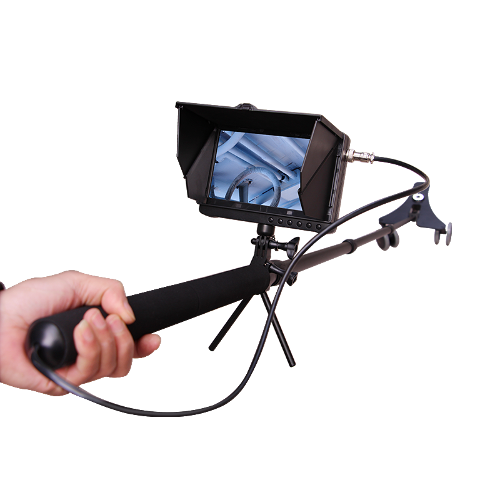
Overview
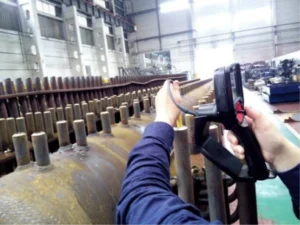
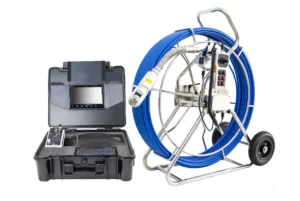
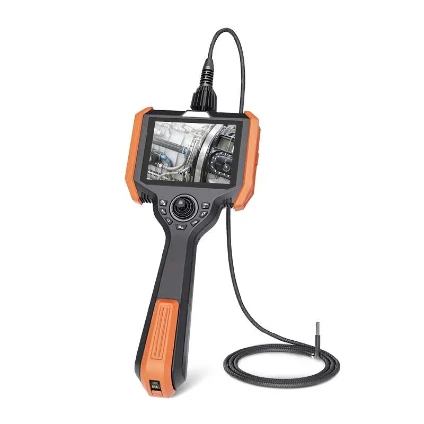
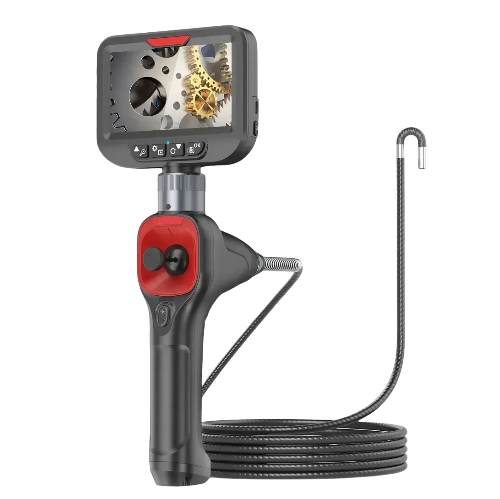
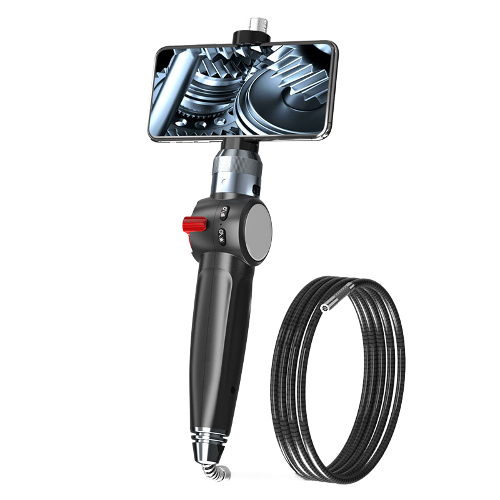
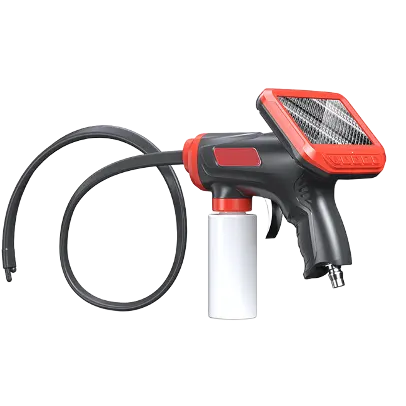
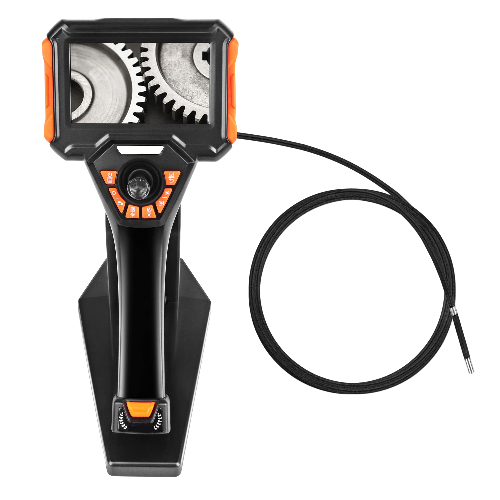
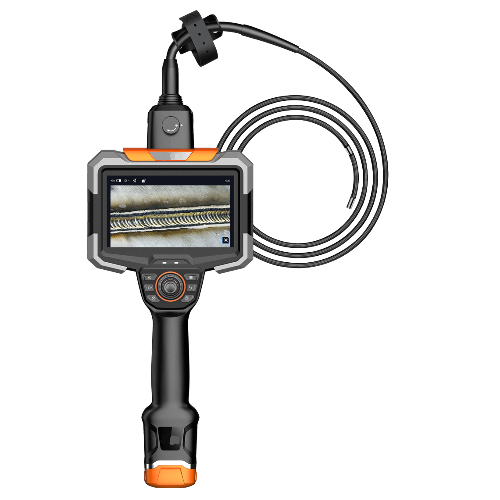
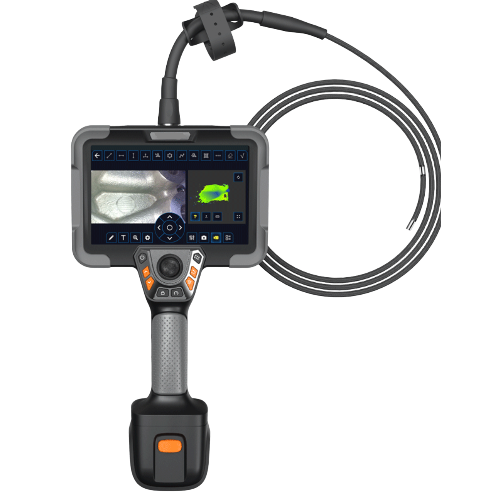
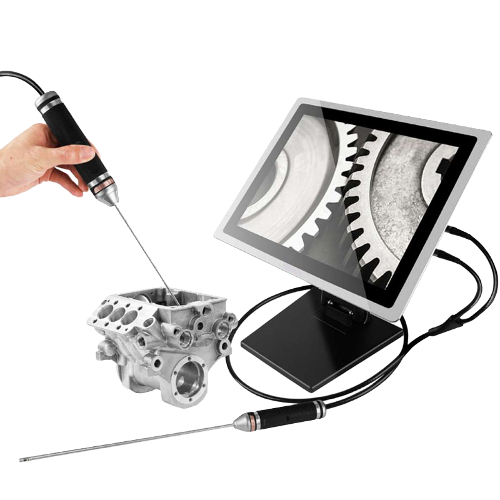
As an advanced non-destructive testing (NDT) device, the electrically controlled 3D measurement endoscope goes beyond the basic “see-inside” capability of traditional high-definition borescopes. It enables precise, quantitative measurement of defect dimensions—such as crack length, corrosion area, and wear depth. By utilizing 3D modeling and high-precision measurement algorithms, this instrument provides reliable data support for quality inspection, condition assessment, and maintenance decision-making across various industries. It has progressively become an indispensable tool in modern industrial inspection systems.
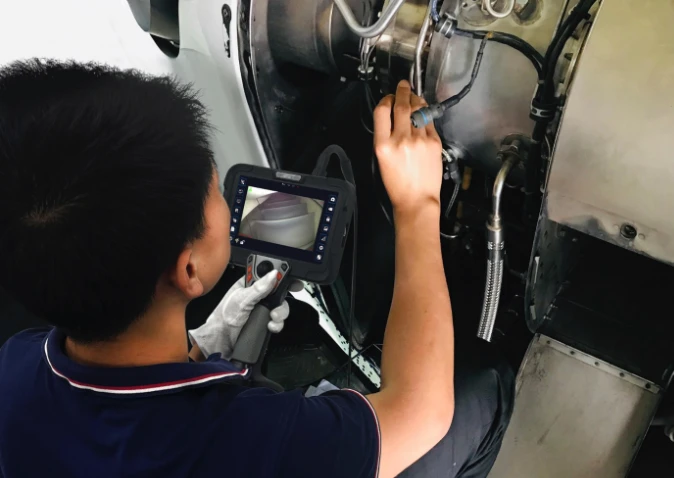
Aerospace: Ensuring Flight Safety and Reliability
In the aerospace sector, where equipment reliability is directly tied to flight safety and demands extreme inspection accuracy, 3D measurement endoscopes are widely used in the following applications:
Aero-engine Inspection: Precisely measures high-pressure turbine blade crack depth down to micron level, blade wear, coating thickness, and turbine clearances. This provides quantitative data for damage assessment and repair planning. For instance, an aviation maintenance company used 3D modeling to clearly visualize a crack on a specific engine’s high-pressure turbine blade, measuring it at 1.2mm deep and 4.8mm long. Based on this data, a targeted repair plan was developed, successfully saving over 100,000 RMB per blade in replacement costs and reducing the repair timeline by three days.
Aircraft Structure Maintenance: Performs 3D measurement and defect evaluation on internal fuselage structures, weld seams, and hydraulic lines to promptly identify fatigue cracks, corrosion, or assembly deviations, thereby ensuring flight safety.
Energy & Power: Enabling Precision Operations and Lifecycle Management
Equipment in the oil & gas, and power generation industries operates under harsh conditions of high temperature, high pressure, and corrosive environments. Regular inspection is critical for accident prevention and extending equipment life.
Turbine & Generator Inspection: Conducts 3D quantitative analysis of steam turbine blade wear and generator rotor deformation to guide precise maintenance, preventing both over-maintenance and under-maintenance.
Pipeline & Storage Tank Assessment: Measures the depth and area of corrosion pits on pipeline inner walls, evaluates weld quality and deformation, identifies potential leak hazards early, and aids in repair or replacement decisions.
Nuclear & New Energy Equipment: Executes high-precision measurements within confined spaces like nuclear plant piping and wind turbine gearboxes to ensure operational safety.
Defense & High-End Equipment Manufacturing: Rigorous Quality Control and Acceptance
Defense products and high-end equipment have stringent requirements for dimensional accuracy and assembly quality. 3D measurement endoscopes provide critical support in related manufacturing and acceptance processes.
Defense Manufacturing QC: Used for measuring missile casing weld dimensions, analyzing naval pipeline deformation, and detecting machining errors on armored components, enabling precise dimensional acceptance of weaponry.
High-End Equipment Assembly Acceptance: Performs 3D measurement of gearbox meshing clearance, valve runner dimensions, and pump impeller eccentricity to strictly control the assembly accuracy and performance consistency of high-end machinery.
Automotive Manufacturing: Enhancing Quality and Production Efficiency
In automotive manufacturing, minor defects in components or assemblies can impact vehicle performance and safety.
Powertrain Inspection: Measures cylinder liner wear, piston crack depth, and detects gear tooth face wear in transmissions, capable of identifying deviations as small as 0.3mm. This helps pinpoint production batch issues and prevent mass quality problems. For example, an automaker detected 0.3mm wear on a transmission gear, traced it back to a machining equipment accuracy deviation, and avoided economic losses exceeding 2 million RMB.
Exhaust & Fuel Systems: Inspects exhaust pipe weld cracks and corrosion, and assesses the sealing integrity of fuel lines.
Body & Chassis Components: Used for internal dimensional measurement and assembly condition assessment of complex structures to ensure part precision and overall vehicle safety.
Precision Manufacturing & Electronics/Medical Devices: Pursuing Micron-Level Quality Assurance
In mold making, precision machinery, electronics, and medical device production, 3D endoscopes can detect microscopic defects difficult to observe with the naked eye.
Molds & Precision Parts: Measures micro-cracks on mold surfaces and evaluates part assembly clearances and geometric tolerances.
Electronic Components: Inspects the quality of circuit board solder joints and the integrity of micro-connection structures.
Medical Device Production: Conducts dimensional checks and surface defect analysis on the internal structures of implants and endoscopic instruments to ensure products meet medical standards.
Engineering & Equipment Maintenance: Efficient Fault Diagnosis and Prevention
In maintaining large industrial equipment, construction machinery, and rail transit systems, 3D measurement endoscopes enable rapid fault source identification.
Critical Rotating Component Inspection: Quantitatively detects internal wear and cracks in bearings, gears, and drive shafts.
Enclosed Equipment Condition Assessment: Accesses the interiors of compressors, pumps, valves, and heat exchangers to evaluate corrosion, fouling, or mechanical damage, guiding predictive maintenance strategies.
Conclusion
With advantages such as 3D visualization, high-precision measurement, and non-destructive testing, electrically controlled 3D measurement endoscopes have become vital tools in industrial inspection. They not only improve the accuracy of defect identification but also support maintenance decisions, quality control, and lifecycle assessment through quantitative data, helping companies reduce costs, improve efficiency, and ensure operational safety. As the demand for smart manufacturing and precision operations grows, the application scope and depth of 3D measurement endoscopes will continue to expand, providing a solid technological foundation for the high-quality development of modern industry.