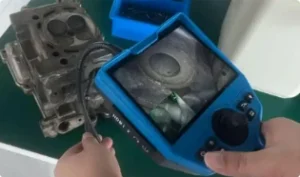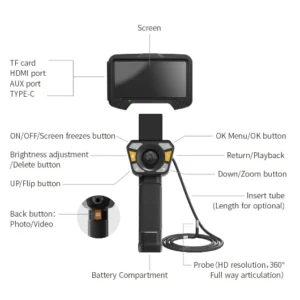

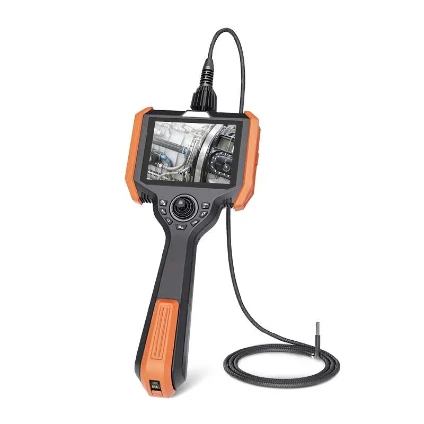
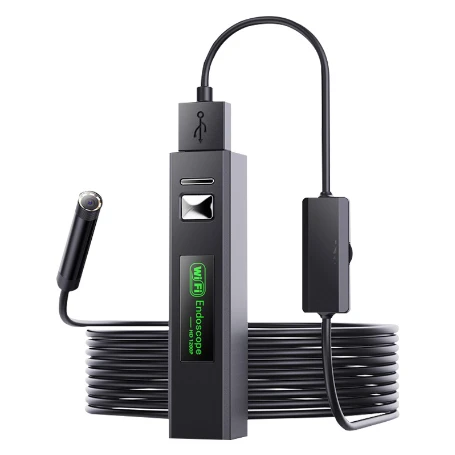
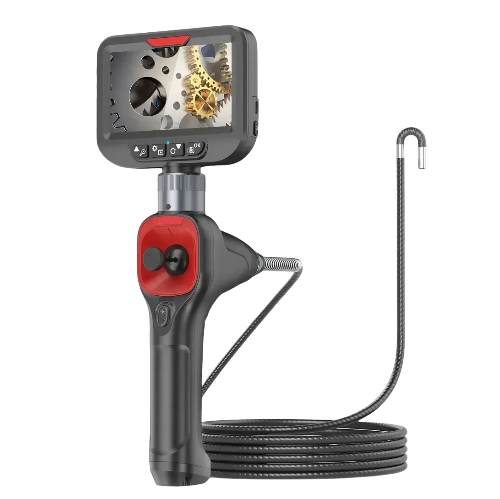
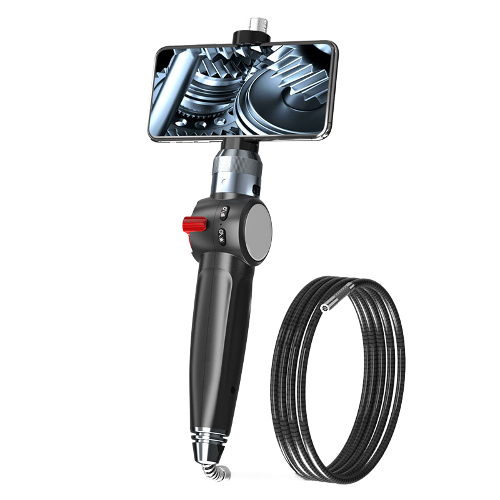
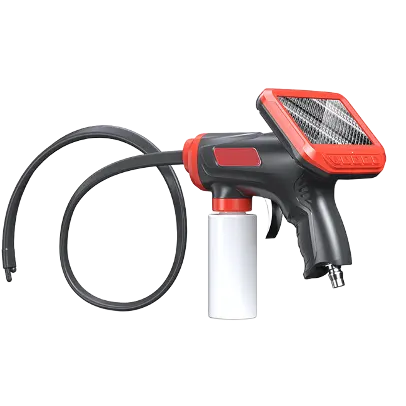
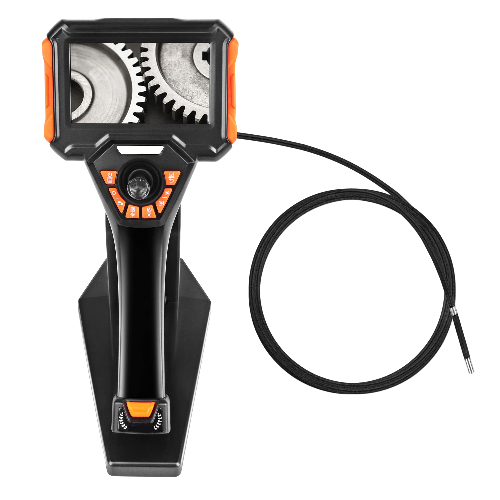
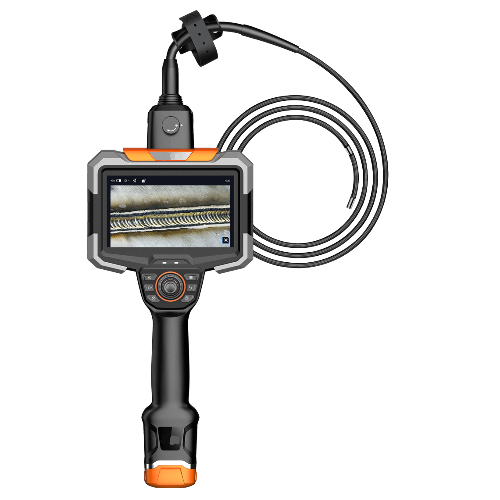
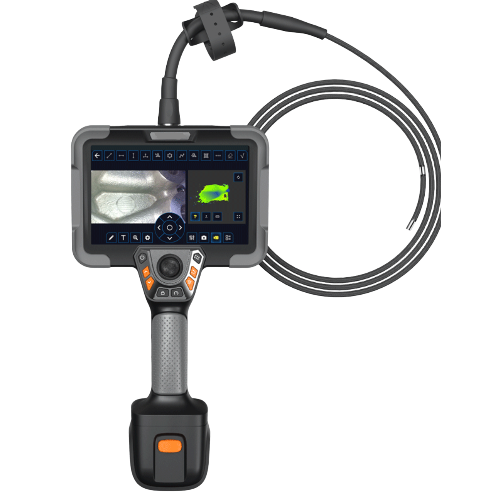
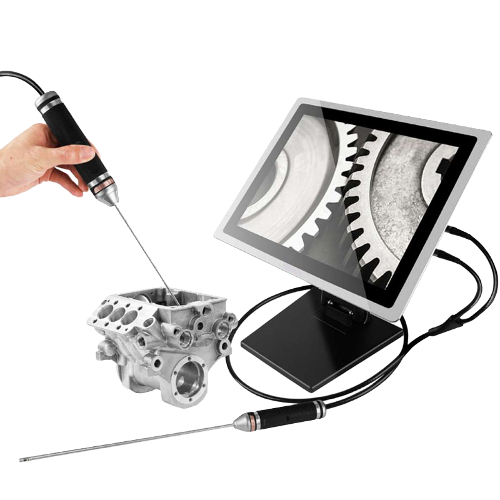
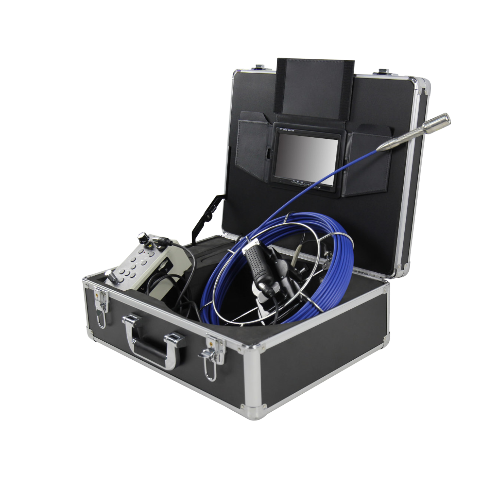
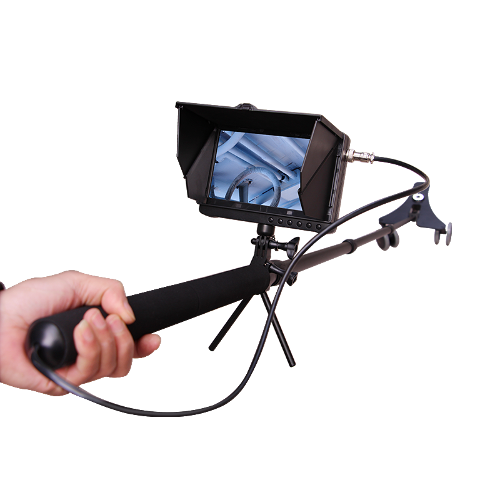
Ultra-thin industrial borescopes feature a probe diameter generally below 1mm, with the minimum size reaching 0.4mm or 0.48mm. Thanks to the slim profile and excellent flexibility, they can reach confined spaces and conduct visual inspection on invisible internal areas without disassembling equipment. Currently, they have gained extensive application across a wide range of industrial fields.
Aerospace Industry
Ultra-thin and small-diameter borescopes are primarily adopted for internal inspection of core aerospace components.
Aero-engine Inspection: The probe can enter turbines, combustion chambers and air intake ducts to check blades and chamber walls for cracks, wear, ablation and other damages.
Airframe Structure Inspection: It observes weld seams, brackets and connectors to assess welding quality and structural integrity, and detects material corrosion and fatigue aging.
Fuel System Inspection: It accesses narrow and intricate fuel pipelines to find contamination, blockages and corrosion. All inspections are completed without disassembly, helping discover potential risks in advance and lower operational hazards.
Precision Manufacturing & Electronics Industry
They are applied to examine the machining quality and internal structure of micro-sized parts.
Electronic Component Inspection: The slim probe penetrates circuit boards, chips and solder joints to identify welding defects, open circuits, short circuits and foreign residues, so as to guarantee product electrical performance.
Precision Casting Inspection: It goes through tiny holes of castings to detect internal defects including sand holes and cracks.
Semiconductor & MEMS Device Inspection: Sub-millimeter probes enable non-contact observation inside micro-holes of chips and ultra-precision parts, avoiding damage to delicate structures.
Medical Device Manufacturing & Inspection
Mainly used to check the cleanliness and structural integrity of internal channels of medical devices.
Internal Cleanliness Check: Insert into narrow pipelines of medical instruments to inspect residual blood, tissue and foreign substances. Some models can work with flushing systems to verify cleaning effects.
High-end Medical Equipment Inspection: Conduct internal detection on ophthalmic surgical devices, implant accessories and other precision medical products to ensure all components are defect-free and compliant with safety standards.
Automotive Manufacturing & Maintenance
It undertakes production quality control and on-site fault diagnosis for the automotive sector.
Production Inspection: Verify the machining quality and internal cleanliness of core parts such as engines, fuel systems and brake assemblies.
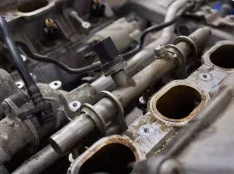
Maintenance & Troubleshooting: Check cylinder wear, carbon deposition and fuel injector blockages without dismantling the engine, providing reliable reference for maintenance work.
Petrochemical Industry
Used to inspect in-service equipment and assist in formulating scientific maintenance plans. The probe enters pipelines, storage tanks and reactors to check for corrosion, scaling and blockages. The whole process requires no shutdown or equipment disassembly.
Electric Power Industry
Applied to preventive maintenance of key power facilities. It accesses generators, transformers and other equipment to inspect windings, insulating parts and more, so as to spot hidden troubles ahead of time and prevent unexpected breakdowns.
Other Industrial Applications
• Large-scale Equipment Inspection: Carry out rapid internal scanning and overall structural assessment for pressure vessels, wind turbine gearboxes and other large facilities.
• Complex Pipeline & Deep Hole Inspection: Adapt to S-shaped pipelines, deep holes and other complex passages to finish image observation, defect marking and data analysis.
Summary
The core strength of ultra-thin industrial borescopes lies in its sub-millimeter probe, which can reach ultra-narrow confined spaces and capture internal images without equipment disassembly for defect detection and quality evaluation. Widely used in aerospace, precision manufacturing, medical devices, automotive, petrochemical, electric power and other industries, it effectively solves the technical difficulties of internal inspection in narrow, complex and concealed spaces.