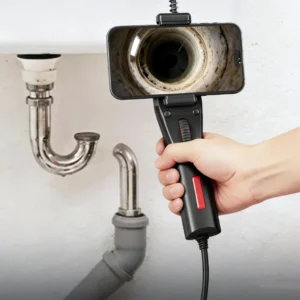

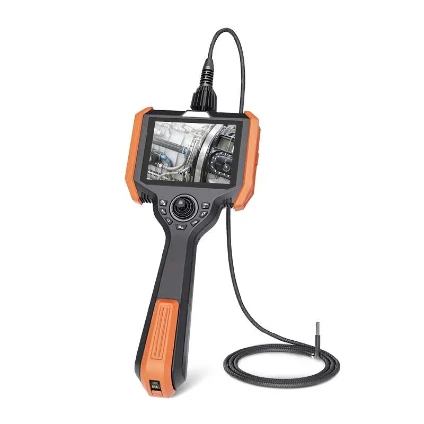
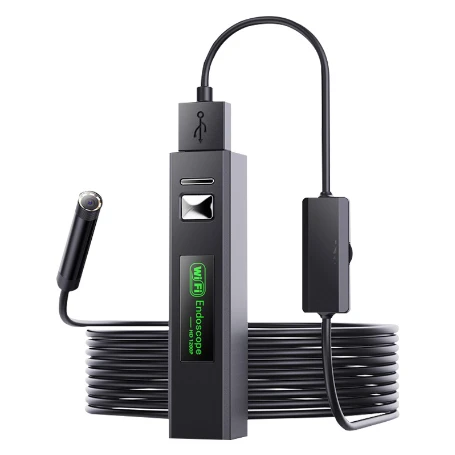
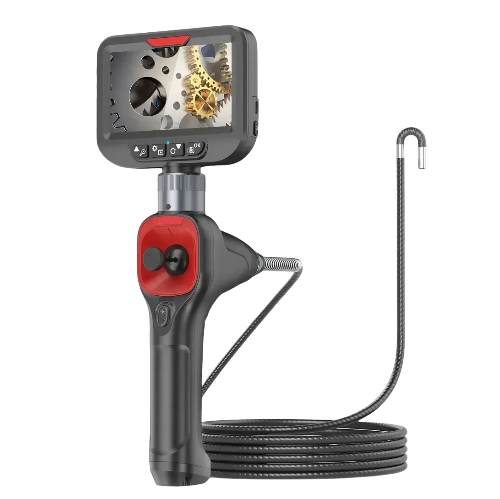
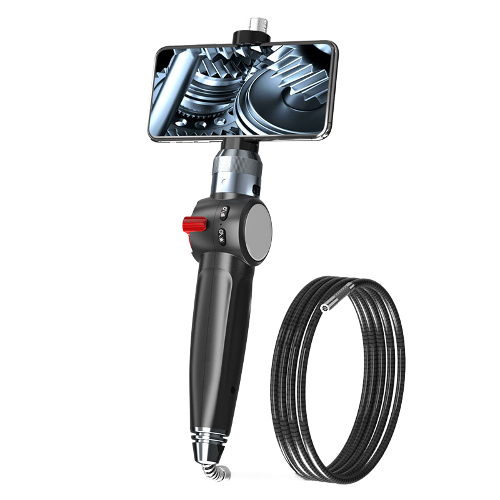
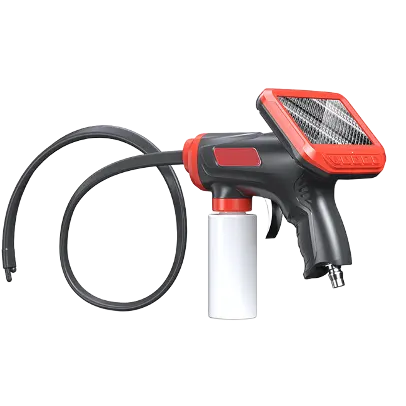
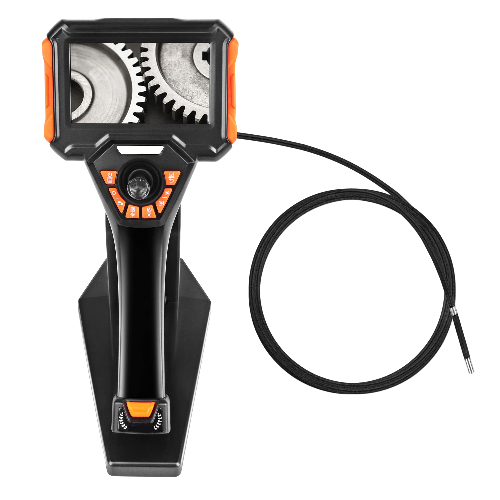
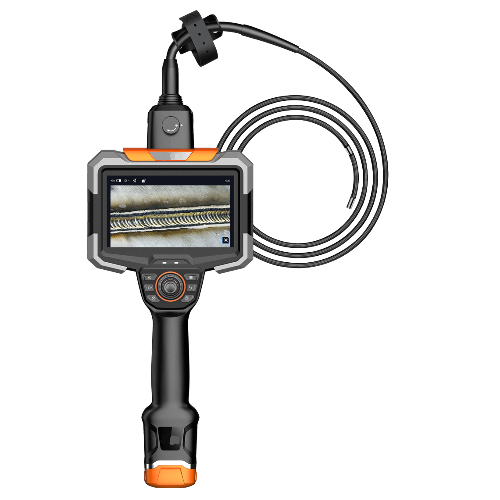
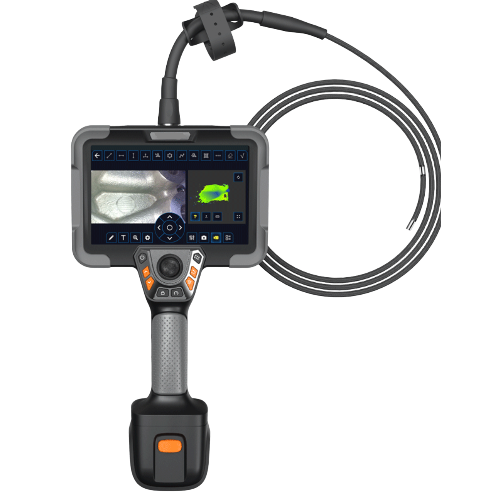
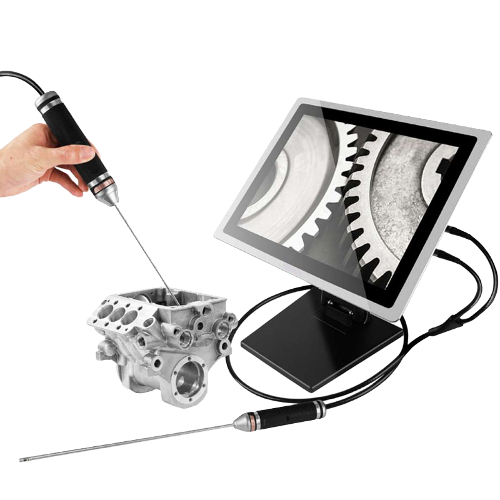
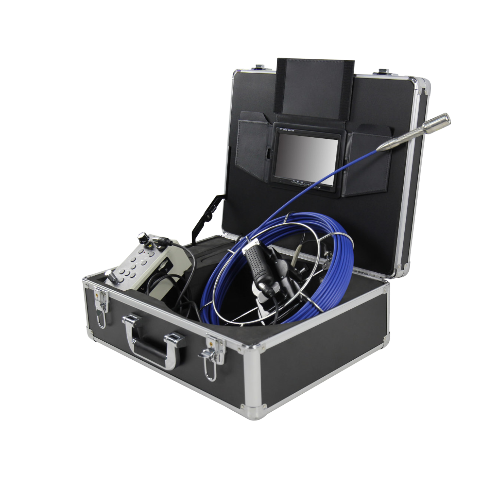
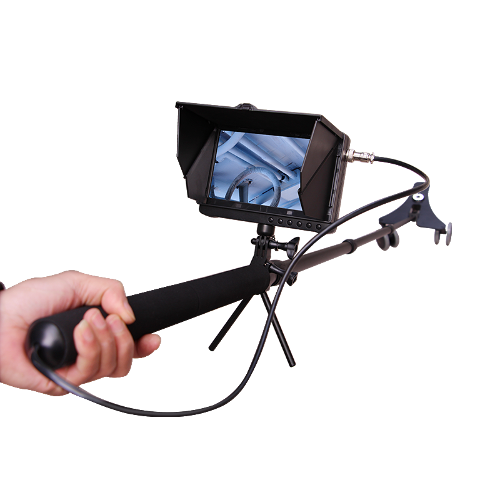
Industrial endoscopes are core instruments for industrial non-destructive testing, and ultra-thin structural design has become a key technical upgrade trend in the inspection industry. Ultra-thin borescopes break spatial access limitations and expand the application boundaries of industrial visual inspection. While ultra-small probe diameter is its most prominent feature, equipment selection and assessment require comprehensive evaluation of multiple technical indicators. The following key selection criteria should be prioritized.
Probe Specification Matching
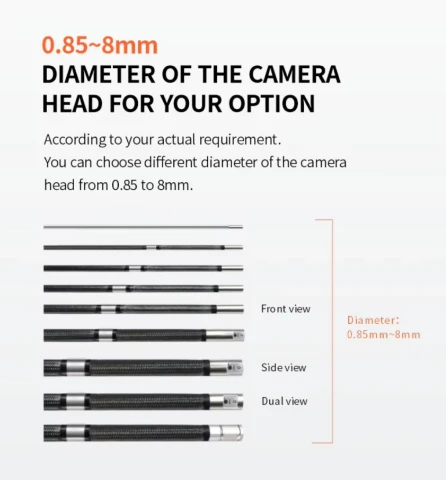
Determine the probe outer diameter according to the actual size of the inspected cavity. For instance, PCB micro-hole inspection demands probes of 1mm diameter or even smaller. On the premise that the probe can smoothly reach the target detection position, moderately larger-diameter probes are preferred, as they can accommodate superior optical imaging assemblies and deliver clearer picture quality.
The required detection depth defines the insertion tube length; longer tubes do not equate to better performance. Ultra-thin slender insertion tubes are susceptible to bending, distortion or fracture during operation, so the tube material must strike a perfect balance between rigidity and flexibility. Tungsten wire or tungsten alloy braided tubes are the mainstream mature solution on the market. Customize the tube length according to on-site working conditions to guarantee convenient manipulation and stable signal transmission for efficient and reliable inspection.
Imaging Quality Assessment
The smaller the probe caliber, the stricter the dimensional constraints on built-in lenses and image sensors. High pixel count and high resolution are fundamental prerequisites for sharp inspection images, and robust image processing algorithms can truly restore tiny surface details of workpieces. Built-in multi-dimensional image parameter adjustment functions assist inspectors in detailed observation and accurate defect judgment.
Auxiliary Lighting System
To realize even illumination without overexposure and glare inside narrow confined spaces, mainstream ultra-thin industrial borescopes adopt high-brightness, low-heat LED light sources. Industrial sites feature drastically variable ambient light levels; models with stepless brightness adjustment boast stronger environmental adaptability for diverse inspection tasks.
Humanized Operating Experience
Evaluate the intuitiveness of the human-machine operation interface. Products with graphical icon display and simplified button layout support one-touch control of probe positioning, photo/video capture, light brightness modification and other core operations. Streamlined menu structure helps operators quickly locate needed functional modules. Furthermore, integrated portable all-in-one design facilitates transportation and on-site operation across different inspection scenarios.
Practical Comprehensive Performance
Complicated industrial working environments impose stringent requirements on equipment durability. Select borescopes made of wear-resistant materials with high IP protection grades such as IP67, which can resist dust, oil stains and liquid erosion to extend service life effectively.
The equipment shall support local storage and external data export for convenient inspection data preview, archiving and post-analysis. Optional wired or wireless high-speed data transmission supports remote expert collaborative diagnosis. High-precision measuring versions are applicable to quantitative detection tasks including defect dimension measurement and wear quantification, greatly lifting inspection accuracy and working efficiency.
Selection Summary & Suggestions
The core competitiveness of micro-probe ultra-thin borescopes lies in their access capability for narrow precision cavities. However, integrating complete functional modules into an ultra-small diameter brings higher technical barriers and manufacturing costs.
When purchasing ultra-thin industrial video borescopes, combine your actual inspection scenarios and technical demands to comprehensively assess probe parameters, imaging performance, lighting configuration and operation experience. Meanwhile, verify key indicators including IP protection rating, battery endurance and data storage & transmission solutions. Choose professional inspection equipment with balanced cost and practicality to ensure stable, high-efficiency long-term inspection operations.