
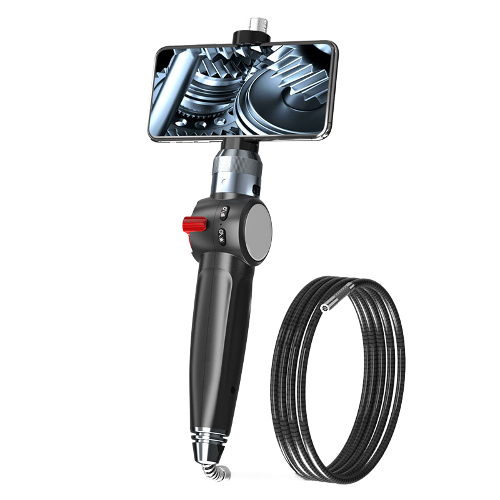
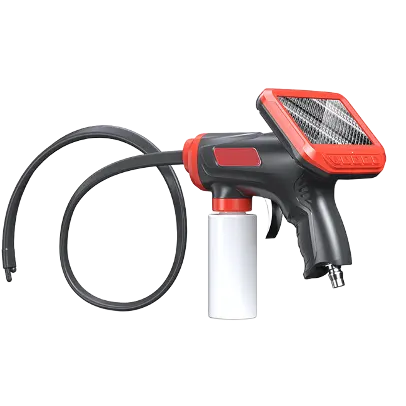
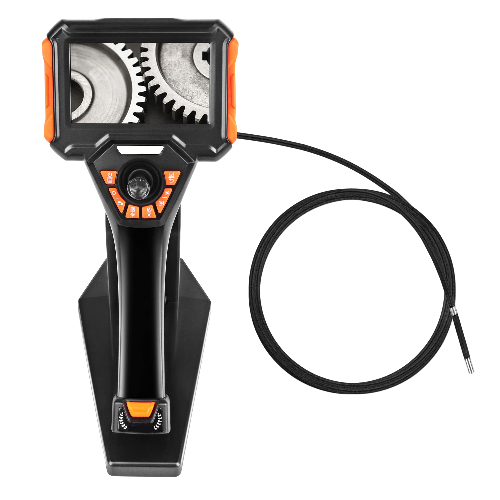
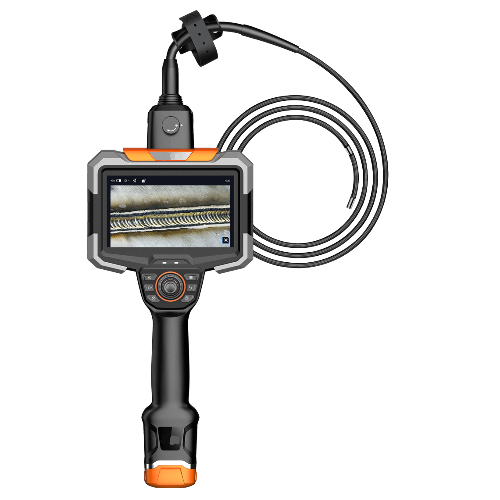
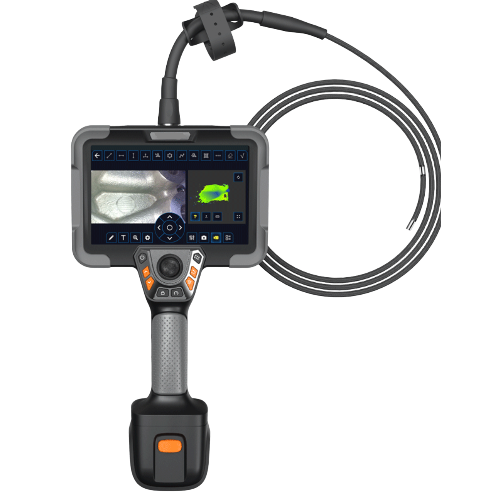
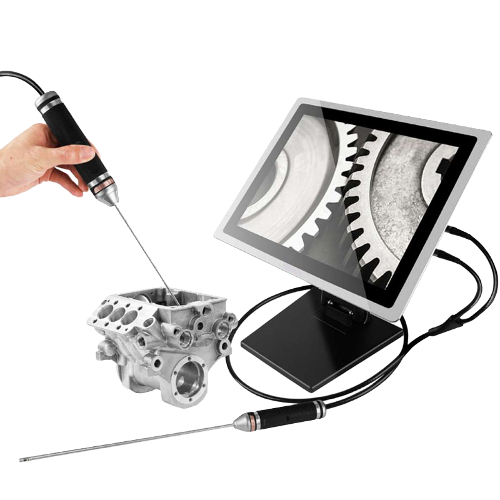
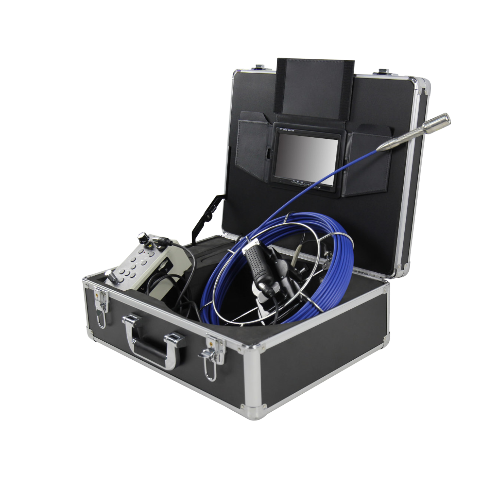
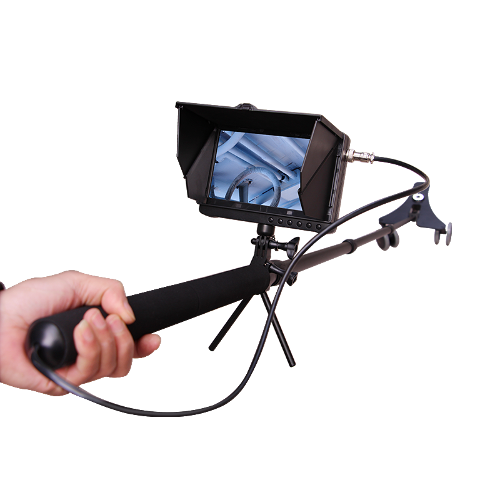
Industrial endoscopes are essential tools for non-destructive testing, the selection of industrial endoscopes must closely align with practical application scenarios and core inspection requirements to avoid missed defections or unnecessary cost wastage. This article aims to systematically outline the key factors and procurement recommendations for industrial endoscopes , assisting you in choosing the most suitable model.
Industrial borescope selection: Clarifying your inspecting environment and requirements
Clarifying the environment and requirements is the “first step” and the most crucial step in the selection of industrial endoscopes, laying the foundation for comparing core parameters and avoiding purchase errors in the future.
-
Environment of use
Industrial testing environments vary greatly, neglecting environmental adaptability not only leads to testing interruptions, but also may cause permanent damage to equipment. So it is very necessary to clarify the environment in which the detection is carried out. Factors such as temperature, humidity, space size, presence of water, dust, oil, and flammable, explosive, and corrosive conditions.
-
Core requirements
There are various industrial testing tasks, and it is necessary to clarify one’s own core requirements, such as portability, detection accuracy, or video storage, to accurately screen essential functions, avoid unnecessary additional functions, and control procurement costs.
Industrial endoscope selection: Evaluating core parameters
After clarifying the application environment and requirements, it is necessary to evaluate the core parameters of the equipment, and the key technical indicators directly determine whether the equipment can meet the actual detection needs. Here are four core elements to analyze and provide suggestions:
Probe
The probe is the core imaging component of industrial endoscopes, which is the part in direct contact with the detection scene. Its parameters directly determine whether the equipment can adapt to the usage environment and better complete the detection task.
-
Diameter/Probe diameter
Select based on the minimum diameter of the channel to be inspected to ensure that the probe can smoothly enter the detection hole. The common diameter range is 2.2mm-8mm. Principle: Within the allowable range of channel aperture, larger diameter probes are preferred. Its advantage lies in the ability to accommodate higher resolution image sensors, making the imaging clearer. The smaller the diameter, the higher the process difficulty and cost.
-
Viewing direction and field of view(FOV)
Viewing direction refers to the observation direction of the endoscope lens, usually direct or side view. Direct vision is suitable for straight line detection, while side view can observe defects in vertical or difficult turning areas. For comprehensive testing, it is usually recommended to choose a model with interchangeable straight/side view lenses, or to choose an integrated straight/side view lens. The field of view angle determines the field of view for a single imaging, typically ranging from 60 ° to 120 °. A large field of view angle (such as 120 °) is suitable for large-scale inspection, while a small field of view angle (such as 35 °) is conducive to detailed observation.
-
Resolution and Pixel
Image quality is one of the most important performance indicators of industrial endoscopes, as for resolution (usually recommended to be at least 720P, not less than 1 million pixels). Check for below 0.02mm small cracks ? Must be 1080P or 4K! Industrial endoscope for ordinary scenes (car repair, routine inspection)? A few hundred thousand pixels is sufficient, and 720P is also acceptable.
-
Material and protection level
Industrial endoscope probes are generally made of wear-resistant and high-temperature resistant materials such as sapphire glass or titanium alloy. In environments with high temperature, high pressure, strong corrosion, water or oil pollution, probes are required to have corresponding protection levels (such as IP67). If there are flammable and explosive gases in the environment, they must also comply with explosion-proof certification standards. If prolonged immersion in water is required, a higher protection level (such as IP68) should be chosen. If the temperature is too high, a cooling device should also be equipped.
Tube
The tube that connects the probe to the host, and the core parameters of the tube are directly related to the adaptability of the detection scenario, detection accuracy, and equipment durability.
-
Length
It is selected based on the required depth and bends of the inspection channel. Under the premise of meeting the inspection requirements, the shortest effective length, the least number of bends, and the smallest bending angle path are preferred to reduce equipment complexity and cost (under the same specifications, the longer the tube, the higher the cost).
-
Light source and illumination
White LED is the mainstream type of light source, ultraviolet light (fluorescent agent required) detects surface cracks, and infrared light is suitable for low light/night vision fill light; The lighting methods include front LED (probe front LED beads, up to 18000 lux) and rear fiber optic light guide (high-power light source conduction, up to 100000 lux, suitable for deep cavities/dark areas, high cost). Suggestion: Based on the brightness, cavity depth, and detail requirements of the detection environment, choose equipment with a uniform and adjustable brightness lighting system and lighting mode (front/rear) to meet different detection needs.
-
Bending angle and Articulation
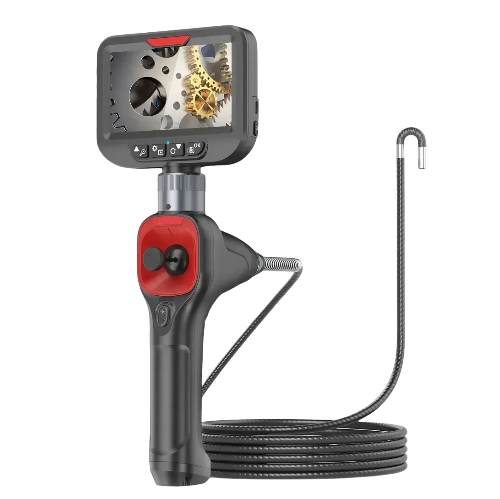
determine the “turning flexibility” of the probe in complex spaces. The bending angle is usually divided into 180 ° double-way or 360 ° all-way. It is recommended to choose tube with steering function, which can achieve more flexible observation in complex spaces.
-
Material
tube materials are mostly elastic hoses, stainless steel woven mesh, and tungsten braided tube . Elastic hoses are known for their high flexibility and chemical resistance; Stainless steel woven mesh has excellent strength and corrosion resistance; The tungsten braided tube has the core advantages of extremely high heat resistance and extreme environmental durability. Choosing materials with high durability according to the actual usage environment can effectively extend the service life of industrial endoscopes.
Convenience of operation
In industrial inspecting, convenient operation can significantly improve testing efficiency. Therefore, it is necessary to choose a simple design, equipped with an easy-to-use control interface and intuitive operation mode.
-
Probe control
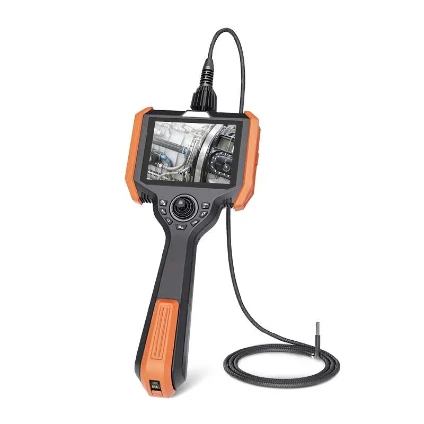
Common manipulators include knobs, rollers, and joysticks. with the joystick being the most widely used, control the direction, movement speed, and direction of the probe manually or electrically. The manual joystick requires real-time manual adjustment and is generally more suitable for testing scenarios with high flexibility and harsh environments. It is easy to operate and cost-effective; The electric joystick is automatically controlled by the system to adjust the direction of the probe, making it more suitable for high-precision detection environments with labor-saving operation and high cost.
-
Weight and size
The integrated handheld device is the most convenient, with a screen and battery, making it more suitable for outdoor operations. The screen size range is usually 3.5-7 inches. Desktop models with brackets can be selected for fixed indoor locations, and screen sizes of 5-15 inches are recommended. Small screens are more portable, while large screens provide clearer observation. It is recommended to choose based on the work method and whether dual screen display is needed (such as advanced detection/team collaboration).
-
Body design and protection level
The body conforms to ergonomics, with anti slip materials at the grip. The body needs to be adapted to industrial environments, resistant to drops, dust, and water, reducing environmental concerns during operation.
-
Operation mode
Industrial endoscopes are mainly adjusted for parameters and function switching through buttons and touch screens, which can be selected according to actual detection needs, such as outdoor or harsh working conditions, and the need to wear gloves for operation. The buttons are more suitable; For indoor precision inspection or testing that requires real-time annotation, cropping of images, and generation of simple reports, a touch screen is more suitable.
-
Battery life
Long term detection tasks need to consider battery life (recommended ≥ 4 hours) and fast charging function.
Additional functions
First, meet the basic needs of detection, and then supplement and expand functions according to the requirements of scenarios, data management, etc
-
Intelligent image processing system
Reflecting image processing capabilities. Products with strong image enhancement, automatic white balance, and good imaging capabilities can provide good image quality in different environments.
-
Storage function
It can save the test results for easy analysis and report production in the future. Supports SD card or USB direct storage for easy image/video archiving.
-
Data transmission
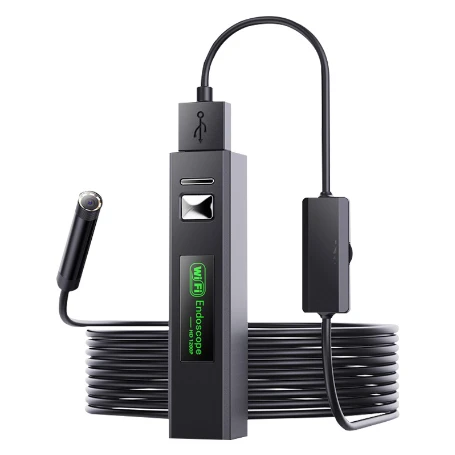
WiFi/Bluetooth can quickly export data, and the USB interface can be directly connected to a computer.
-
Measurement function
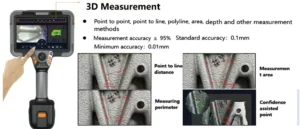
Choose one with 2D/3D measurement function, which can quantify the size of defects.
-
Generate report
Select support for one click generation of detection report.
-
Intelligent assistance
AI defect recognition (automatically identifying cracks, corrosion, and other issues).
Misunderstandings in purchasing
Parameter Misconception: Blindly Pursuing “High Configuration”
The higher the pixel, the better?
– In non precision detection scenarios, there is no need to blindly pursue pixels, as excessively high pixels can actually increase storage and costs.
The longer the insertion tube, the better?
– Excessive length can cause inflexibility in operation, resulting in “pipe body knotting”. Choose the length as needed.
The more comprehensive the functions, the better?
– Non essential additional features, such as 3D measurement, can increase costs.
Cognitive Misconception: Neglecting “Implicit Needs”
Only focusing on equipment prices and neglecting after-sales service
– Industrial endoscopes require regular maintenance, and small brands without after-sales service can lead to difficulties in maintenance in the later stages.
Neglecting operational convenience
– In complex scenarios, devices with small screens and cumbersome buttons can reduce detection efficiency.
Not considering future upgrades
– if the enterprise needs to upgrade after development, it is necessary to choose a model that supports firmware updates and accessory expansion.
Summary
Choosing the appropriate industrial endoscope not only requires consideration of the overall performance of the equipment, but also specific analysis based on usage needs. Accurately matching needs, avoiding pitfalls, finding the most suitable industrial endoscope, truly improving the efficiency and accuracy of industrial testing, we also provide a free testing needs assessment form to help you.