
Definition · Structure · Applications · Value · Selection Guide · Development Trends
What Is a Rigid Borescope
An industrial borescope is a core tool in modern non-destructive testing (NDT). Based on probe structure and material characteristics, it is generally divided into rigid borescopes and flexible borescopes. Flexible borescopes offer excellent maneuverability and are suitable for complex, curved pipe systems, making them more widely used. In contrast, rigid borescopes deliver sharper, more stable imaging and are optimized for straight-line inspection paths, maintaining a strong position in industrial inspection applications.
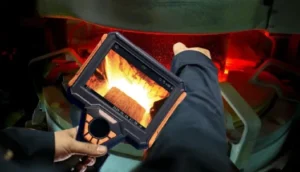
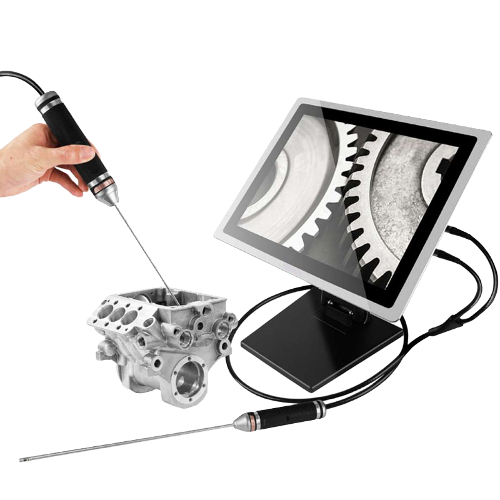
A rigid borescope is a visual inspection instrument used for industrial NDT. It uses a rigid insertion tube to access internal equipment and visually inspect internal surfaces without disassembly or damage to the inspected object. It is particularly suitable for narrow, straight channels such as engine interiors, metal castings, machined parts, and bolt holes.
Components of a Rigid Borescope
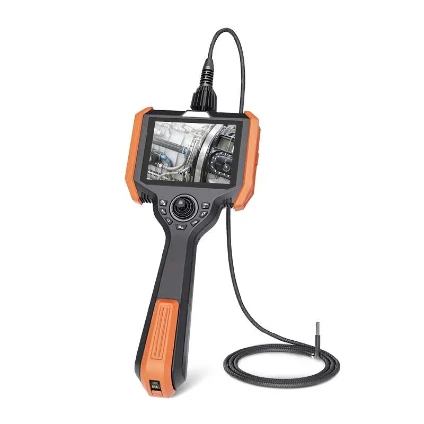
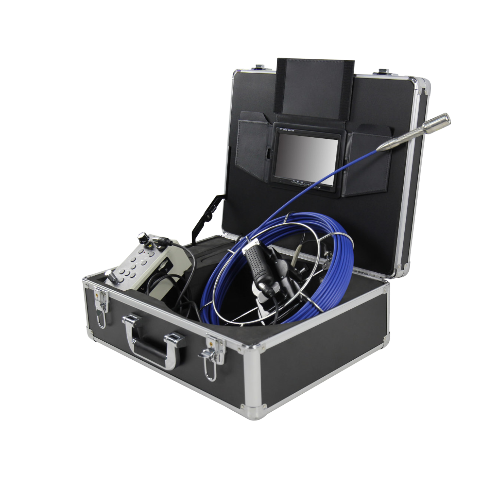
A rigid borescope features an integrated design composed of four main modules:
Rigid Insertion Probe
The probe is typically made of durable stainless steel or similar rigid materials. It does not bend, ensuring precise positioning and stable operation when inspecting deep holes, vertical cylinders, or linear cavities.
Illumination System
Provides sufficient lighting for imaging. It commonly uses a cold light source such as high-intensity LED, delivering stable and soft illumination that is transmitted to the inspection area.
Handle Unit
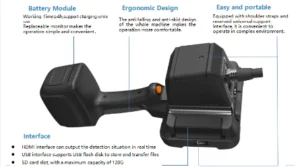
The handheld control section allows operators to precisely control insertion angle and movement. Some advanced models integrate functional buttons into the handle for single-hand, high-efficiency operation.
Display & Control Unit
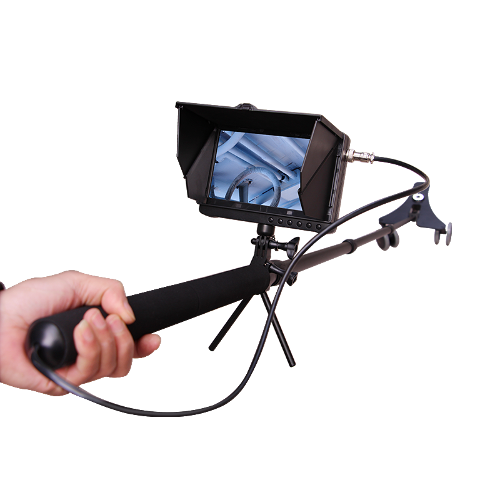
Responsible for image/video processing, storage, and user interaction. It typically comes in two forms: a standalone industrial display (10–15 inches) or a portable handheld screen.
Due to the rigidity of the probe and the structural advantages of stainless steel, rigid borescopes provide excellent directional accuracy and stable imaging in confined spaces. With a simple structure, high durability, and low maintenance cost, they are widely used for precision cylinder and straight-cavity inspections in industrial NDT applications.
Application Value of Rigid Borescopes
In manufacturing and equipment maintenance, internal defect inspection is a critical quality control process. Rigid borescopes overcome the limitations of traditional inspection methods through precise guidance, environmental adaptability, high imaging clarity, and cost efficiency. They enable defect detection in hidden areas while improving operational efficiency and safety assurance.
Guidance Value: Precise Positioning
The key advantage lies in high mechanical rigidity. The stainless-steel probe does not deform during operation, allowing accurate targeting and reducing repeated adjustments. It enables straight insertion without blind spots caused by bending probes. The structure also withstands friction and pressure, making it suitable for repeated insertion in complex cavities such as engine cylinders, hydraulic valves, and gearboxes. With interchangeable viewing angles (0°, 30°, 70°, 90°), rigid borescopes support flexible inspection perspectives.
Durability Value: Harsh Environment Adaptability
Rigid borescopes use stainless-steel outer housings and full-metal construction, providing outstanding durability. They resist wear, corrosion, and accidental bending, ensuring stable performance in oil, dust, and corrosive environments. Their total cost of ownership (TCO) is significantly lower than flexible systems, making them ideal for high-frequency industrial inspection lines.
Imaging Value: High-Definition Inspection
Equipped with high-resolution imaging systems, rigid borescopes accurately capture micro-cracks, pores, and inclusions. Images are sharp, color-accurate, and distortion-free, effectively revealing internal defects that are otherwise difficult to detect. They are widely used in turbine blades, engine cylinders, castings, and pipelines.
Economic Value: Cost Reduction & Efficiency Improvement
Compared to traditional disassembly-based inspection, rigid borescopes allow direct internal inspection without dismantling equipment, significantly reducing inspection time. They are easy to operate and require minimal training. Their durable probe reduces maintenance and replacement costs, making them ideal for mass production and routine inspections.
Core Application Scenarios of Rigid Borescopes
A rigid borescope combines a rigid optical structure with high-resolution lenses and LED illumination. It delivers real-time HD imaging inside equipment without disassembly. Compared with flexible borescopes, it offers higher stability and is especially suitable for straight channels and rigid cavities.
Automotive Manufacturing & Maintenance
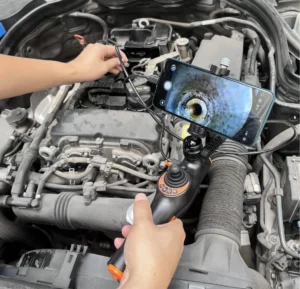
Used for engine and transmission inspection, including cylinder wear, carbon deposits, gear meshing conditions, and EV battery or motor inspection.
Aerospace
Used for turbine engines, combustion chambers, structural components, and aircraft maintenance inspections, ensuring flight safety.
Mechanical Manufacturing & Precision Machining
Applied in mold inspection, hydraulic components, and precision metal parts to detect cracks, scratches, and machining defects.
Petrochemical & Pressure Vessels
Used for pipelines, storage tanks, and valves under high temperature and pressure to detect corrosion, weld defects, and sealing issues.
Energy & Power
Applied in turbines, boilers, and gearbox systems to identify early-stage failures and reduce downtime risks.
Casting Industry
Used to detect internal porosity, sand inclusions, and surface defects in castings.
Medical Devices
Used for quality inspection of medical tubes and implantable devices to ensure manufacturing precision.
Rail Transportation
Used for gearbox, ventilation, and propulsion system inspections without disassembly.
Municipal & Security
Used for infrastructure inspection and confined-space security checks such as pipelines and underground structures.
Steel & Metal Processing
Used for internal defect detection and measurement of key weld parameters.
Selection Guide for Rigid Borescopes
Rigid borescopes are widely used for straight-channel inspection due to their clarity and durability. Selection should focus on the following parameters:
Probe Viewing Angle
Choose direct-view, side-view, or combined-view probes depending on inspection requirements to avoid blind spots.
Diameter Selection
Smaller diameters are preferred. The probe diameter should not exceed two-thirds of the channel diameter to ensure smooth insertion and reduce friction.
Length Selection
Typical range: 10–2000 mm. Selection should balance rigidity and reach:
- 10–600 mm: Suitable for close-range precision inspection such as engine components and small cavities.
- 600–1200 mm: Balanced for most industrial applications such as engine blocks and gear systems.
- 1200–2000 mm: Used for deep cavity inspection such as pipelines and large equipment interiors.
Illumination System
LED or fiber-optic light sources are recommended depending on inspection depth and environment.
Display System
High-resolution industrial displays with functions such as image freeze, recording, and zooming improve inspection efficiency and accuracy.
Proper configuration ensures optimal performance across different industrial inspection scenarios.
Development Trends of Rigid Borescopes
With the rapid growth of aerospace, semiconductors, and hydrogen energy industries, rigid borescopes are evolving toward higher resolution, intelligence, miniaturization, modularity, and service-based models.
Higher Resolution Imaging
Future systems will adopt 4K–8K sensors combined with image enhancement algorithms to improve defect detection capability.
Intelligent Inspection
AI integration will enable automatic defect recognition, dimensional measurement, and anomaly alerts, improving consistency and efficiency.
Miniaturization & Extended Length
Probe diameters will shrink below 2 mm, while longer rigid probes will expand inspection depth capabilities.
Modular Design
Interchangeable probes and compatible display units will improve adaptability and reduce user costs.
Business Model Transformation
The industry is shifting toward a “Hardware + Service + Data” model, including Inspection-as-a-Service (IaaS) and Equipment-as-a-Service (EaaS).
In the future, rigid borescopes will evolve from simple visualization tools into intelligent inspection terminals integrating AI analytics and data services, playing a more critical role in digital industrial quality systems.