
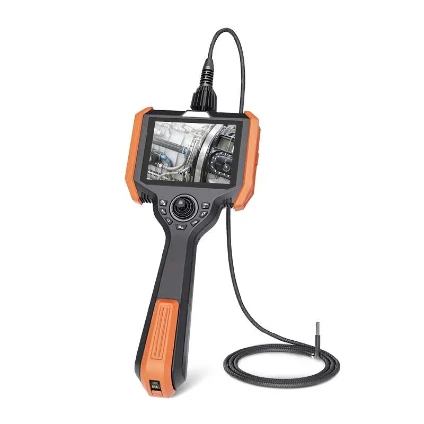
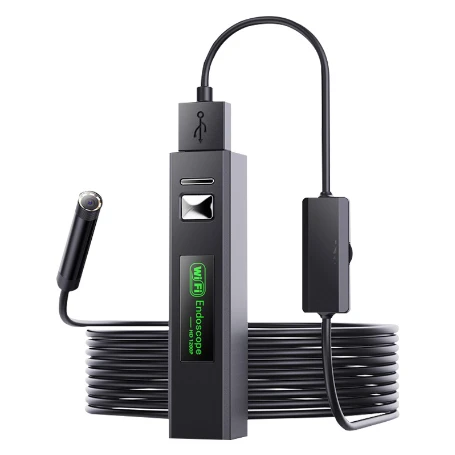
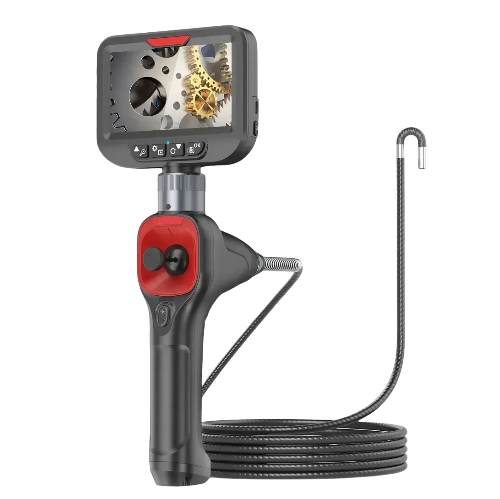
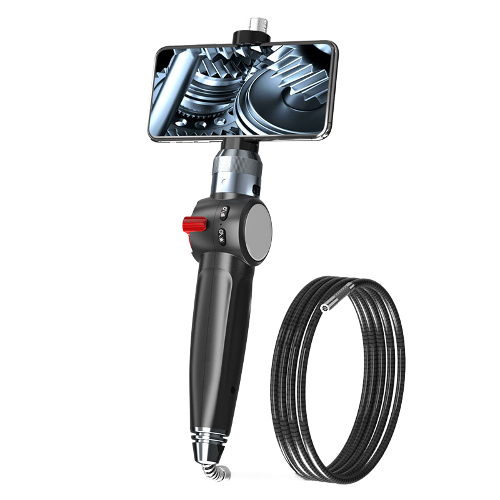
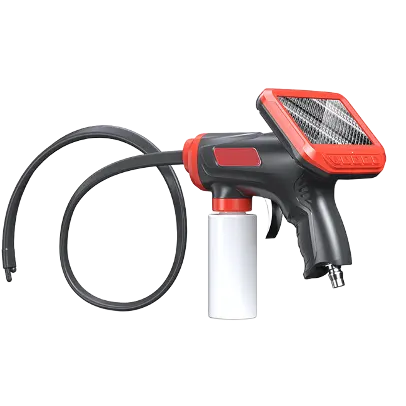
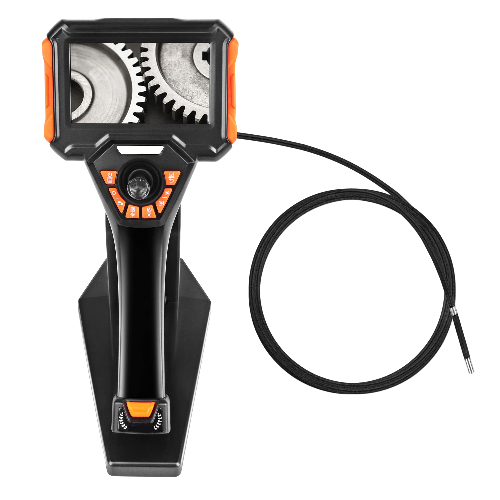
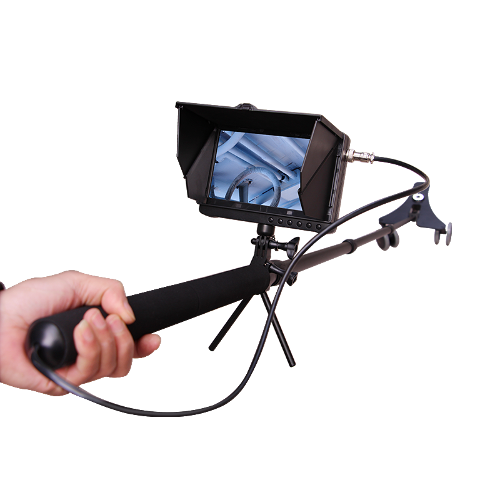
In the field of industrial inspection, traditional borescopes have prominent drawbacks when working in dark environments. Leveraging core strengths such as clear imaging in total darkness and dual‑mode diagnosis with infrared and white light, the infrared inspection camera (IR Borescope) has become an indispensable non‑destructive testing tool in industries including electric power, petrochemicals, and aerospace. It delivers brand‑new solutions for equipment routine inspection and fault prediction.
Core Value 1: Clear Imaging Capability in Total Darkness
Traditional optical borescopes rely on LED white light illumination. In narrow and dark spaces such as pipelines, boilers and storage tanks, lighting blind spots often occur due to spatial constraints and obstacle occlusion, resulting in poor imaging quality.
The infrared inspection camera emits infrared light as the active illumination source. Taking advantage of the high sensitivity of ordinary image sensors to the near‑infrared spectrum, it can capture clear real‑time images even in completely lightless environments.
The practical value of this capability is reflected in the following industrial scenarios:
- Inspection of enclosed dark cavities: It is applicable to internal checks of boiler furnaces, reactor kettles, large storage tanks, underground pipelines and other confined dark spaces. The IR borescope requires no additional lighting layout and can capture real‑time internal images immediately after the probe is inserted.
- Penetrating imaging in dusty and smoky environments: Power equipment interiors and casting furnace surroundings are often filled with dust or smoke. Visible light scatters severely in such conditions and blurs images. With a longer wavelength, infrared light boasts far stronger penetration through dust and smoke, maintaining clear imaging under harsh working conditions.
- Identification of oil‑contaminated surfaces: Mechanical parts are usually covered with oil stains, which cause strong visible light reflection and obscure key structural features. Infrared lighting effectively suppresses such reflection interference and presents authentic surface textures and structural contours.
- Safe detection in explosion‑proof scenarios: In coal mine roadways, offshore oil platforms and other sites with flammable and explosive gas, high‑brightness white LED fill light may pose potential safety risks. The infrared inspection camera adopts low‑energy infrared light sources, meeting detection needs while greatly improving operational safety.
Core Value 2: Concealed Observation and Safety Assurance
A key differentiated advantage of the infrared inspection camera is its concealment during operation. When traditional optical borescopes work in dark environments, their LED light sources emit obvious red light spots, exposing operators in law enforcement, military and confidential inspection scenarios.
The IR borescope uses invisible infrared band illumination with zero red glow leakage, minimizing the risk of exposure. Its value is particularly prominent in the following scenarios:
- Covert investigation and evidence collection for law enforcement: When conducting counter‑terrorism, anti‑drug and hostage rescue missions, law enforcement officers need to obtain information on indoor personnel distribution, movement tracks and hiding locations without alerting targets. The miniature probe of the infrared inspection camera can penetrate tiny openings such as door gaps, window crevices and air conditioning ducts to enter target areas. With no visible light leakage, it avoids exposure. Its built‑in photo and video functions provide first‑hand image evidence for case investigation and legal proceedings.
- Anti‑terrorism and bomb disposal safety operation: For suspicious parcels, vehicles, luggage and boxes, forced opening may trigger explosive devices. Law enforcement personnel can remotely control the IR borescope for internal detection from a safe distance, acquiring critical information while eliminating personal safety risks.
- Covert inspection of military facilities: In border patrol and frontline reconnaissance missions, the infrared inspection camera can inspect inlets, outlets and ventilation ducts of suspicious facilities without being detected.
- Pre‑security inspection for key areas: Before important conferences and large‑scale events, the IR borescope is used to inspect wall hidden compartments, ceiling interlayers and other spaces where contraband may be concealed. It avoids destructive inspections and improves security check efficiency.
- Search and rescue in fire ruins and night operations: In pitch‑dark environments such as earthquake collapse sites and fire ruins, the infrared inspection camera can penetrate crevices to search for trapped personnel without generating extra light pollution. It assists rescuers in acquiring internal information quickly and supports rescue decision‑making.
Core Value 3: Dual Diagnostic Capability with IR & White Light Integration
This is the core practical advantage that distinguishes the infrared inspection camera from ordinary visible light borescopes. The device integrates standard white light visual detection and infrared night vision dual modes, supporting one‑click fast switching on‑site. There is no need to replace equipment, re‑enter the site or adjust detection angles, greatly enhancing inspection flexibility.
The white light mode restores the true color and surface texture of workpieces, accurately identifying visible defects such as cracks, corrosion, scratches, blockages, falling‑off and deformation to meet routine quality inspection and appearance patrol requirements. The infrared mode is tailored for dim, lightless and high‑reflection complex scenarios, solving the problem of blurred or incomplete imaging with visible light. The free switch between dual modes covers both conventional bright working conditions and harsh dim environments. One single device adapts to multiple inspection scenarios and completely eliminates the limitations of single‑mode borescopes.
Core Value 4: Cost Control Benefits
Traditional fault troubleshooting often requires disassembling large equipment and pipeline units, which is time‑consuming and causes long production downtime, directly cutting operational productivity. The infrared inspection camera enables non‑disassembly rapid detection and instant fault troubleshooting, significantly shortening equipment downtime and maintenance waiting time. It ensures continuous production and reduces losses caused by production suspension and output reduction.
With one‑click switching between infrared and white light modes and full‑scenario coverage, the IR borescope delivers precise imaging to accurately locate fault points and assess fault severity. It avoids blind maintenance, full‑section replacement and over‑maintenance in traditional detection. Only defective parts are repaired precisely, lowering costs for parts replacement and manual maintenance. In addition, it detects hidden potential hazards in advance, preventing minor defects from evolving into major malfunctions and avoiding huge costs from overhauls and equipment scrappage.
Summary of Industry Application Value
The infrared inspection camera (IR Borescope) has extensive application value across multiple industries. The specific benefits it brings to major industrial sectors are summarized as follows:
Electric Power Industry
It detects foreign objects, looseness, wear and other faults inside generators, transformers, GIS equipment and switchgears. High‑definition imaging is realized inside dark cavities without equipment disassembly, avoiding unnecessary power outages and eliminating safety hazards for personnel entering confined spaces.
Petrochemical Industry
It inspects coking, corrosion and foreign matter accumulation inside pipelines, storage tanks, reactor kettles and furnace tubes. One‑time clear imaging is achieved in dark furnace and tank interiors, eliminating repeated entry operations due to insufficient lighting and reducing economic losses from unplanned shutdowns.
Machinery Manufacturing Industry
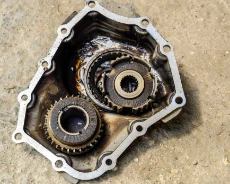
It checks assembly quality and operating status of hydraulic systems, gearboxes and bearing chambers. It identifies metal debris, scratches and looseness in dark and oil‑polluted environments, cutting production downtime and operational costs.
Aerospace Industry
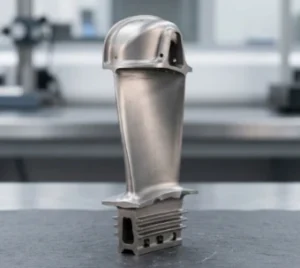
It examines the integrity of aero‑engine turbine blades, combustion chamber inner walls and cooling channels. High‑definition detailed images are captured in lightless environments, ensuring key components meet safety standards and preventing catastrophic failures such as in‑flight shutdowns.
Automotive Manufacturing Industry
It inspects assembly accuracy and wear conditions of engine cylinder blocks, gearboxes and exhaust systems. Internal detection of dark and narrow cavities is completed without disassembly, shortening product development cycles and production line downtime.
Construction & HVAC Industry
It assesses construction quality and damage of internal wall pipelines, ventilation ducts and insulation layers. It accurately locates water leakage points, blockages and structural damage in dark spaces, providing image evidence for construction acceptance and maintenance work.
Law Enforcement & Public Security
Equipped with miniature probes that penetrate tiny gaps such as door and window crevices, it allows law enforcement officers to acquire critical information without direct exposure and minimizes law enforcement risks. It provides all‑weather covert technical support for public security, armed police, border defense, fire control, customs and other departments in criminal investigation, security inspection, bomb disposal, search and rescue, anti‑smuggling and counter‑terrorism tasks.
The infrared inspection camera not only achieves high‑definition detection in all environmental conditions but also effectively controls operation and maintenance costs. Widely applied in electric power, petrochemical, aerospace, construction, public security and other fields, it makes up for the shortcomings of traditional detection technology. It ensures operational safety and stable equipment operation while reducing costs and improving efficiency, making it an indispensable core device for modern non‑destructive testing.