
Introduction
In high‑risk law enforcement operations such as night‑time surveillance, counter‑terrorist rescue missions, security screening, and explosive ordnance disposal, officers are frequently confronted with a difficult challenge: how to inspect the interior of confined or concealed spaces without revealing their presence or alerting the target.
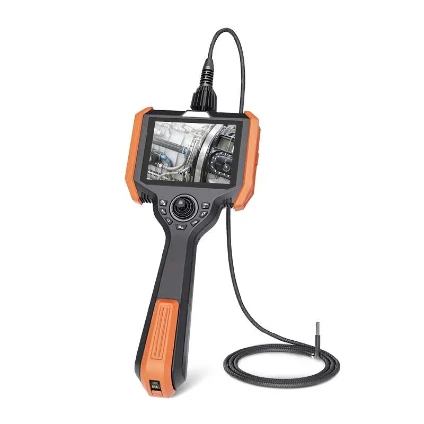
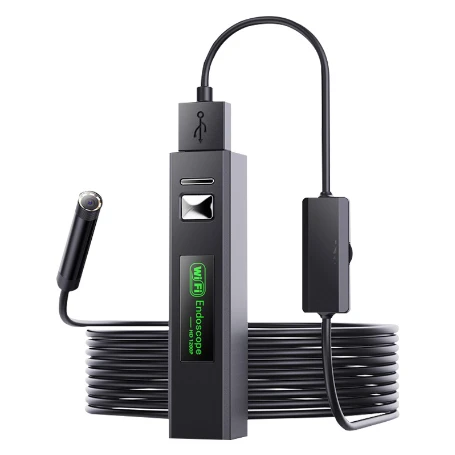
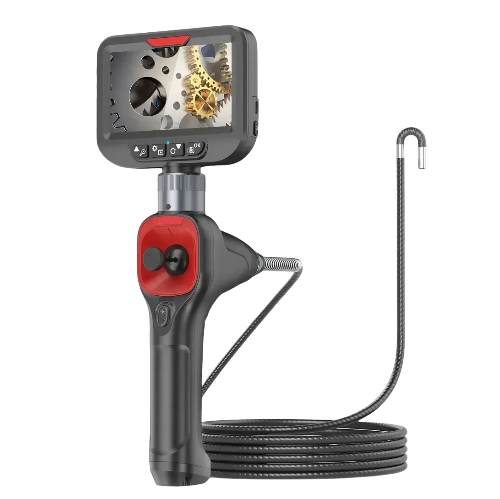
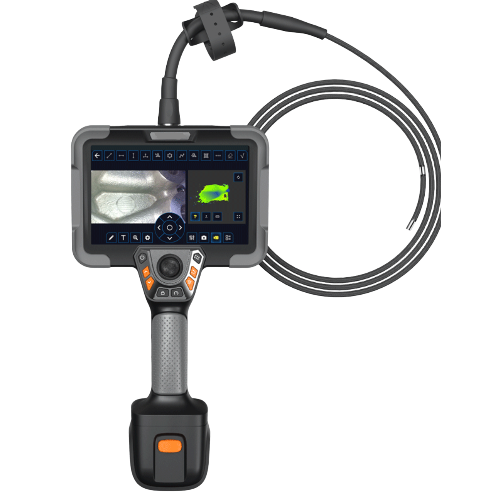
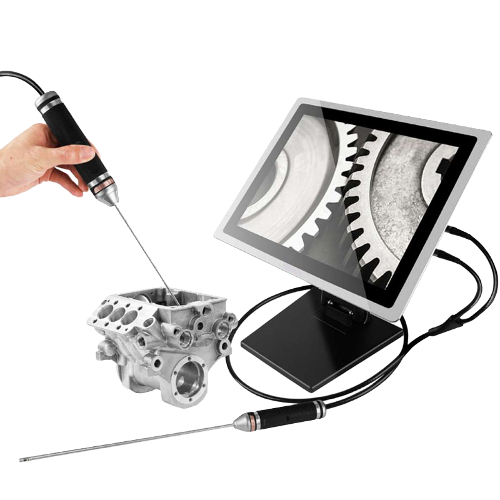
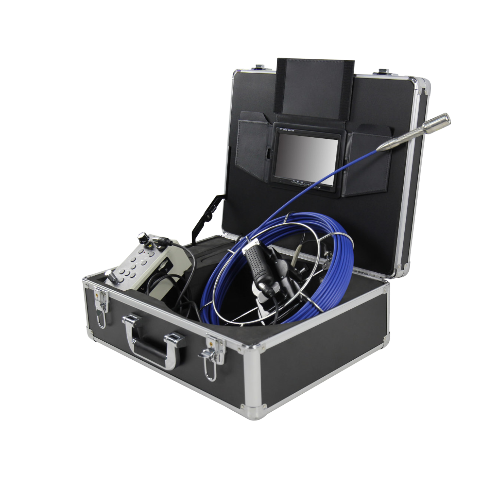
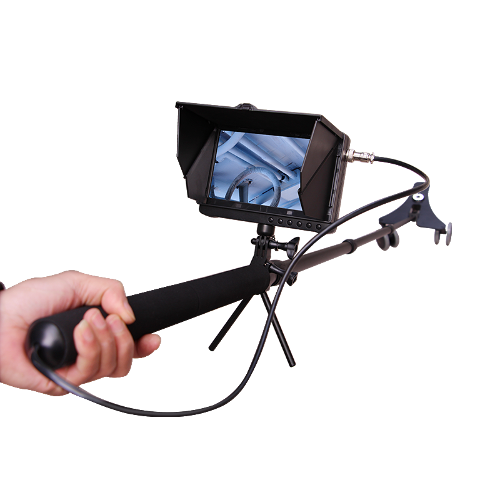
The emergence of the infrared inspection camera has provided an effective solution to this problem. Using near‑infrared (NIR) illumination that is completely invisible to the human eye, the system extends visual inspection capabilities into pitch‑black enclosed environments. Its slim, flexible probe can be inserted through door gaps, beneath vehicle chassis, into wall cavities, and other inaccessible areas where conventional cameras cannot reach — all without producing visible light or noise, leaving the target entirely unaware.
What Is an Infrared Inspection Camera?
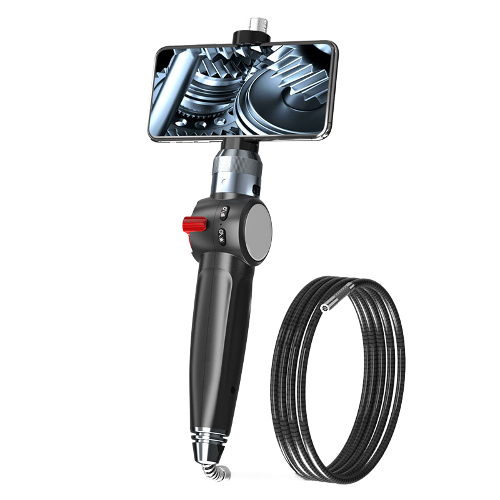
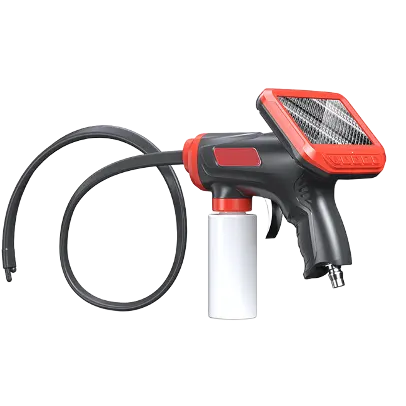
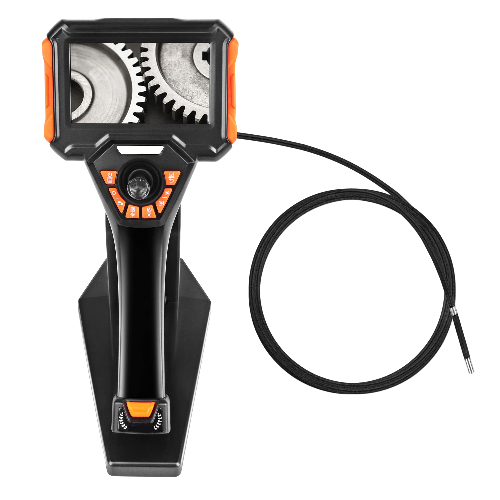
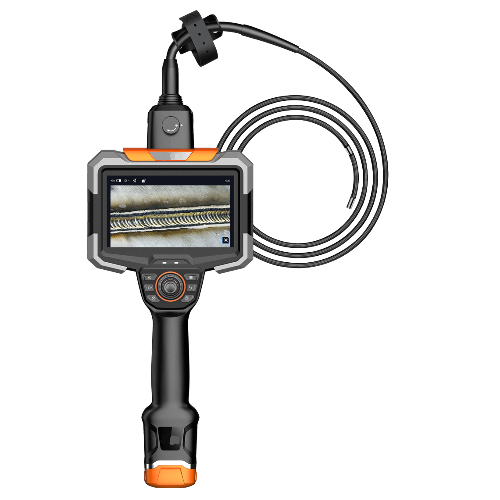
An infrared inspection camera (NIR endoscope) is an active infrared imaging device. It operates using built‑in infrared LED illumination, typically at wavelengths of 850nm or 940nm. The device actively projects invisible infrared light into the target area, while an infrared‑sensitive image sensor captures the reflected light and converts it into high‑resolution monochrome imagery displayed on the monitor.
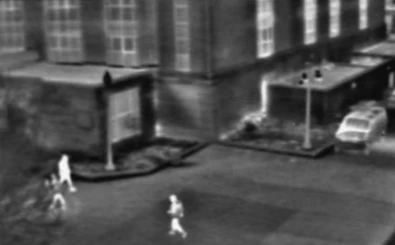
This is fundamentally different from a thermal imaging borescope. An infrared inspection camera relies on active illumination and captures the physical structure and surface detail of objects rather than their heat signatures. As a result, the image quality is rich in detail and close to that produced under visible white light, enabling accurate identification of shapes, textures, and spatial relationships.
Key Technical Comparison: 850nm vs 940nm
| Wavelength | Visible Red Glow | Concealment Level | Recommended Applications |
|---|---|---|---|
| 850nm | Slight red glow visible at close range | Moderate | Situations where covert operation is less critical |
| 940nm | Completely invisible to the human eye | Excellent | Police surveillance, counter‑terrorism, covert night operations |
For police and tactical applications, 940nm no‑glow models are strongly recommended to ensure fully covert illumination.
Typical Applications of Police Infrared Inspection Cameras
Covert Night Surveillance
Night‑time surveillance operations demand an exceptionally high level of concealment. Even low‑intensity white‑light illumination used by standard cameras can create visible light pollution in dark environments, potentially exposing the observer’s position.
An infrared inspection camera equipped with invisible 940nm illumination enables officers to operate only centimetres away from the target while remaining undetected. Through door gaps, vents, or other natural openings, operators can discreetly observe interior activity without alerting occupants. Real‑time video can also be transmitted directly to command units for tactical assessment.
- Zero visible light exposure
- Probe insertion through gaps as narrow as 6mm
- Real‑time intelligence transmission
Pre‑Assault Counter‑Terrorism Reconnaissance
Before launching a hostage rescue or tactical entry operation, response teams must determine the number of occupants, their positions, and possible weapons inside the building. Any premature exposure of surveillance activity may place hostages at immediate risk.
An infrared inspection camera allows tactical teams to insert the probe through tiny openings in the building structure and silently capture live interior imagery without emitting any audible or visible signals.
- Critical intelligence prior to tactical entry
- Enhanced hostage safety through covert reconnaissance
- Visual evidence to support operational command decisions
Explosive Ordnance Disposal and Security Screening
During suspicious package inspections or bomb disposal operations, some light‑sensitive or vibration‑triggered devices may detonate if exposed to intense light or physical disturbance.
Using cold infrared illumination, an infrared inspection camera enables EOD personnel to inspect suspicious packages or sealed compartments without opening or touching them. The flexible probe provides clear internal imagery while minimising operational risk.
- Cold illumination without thermal radiation
- Reduced risk of triggering light‑sensitive devices
- Slim probe suitable for irregular cavities beyond X‑ray coverage
Suspicious Vehicle Inspections
When inspecting vehicles suspected of carrying explosives, contraband, or concealed compartments, officers often require visibility inside the cabin without directly interacting with the vehicle.
An infrared inspection camera can be inserted through door seals, ventilation grilles, or other narrow openings, enabling investigators to examine the vehicle interior and hidden compartments without opening doors or making physical contact.
- Zero‑contact inspection improves officer safety
- Full interior visual assessment without opening the vehicle
Border Security and Cargo Inspection
Inspecting large freight containers or modified luggage compartments using X‑ray systems alone may not always provide sufficient detail resolution.
An infrared inspection camera can be inserted between stacked cargo or into narrow cavities to provide real‑time visual inspection of concealed structures. The system remains equally effective in poorly lit warehouses, ports, or night‑time border operations.
- Complements X‑ray blind spots with detailed imagery
- Unaffected by low‑light or night‑time conditions
Criminal Investigation and Forensic Examination
At crime scenes, preserving evidence integrity is essential. Investigators often need to document concealed areas without touching or disturbing physical evidence.
An infrared inspection camera enables non‑contact imaging inside furniture cavities, wall voids, pipelines, and other hard‑to‑access areas that conventional inspection methods cannot easily reach. Recorded footage can also be archived directly as evidential material.
- Preserves original crime scene conditions
- Captured footage suitable for evidential documentation
Prison and Detention Facility Security Inspections
Hidden cavities beneath beds, behind toilets, or inside ventilation ducts are common locations for concealing contraband within prisons and detention facilities. Manual searches are often time‑consuming and difficult to conduct comprehensively.
An infrared inspection camera enables systematic inspection of concealed cavities, significantly improving search efficiency while reducing direct contact between officers and potentially hazardous items.
- Efficient inspection of concealed spaces inaccessible by hand
- Reduced risk when handling dangerous or prohibited items
Frequently Asked Questions
- Can an infrared inspection camera produce clear images in complete darkness?
- Yes. Active infrared inspection cameras include their own infrared illumination source and do not require any external lighting. They can produce clear imagery even in completely dark enclosed environments.
- Is 940nm infrared light truly invisible to the human eye?
- Yes. The 940nm wavelength falls within the near‑infrared spectrum, beyond the visible light range detectable by the human eye (approximately 380–780nm). Even at close distances, it produces no visible glow or red hotspot, making it highly suitable for covert operations.
- What is the difference between an infrared inspection camera and a thermal imaging borescope?
- An infrared inspection camera actively emits infrared light and captures reflected light to generate detailed structural imagery. The resulting image quality is close to photographic clarity and reveals object shape and surface detail.
A thermal imaging borescope, by contrast, passively detects heat radiation emitted by objects and displays temperature distribution rather than structural detail. Thermal imaging is effective for detecting people or equipment heat signatures but cannot provide the same level of physical detail.
Both technologies serve different operational purposes. - How narrow a gap can the probe pass through?
- Professional‑grade police models are available with probe diameters as small as 3.9mm. Combined with flexible articulation, they can typically pass through openings of approximately 5mm or wider, making them suitable for most door gaps, vents, and concealed cavities.
Conclusion
By combining active near‑infrared illumination with high‑definition structural imaging, the police infrared inspection camera extends visual inspection capability into dark and confined spaces beyond the reach of the naked eye. Its fully covert illumination characteristics satisfy the stringent operational requirement for zero visible light exposure in law enforcement environments.
From covert surveillance and counter‑terrorist rescue operations to explosive ordnance disposal and vehicle inspections, the infrared inspection camera significantly enhances operational intelligence gathering, improves tactical precision, and helps safeguard frontline personnel during high‑risk missions.