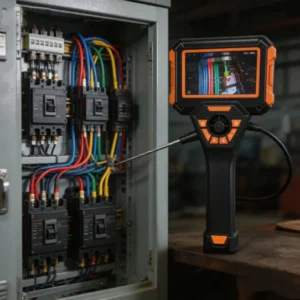

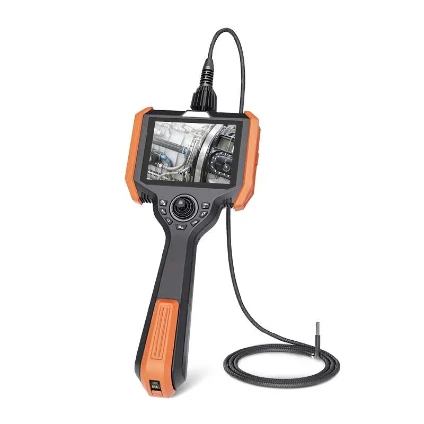
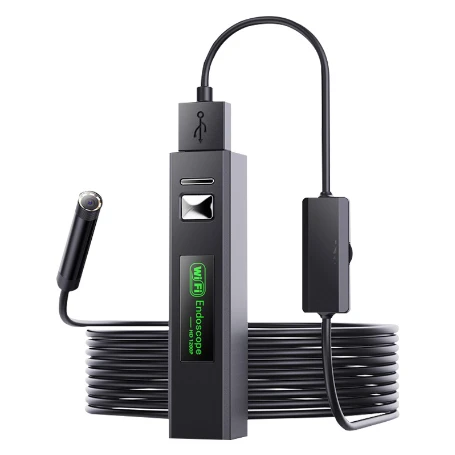
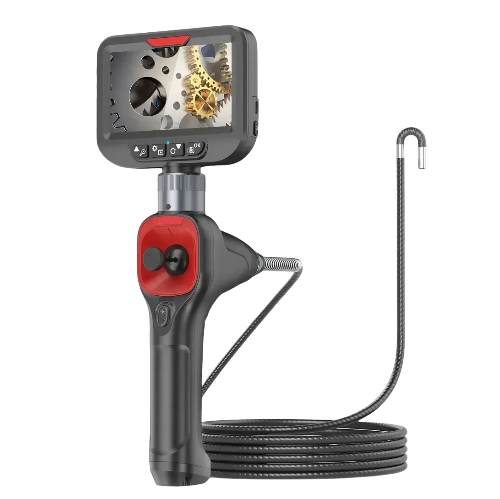
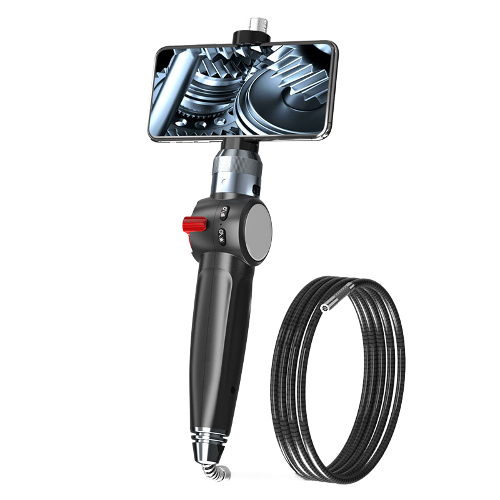
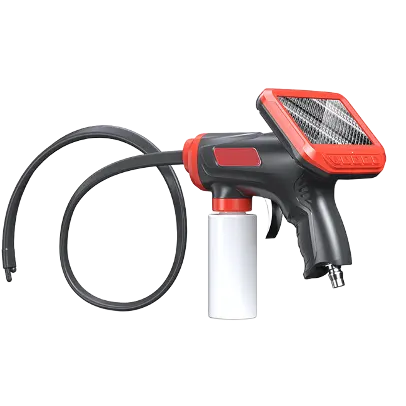
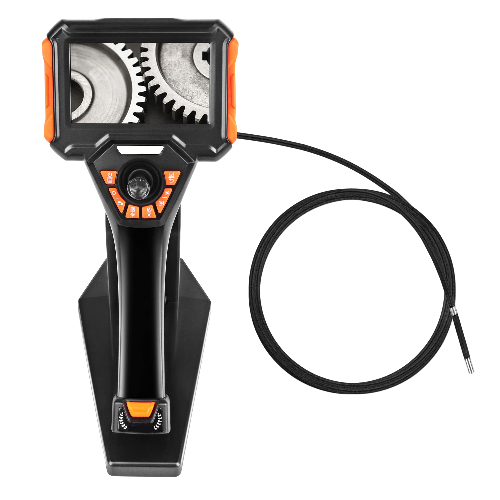
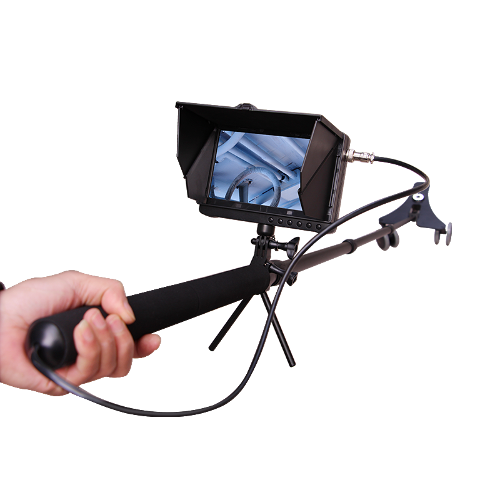
Sewer inspection cameras—also widely referred to as drain cameras and pipeline cameras—are essential tools for pipeline inspection and maintenance. They are widely used in all types of industrial sectors that rely on pipeline transportation and operation. Since testing requirements vary significantly across different working conditions, a scientific selection process directly determines the accuracy and efficiency of your inspections. Here’s the guide for you to choose the right sewer camera.
The Key Factors for Choosing Sewer Inspection Camera
Camera
Opt for a modular design that matches assemblies with different diameter probes and lengths, suitable for inspecting pipelines of different diameters and detection ranges.
Opt for a built-in 512Hz transmitter as needed – it enables precise positioning of the probe inside the pipeline, making it easy to locate and mark damaged sections, blockages and other issues accurately.
Equipped with self-leveling function to ensure that the lens remains level at all times and avoid probe shaking affecting observation clarity.
Equipped with a pan tilt rotating camera, it supports flexible turning from multiple angles and can explore the inside of pipelines without blind spots.
Choose a wide-angle lens to reduce detection blind spots, and pair with an adjustable LED light to adapt to the dark environment inside the pipeline.
Convenience of Detection and Operation
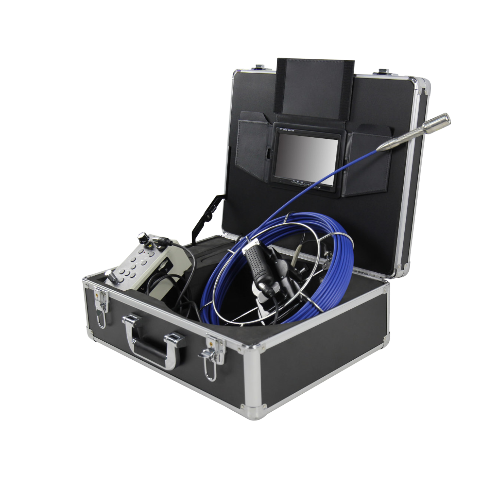
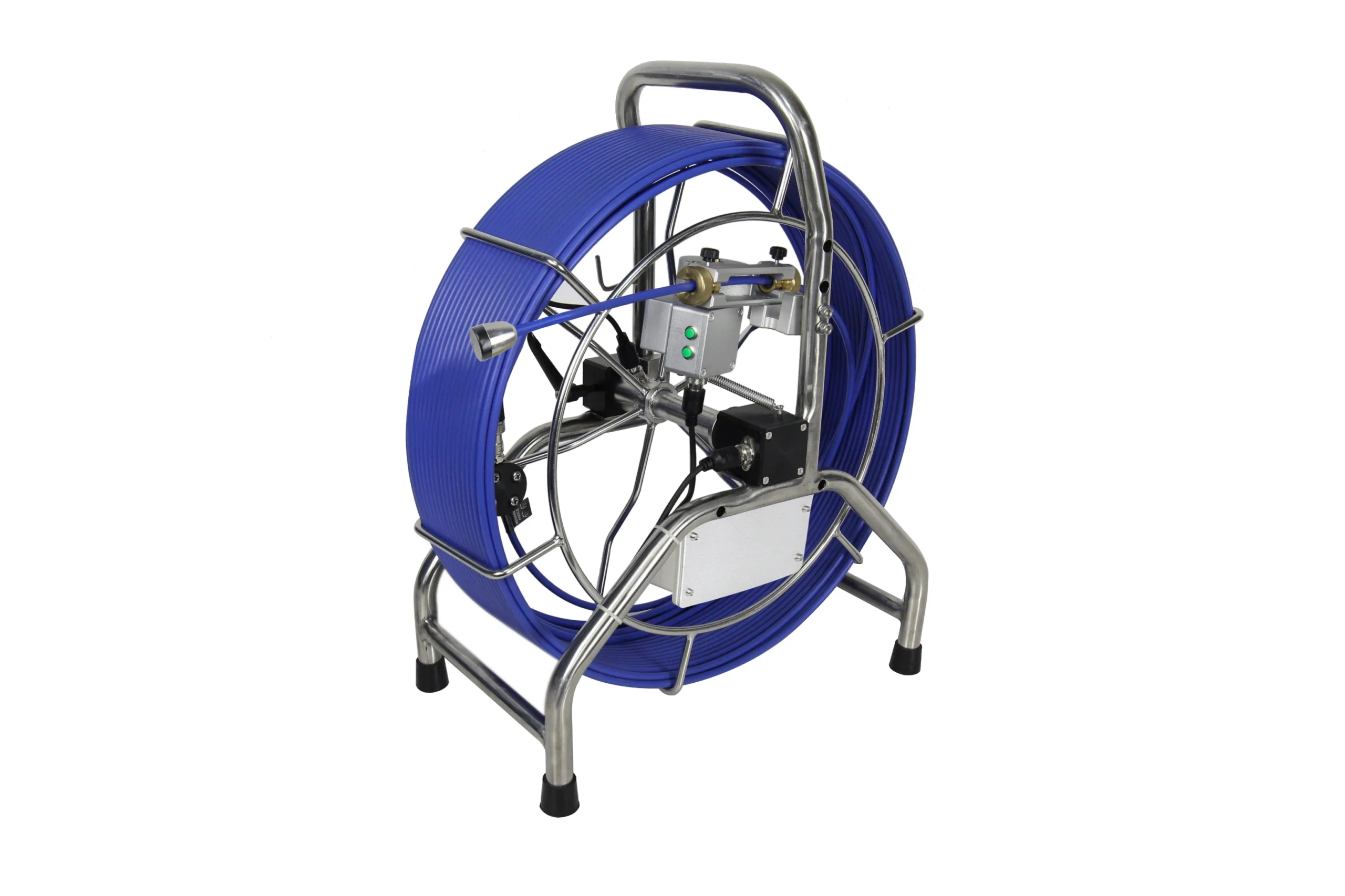
Sewer inspection cameras come with a standard cable length of 20–30 meters, with optional lengths ranging from 50 to 120 meters. A cable reel is included as standard, for convenient on-site storage and portability, and to prevent cable tangling and abrasion.
Equipped with a built-in integrated or handheld 7/9-inch display screen, delivering crystal-clear imaging even in harsh outdoor lighting conditions.
One-click photo and video recording lets you instantly capture pipeline fault points, with support for both SD card and USB data storage.
Opt for a built-in meter counter or the optional 512Hz transmitter to accurately locate the fault points such as damage and blockage, providing accurate data for maintenance and renovation. An optional input keypad is also available for real-time entry of relevant inspection information.
Equipped with a controller box or an integrated handheld screen controller for easy operation.
For ultra-long-distance inspections, we recommend a 960TVL cable with a fiberglass core – it ensures sharp imaging and stable signal transmission at all times.
Protection
The lens protection level should reach IP68 or above, and be suitable for complex pipeline environments with accumulated water, mud, and dust.
In flammable and explosive environments like petroleum, chemical and gas industries, the lens should feature an explosion-proof sealed design and be fully compliant with the Ex explosion-proof certification of the complete unit.
For high-temperature environments, the lens should have high-temperature protection.
The body takes into account dust, water, and drop resistance, making it suitable for complex outdoor construction scenarios.
Equipped with a storage case for easy carrying and overall protection.
Battery Life
Optional built-in high-capacity rechargeable lithium battery, with a battery life of more than 6 hours, to avoid power outages and ensure mission continuity.
Sewer cameras are non-destructive visual inspection tools for detecting the internal condition of pipelines, which can help you identify potential hazards in a timely manner. When choosing equipment, priority should be given to scenario adaptability, opt for a modular camera, customize the cable length and match different functional modules as needed. Choosing the right sewer inspection cameras will make pipeline inspection and maintenance work more efficient and accurate.