
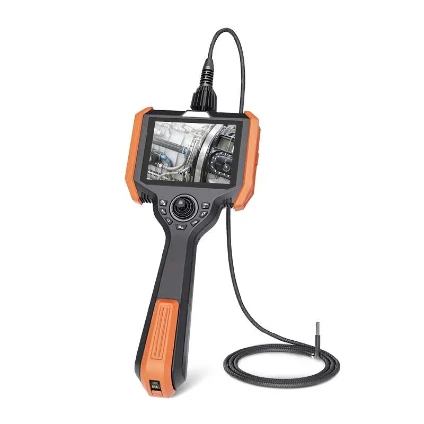
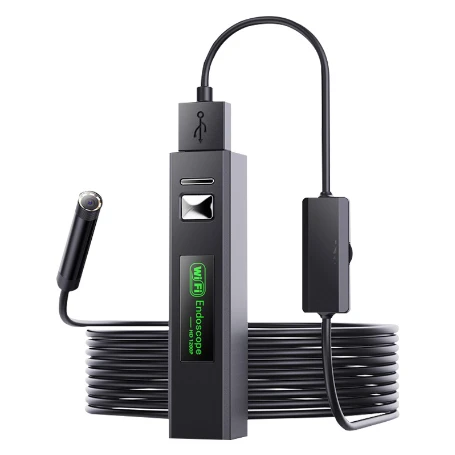
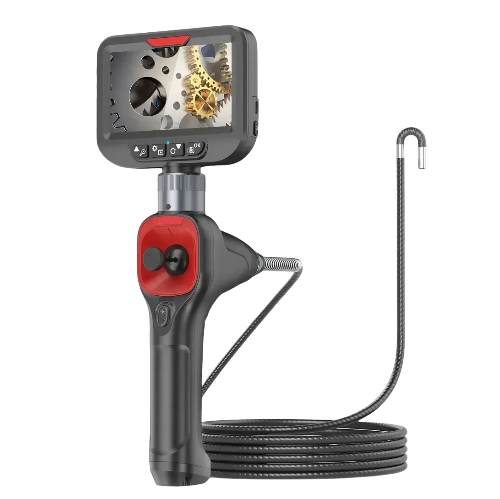
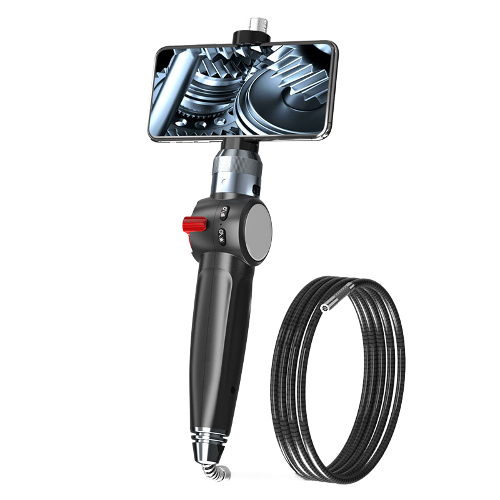
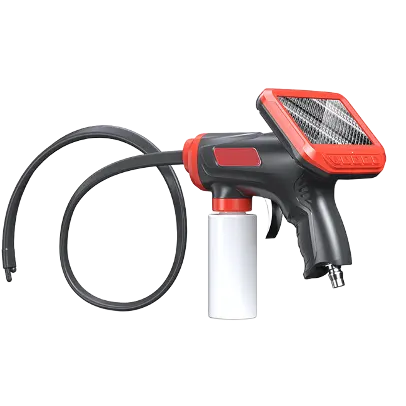
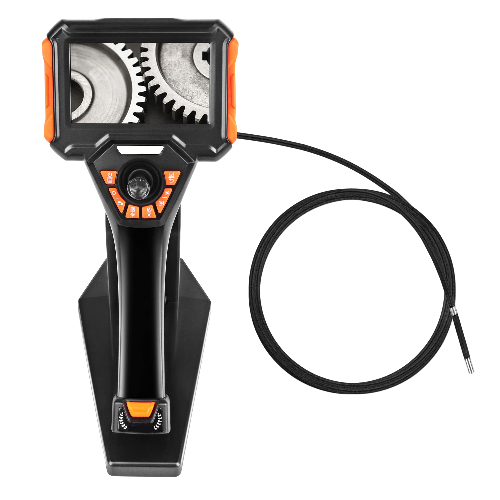
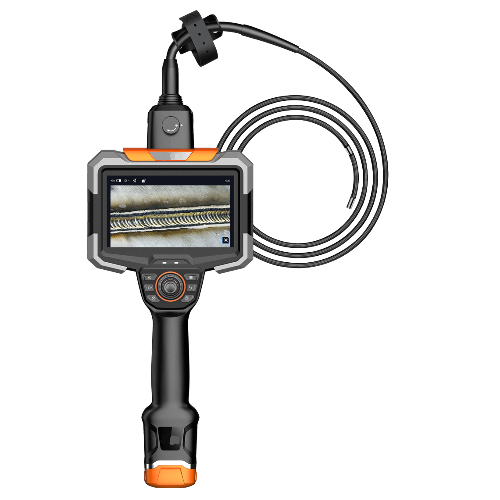
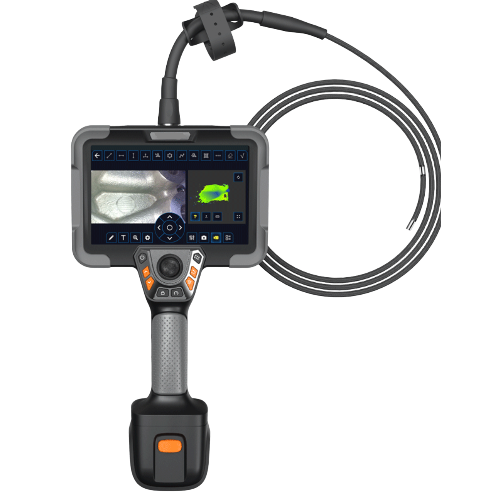
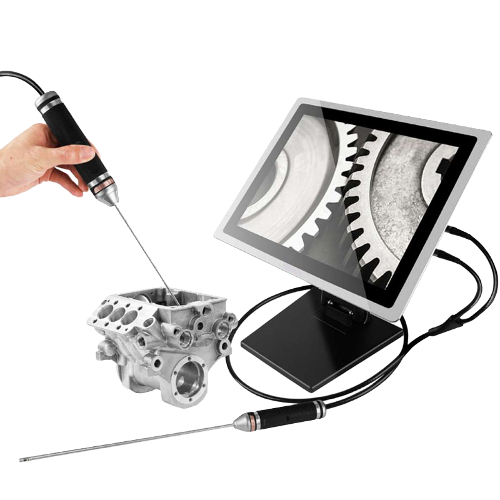
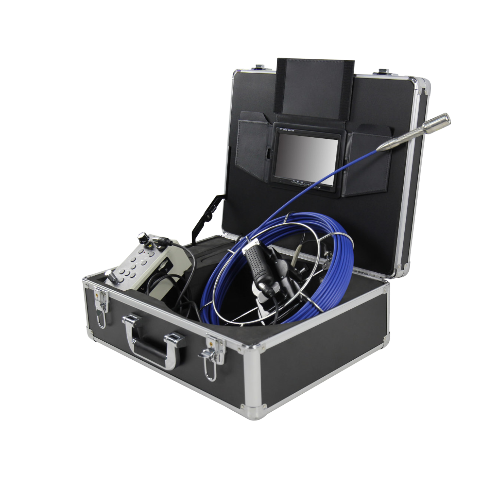
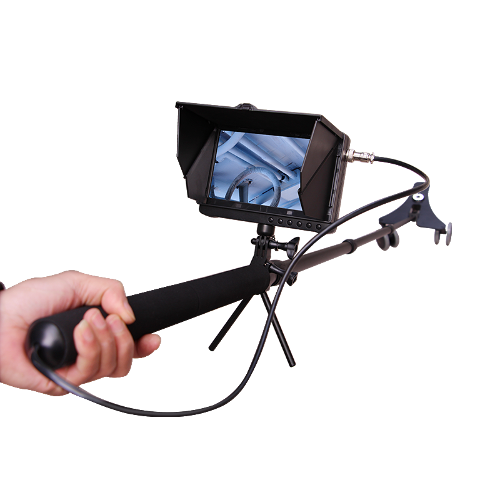
Against the backdrop of micro-precision manufacturing, inspection spaces have developed from narrow passages to ultra-limited micro-cavities. Ultra-thin borescopes with probe diameters breaking the 1mm threshold and reaching as low as 0.48mm are not merely a miniaturization achievement, but a generational technological leap in industrial non-destructive testing.
Definition of Ultra-Thin Borescope: Break the 1mm Size Barrier
An ultra-thin borescope is not just a downsized version of standard industrial endoscopes. It is a professional inspection instrument specially customized for sub-millimeter micro holes, tiny capillary pipelines and intricate internal confined cavities.
- Ultra-miniature size gradient: Mass-produced mainstream products cover 0.5mm–1.0mm diameter range; cutting-edge R&D prototypes with 0.3mm–0.5mm diameter are undergoing performance verification.
- High-density precision integration: Micro CMOS image sensor, high-brightness LED light source and dedicated signal transmission wires are all embedded inside a probe slimmer than an injection needle.
- High-performance composite materials: Adopt tungsten wire or tungsten alloy braided tube structure to solve the core defect of easy breakage for ultra-slim insertion tubes, balancing rigid support and flexible bending for smooth travel through complex curved channels.
Core Application Scenarios: Reach Unreachable Inspection Blind Zones
The core competitiveness of ultra-thin borescopes lies in accessing micro spaces unreachable by conventional equipment and completing precise non-contact detection without workpiece disassembly or destructive cutting.
Aerospace Industry: Micro Cooling Hole Inspection
Specially applied to detect micro film cooling holes on turbine blades, carbon deposition inside fuel nozzles and corrosion of tiny capillary pipelines in fuselage structures. It realizes airworthiness inspection without complete engine disassembly.
Precision Machinery & Electronic Manufacturing: Capture Micron-level Micro Defects
- Semiconductor & MEMS Devices: Enter chip packaging interiors and ultra-precision components to identify tiny flaws as small as 5μm, avoiding scratch damage to delicate micro structures caused by contact detection.
- Precision Castings: Penetrate through tiny reserved process holes to inspect internal blowholes, pores and hairline micro cracks.
Medical Device Manufacturing & Automotive Industry: Internal Cleanliness & Micro Channel Detection
- Cleanliness Verification: Inspect residual biological stains inside long narrow lumens of medical instruments, compatible with flushing effect verification workflows.
- Automotive Powertrain & New Energy EVs: Directly observe internal status of fuel injection systems, tiny oil passages, and welding defects on power battery tabs.
Scientific Selection Logic: Customized Standards Exclusive for Ultra-Thin Products
The selection criteria for ordinary borescopes cannot be directly applied to ultra-thin models; targeted evaluation rules shall be followed:
Reasonable diameter matching principle: Thinner does not equal better. On the premise that the probe can smoothly enter the measured hole, select a slightly larger diameter. An extra 0.1mm space can accommodate higher-performance imaging sensors and greatly improve picture quality.
Advanced image algorithm compensation. Micro lenses have inherent light intake limitations. High-quality ultra-thin borescopes are equipped with powerful image processing algorithms to restore tiny details of cracks, burrs and corrosion pits.
Optimized lighting heat dissipation design. Narrow micro spaces are difficult to dissipate heat. Prioritize products with high-brightness low-heat LED light sources to prevent thermal damage to precision workpieces and built-in miniature electronic components.
Industrial high protection performance. Despite ultra-slim probe size, the whole machine needs to reach IP67 protection grade to block dust, oil liquid and sewage from invading through micro gaps of the probe assembly.
Strategic Industrial Value: Shift from Visual Observation to Predictive Maintenance Support
- Space accessibility value: Detect channels below 2mm without destructive slicing or equipment disassembly, fully protecting the integrity of high-value precision parts.
- Inspection equipment asset protection: High-flexibility braided insertion tubes bear minimal abrasion when passing sharp edges and rough inner walls, cutting equipment maintenance and replacement costs.
- Predictive maintenance risk prevention value: Support frequent deep internal inspection to capture early micro cracks and thermal fatigue damage, avoiding unplanned full production line shutdown and huge economic losses.
Future Development Trends: Smaller Size, Clearer Imaging, Higher Intelligence
Continuous probe miniaturization iteration: Within the next 3–5 years, products below 0.5mm diameter will achieve synchronous upgrading of steering precision and imaging resolution.
Popularization of panoramic & multispectral imaging technology
360° panoramic imaging: Built-in miniature conical mirror realizes full circumferential image acquisition in one insertion without rotating the probe.
Multi-band composite detection: Integrate ultraviolet light for oil stain inspection, blue light for metal micro-crack contrast enhancement and infrared light for internal thermal damage identification.
Deep AI intelligent integration
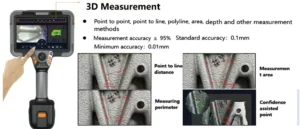
Automatic defect quantification: AI algorithms intelligently mark defect areas and automatically calculate length, depth and area, lifting overall inspection efficiency by more than 50%.
Autonomous intelligent navigation: Combine magnetic drive technology with AI path planning, enabling the probe to independently avoid obstacles and complete full-coverage inspection inside complex S-shaped pipelines.
Summary
The ultra-thin borescope acts as a “micro precision surgical tool” for modern industrial manufacturing. It accurately excavates hidden internal risks of high-end equipment relying on sub-millimeter access capability. With the deep integration of artificial intelligence and micro optical technology, it is evolving from a simple image viewing tool into an intelligent industrial inspection terminal that provides complete data support for production quality and equipment maintenance decision-making.