
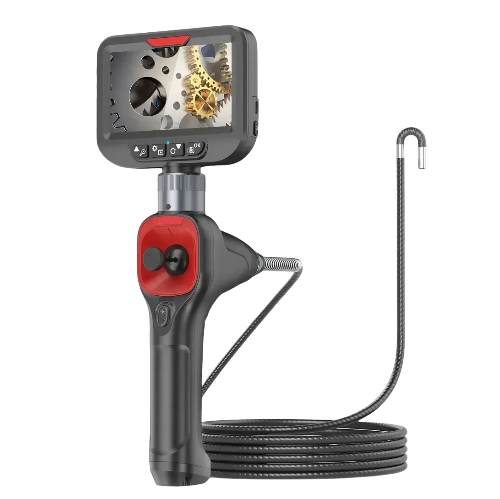
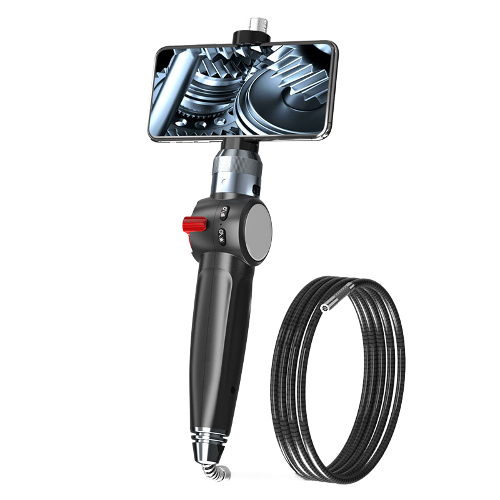
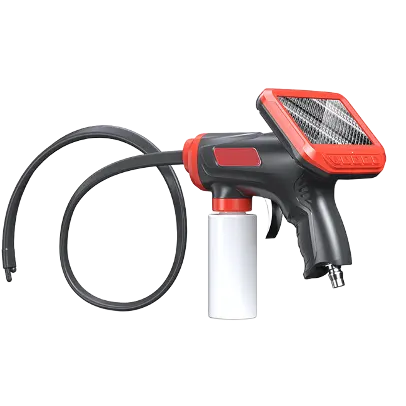
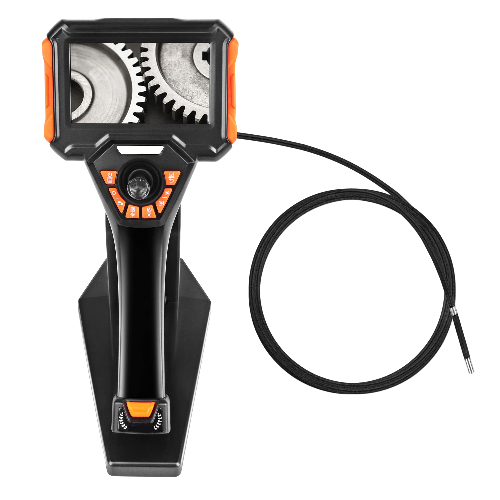
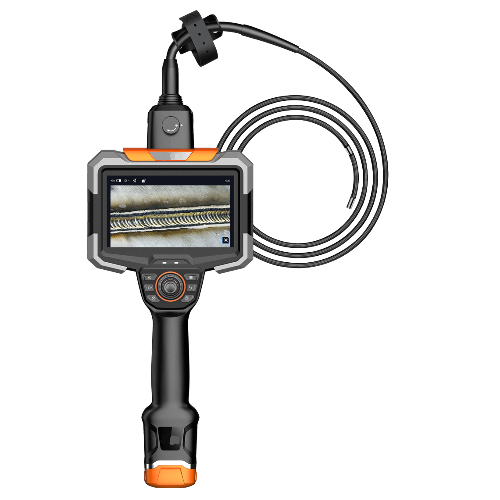
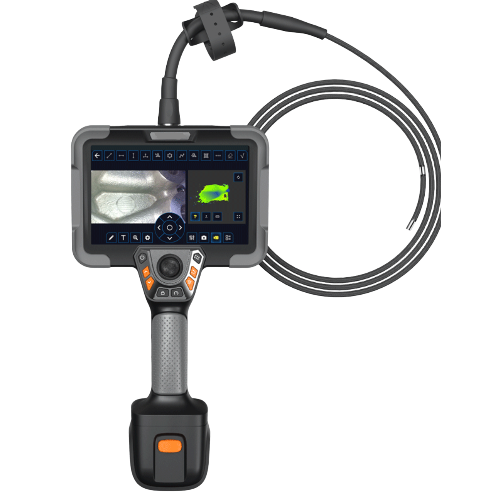
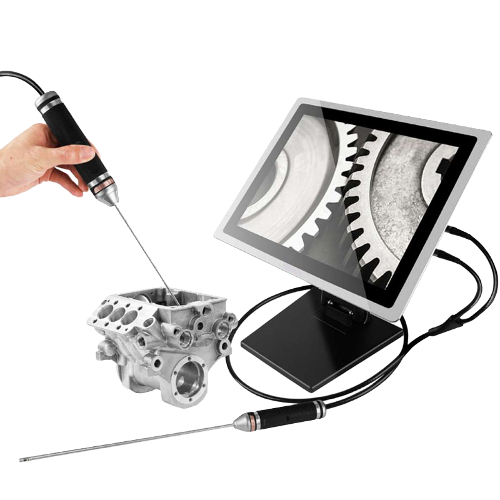
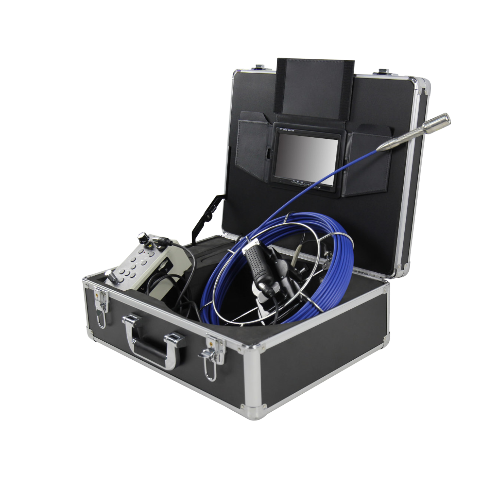
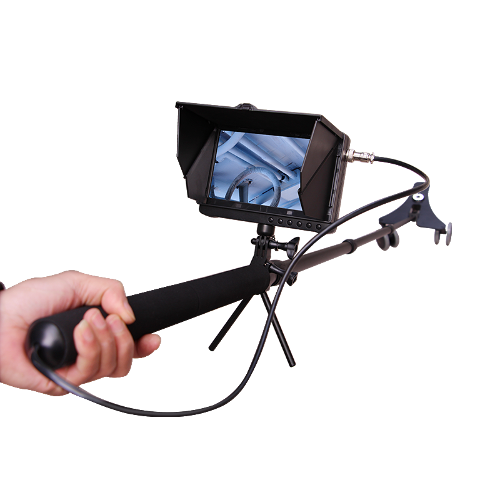
Driven by the trend toward high precision and complex working conditions in industrial inspection, high-end industries including aerospace set ultra-rigorous standards for testing instruments. As core non-destructive testing equipment, ongoing technical upgrades of motorized 3D measurement borescopes fuel the whole industry’s progress. This content elaborates five key future development directions of such products.
Trend 1: Miniaturized Probe & Flexible Multi-joint Articulation for Ultra-narrow Space Detection
Space restriction is the biggest obstacle amid increasingly complex inspection tasks, especially for aero-engine blade testing and micro precision weld inspection. Benefiting from mature motor drive technology, probes keep shrinking in diameter while retaining flexible multi-angle steering performance. Electric 360° articulating borescopes with 2.0mm or smaller diameter will achieve mature industrial application, safely accessing ultra-narrow gaps without scratching workpieces and finishing high-precision internal 3D scanning.
Trend 2: Constant Technical Innovation to Boost Measuring Precision
Accurate quantitative detection is the core competitive advantage of motorized 3D measurement borescopes. Manufacturers will continuously optimize optical structure and 3D reconstruction algorithms to cut measuring errors. Existing mainstream products reach 0.01mm precision with overall error controlled within 5%. Emerging electronically tunable lens (ETL) technology will break the traditional resolution bottleneck, realizing fast axial scanning without mechanical displacement. It supports ultra-precise quantification of tiny flaws and satisfies strict inspection requirements of aero-engine turbine blades and precision molds, becoming a vital R&D direction for high-end models.
Trend 3: Deep Integration of AI & Electric Control to Reduce Usage Threshold
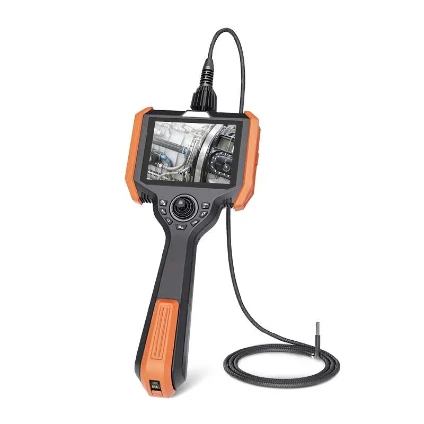
Conventional equipment depends heavily on manual manipulation and inspectors’ practical experience. Future products will embed AI algorithms to realize automatic defect identification, intelligent data calculation and one-click report generation. Matched with high-precision digital motor steering system, operators can realize delicate full 360° probe positioning via joystick fine-tuning to avoid hand shake and boost inspection efficiency inside intricate cavities. Optimized human-machine interaction combining touch screen and physical buttons enables rapid operation for inexperienced users and accelerates intelligent popularization.
Trend 4: Optimized Modular & Ergonomic Design for Stronger Scene Adaptability
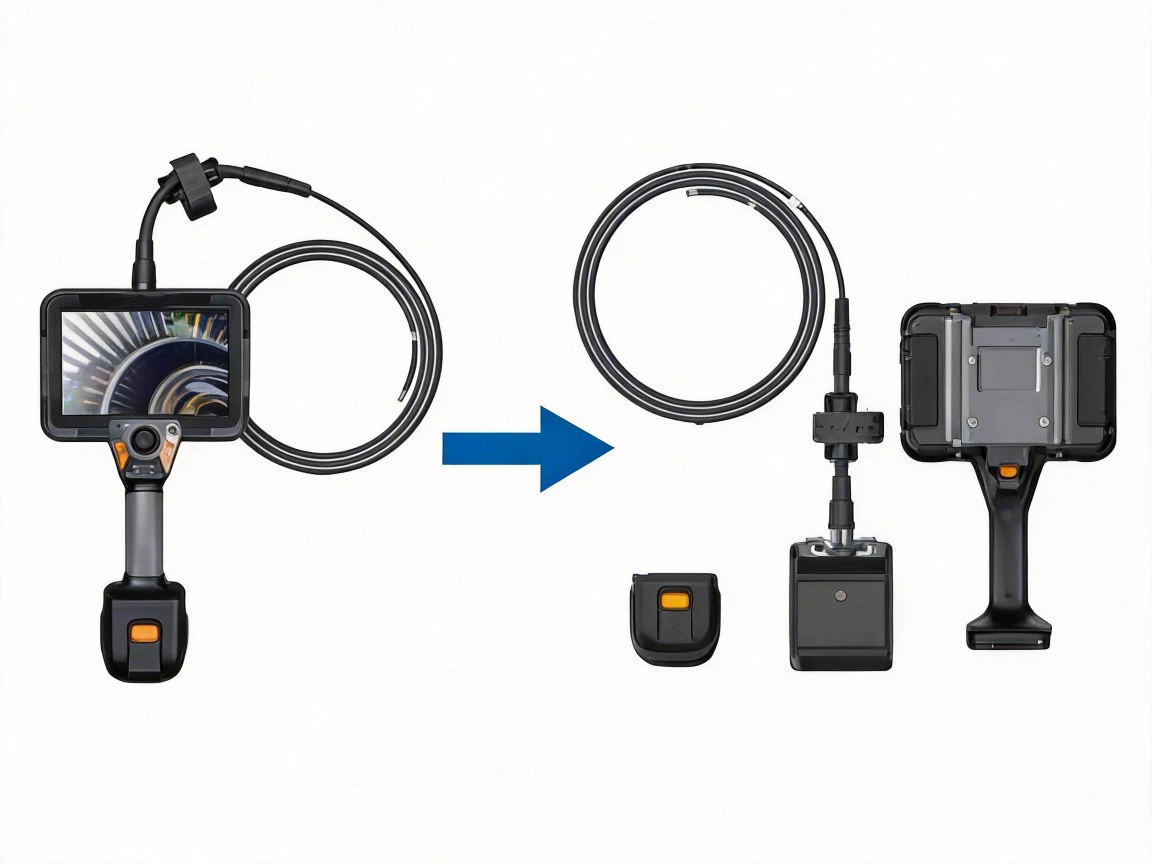
Modern industrial inspection raises higher requirements on equipment flexibility. Next-generation borescopes adopt upgraded modular design with snap-on quick connection, supporting fast replacement of insertion tubes, display screens and batteries to simplify disassembly and maintenance. Meanwhile, the whole machine is developing toward lightweight and compact size with optimized handheld ergonomics for convenient transport under outdoor and high-altitude working conditions. Equipped with dual-power supply solution, continuous working duration gets greatly improved to fit diversified long-hour inspection tasks.
Trend 5: Remote Collaborative Diagnosis & Integrated “Hardware + Software + Service” Industrial Mode
Future motorized 3D measurement borescopes break the limitation of single inspection function and connect deeply with industrial internet, big data and industrial IoT. It realizes cloud data storage, remote expert synchronous analysis and real-time data sharing as well as online firmware upgrade, forming a complete integrated solution of equipment, supporting software and after-sales technical service. In addition, it will realize combined inspection with ultrasonic, eddy current and other NDT technologies to serve emerging sectors such as new energy and biomedicine, transforming from single testing equipment into intelligent digital inspection terminal and expanding cross-industry application scope.
Conclusion
All technical iterations of motorized 3D measurement borescopes center on meeting upgraded industrial inspection standards. Multi-dimensional performance improvements promote its transformation from ordinary inspection tool to digital intelligent terminal, which fully meets precision detection demands across various industries and drives the whole NDT industry toward intellectualization and digitalization with expanding application boundaries continuously.