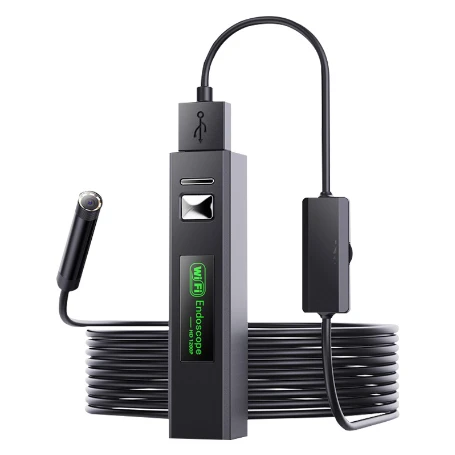
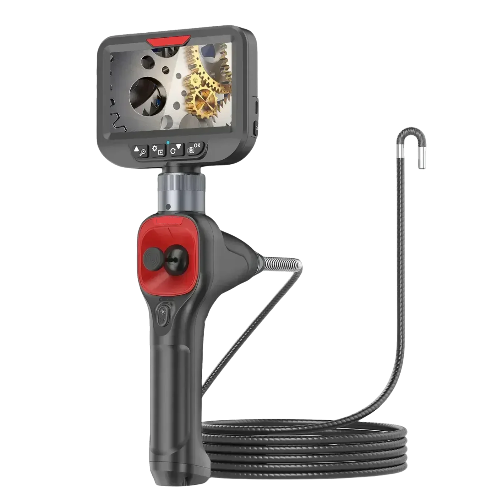
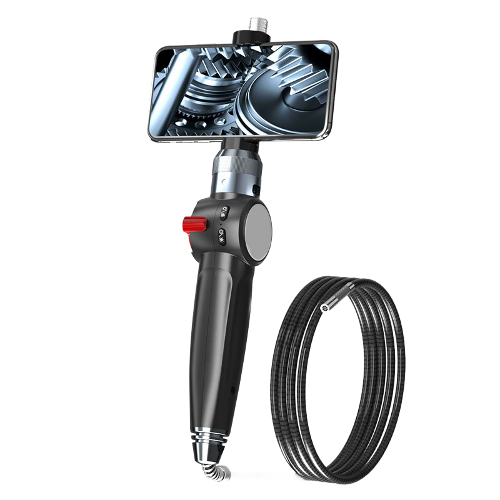
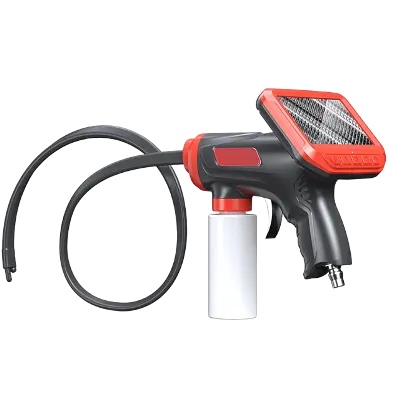
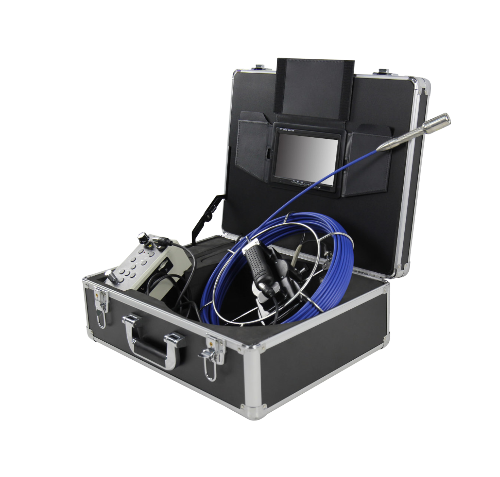
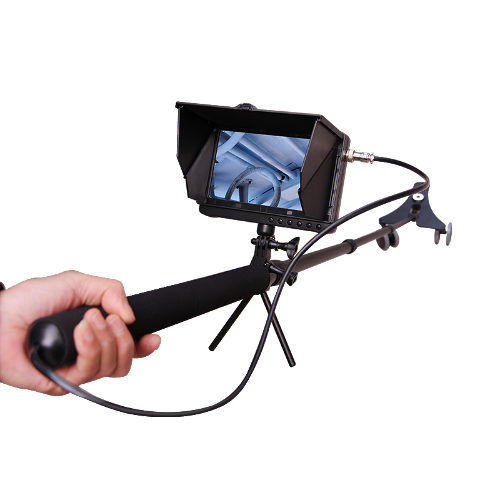
With growing demand for non-destructive internal inspection of equipment operating under extreme conditions such as high-temperature pipelines, boilers and turbines, high temperature borescopes, as core inspection equipment, have become critical tools to ensure safe operation and maintenance of industrial facilities. Driven by innovations in optics, new materials and artificial intelligence, such equipment has evolved beyond basic visual exploration, ushering in comprehensive upgrades across imaging quality, intelligent identification, high-temperature resistance and remote operation. Clear, diversified upgrading trends are emerging across the industry.
Upgraded Imaging Technology
Iterative improvements in imaging technology represent a key trend for high temperature borescopes. Resolution has advanced from early standard definition to 1080P, and now to 4K, with an upcoming shift to 8K technology. Higher resolution enables detection of far finer cracks and defects at the same viewing distance, reducing repeated close-range inspections and shortening probe dwell time in high-temperature environments—indirectly extending equipment service life.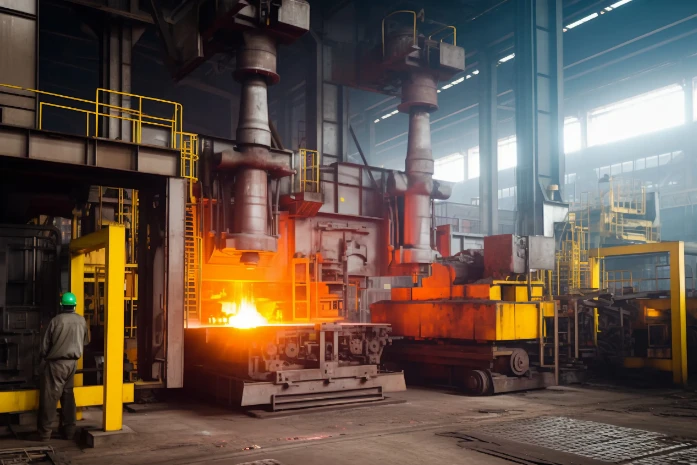
AI-Powered Intelligent Inspection
AI intelligence stands as one of the core future development trends for high temperature borescopes. Traditional industrial borescopes rely entirely on inspectors’ subjective experience to interpret captured imagery. The deep integration of AI and machine learning is revolutionizing this workflow. Next-generation high temperature borescopes can perform real-time analysis of captured images and video, automatically identify and label defect types including cracks, corrosion and carbon buildup, and deliver precise dimensional measurements. This drastically cuts human inspection error and eliminates efficiency bottlenecks.
Continuous Breakthroughs in Extreme Environment Adaptability
High-temperature resistance constitutes the core technical barrier for this category of industrial borescopes, and this capability is constantly being pushed to new limits. On the materials front, probe housings use high-strength Nickel-based alloy or special stainless steel, while optical lenses are fabricated from sapphire or Fused silica and other heat-resistant optical crystals. The adoption of specialized high-temperature alloys, integrated cooling systems and gas sensor modules allows equipment to operate stably for extended periods under high-temperature, high-pressure conditions. Certain premium models already withstand temperatures up to 500°C. Ongoing advances in materials science will keep expanding the performance boundaries of high temperature borescopes in temperature tolerance, miniaturization and environmental adaptability.
Wireless Transmission & Remote Collaboration
High-temperature inspection scenarios frequently carry operational risks due to high hazards and confined spaces, so minimizing on-site personnel exposure remains a key industry priority. Mature wireless transmission and remote collaboration technologies are reshaping inspection workflows. The widespread rollout of 5G unlocks new potential for remote operation and data analysis with high temperature borescopes. Inspection data automatically syncs to equipment management platforms for integrated analysis alongside multi-source metrics such as vibration, lubricant condition and temperature. For enterprises managing cross-regional maintenance, expert teams can remotely view live inspection feeds and tag defect locations across multiple concurrent streams without traveling to job sites, significantly cutting fault response times.
Overall, ultra-high-definition imaging, AI intelligent defect recognition, extreme heat resistance and 5G remote collaboration will jointly steer the development of high temperature borescopes. Continuous breakthroughs in materials and algorithms will further expand the equipment’s applicable scope and reduce inspection risks in high-temperature hazardous environments. Moving forward, intelligent, lightweight and remote-operated high temperature borescopes will continue to enable efficient, accurate non-destructive testing across heavy industrial sectors.
FAQ
What core differences separate high temperature borescopes from standard industrial borescopes?
The primary distinction lies in compatibility with extreme high-temperature environments. Standard borescopes lack heat-resistant alloy housings and cooling systems and cannot penetrate hot cavities. High temperature borescopes leverage specialized materials and temperature control structures to deliver stable, long-duration inspections inside high-temperature pipelines and turbine assemblies.
What are the core future development directions for high temperature borescopes?
Four mainstream development avenues exist: widespread adoption of high/ultra-high-definition imaging, fully automated AI defect detection, rising maximum heat resistance thresholds, and large-scale deployment of 5G remote collaboration. Parallel iteration of materials and algorithms will keep expanding the applicability of miniaturized high temperature borescopes for high-pressure, high-temperature operating environments.
What operational hazards can be mitigated by using high temperature borescopes for hot-surface inspections?
First, they limit direct human proximity to high-temperature, high-pressure confined spaces. Second, they reduce probe exposure time in heat to slow equipment degradation. Third, remote expert consultation eliminates the need for on-site staff travel. Collectively, these advantages reduce safety risks including thermal burns and confined-space occupational hazards.
What optimization benefits does AI intelligent inspection deliver for high temperature borescopes?
Its core value is eliminating bias from human subjective judgment. When equipped with AI, high temperature borescopes can instantly identify cracks, corrosion and carbon deposits, auto-label defect zones and take precise dimensional readings. This overcomes efficiency limits of manual inspection and greatly lowers the risk of missed defects during visual checks in hot operating conditions.