
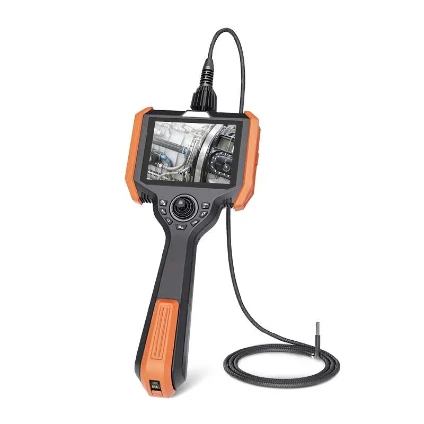
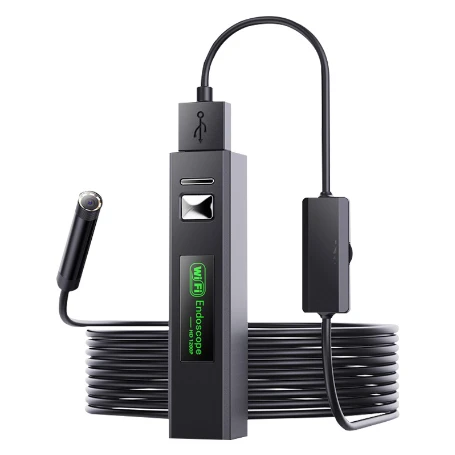
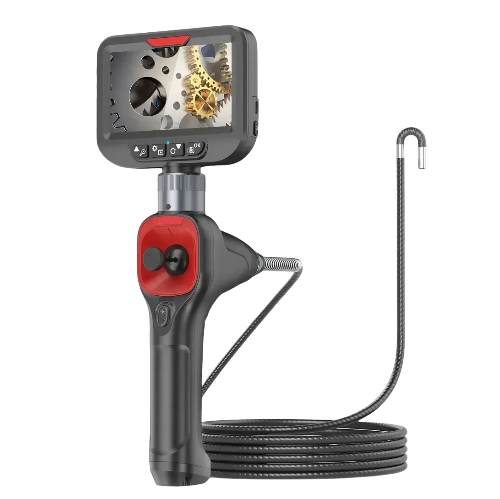
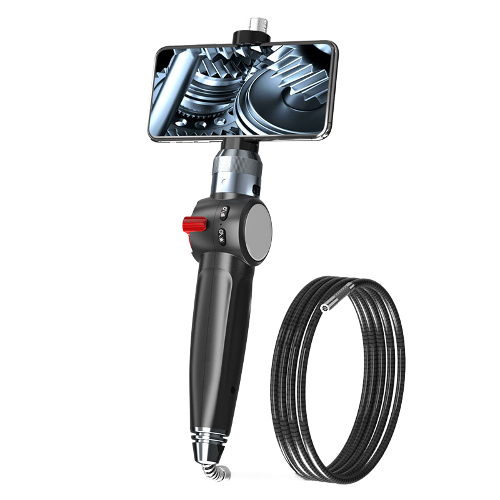
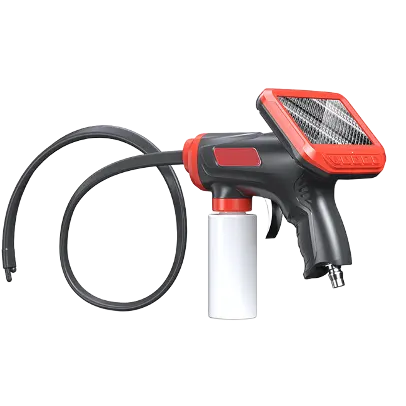
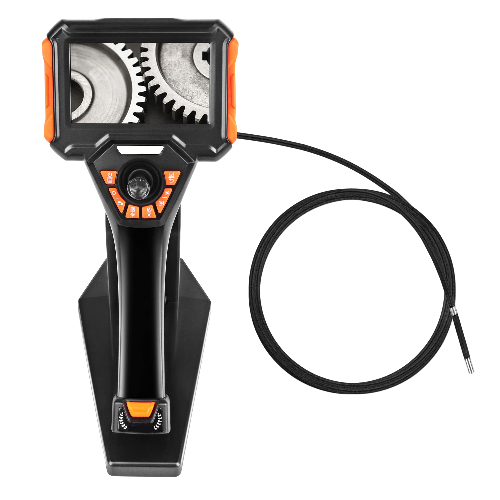
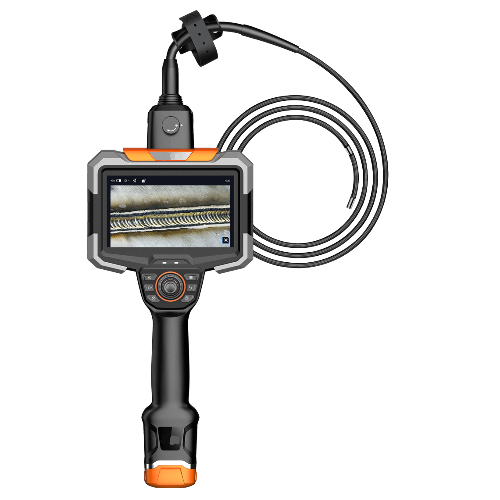
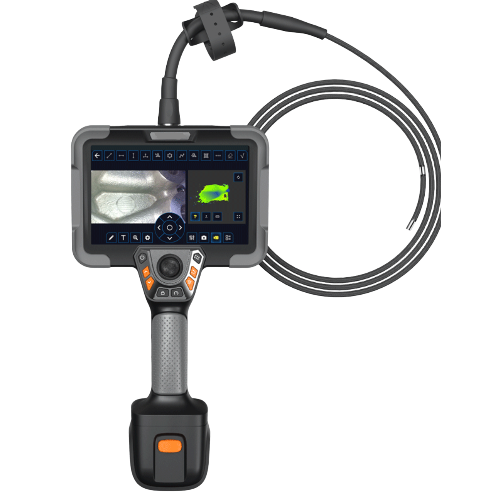
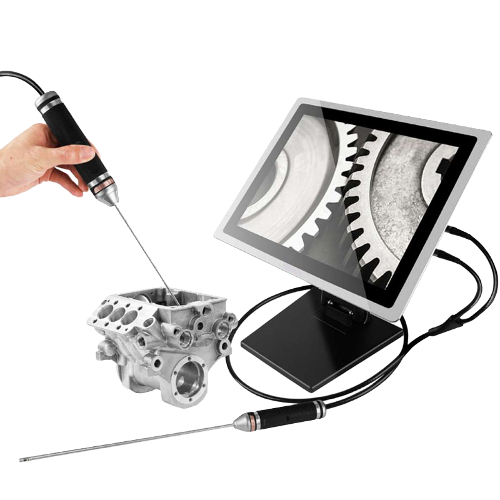
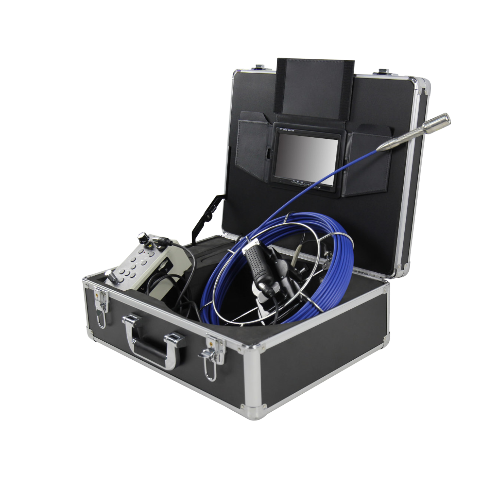
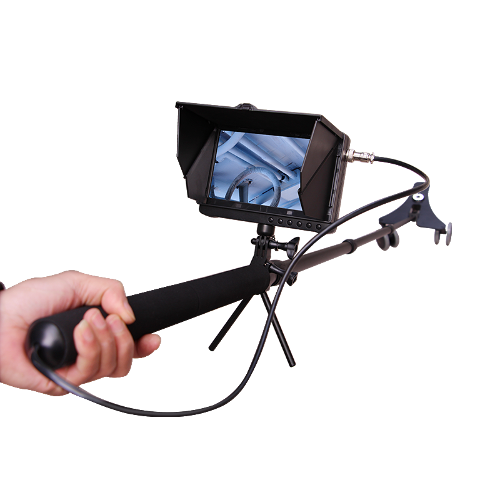
Rigid borescopes deliver high-definition imaging and industrial-level wear resistance, making them the preferred inspection tool for straight passages inside automobile engines, aerospace precision parts and other workpieces. Although its structural design is relatively simple, users need to evaluate multiple key technical parameters comprehensively to select a matching model, as detailed below.
Probe Viewing Angle Selection
The stainless steel rigid probe is highly durable but cannot bend or steer. To realize full coverage inspection without blind zones, users must select forward-view, side-view or dual-view integrated models according to actual working conditions.
Reasonable Matching of Probe Diameter
It is advised to prioritize slim-diameter rigid probes instead of oversized ones for three core reasons:
Rigid rods only travel along straight paths. The probe outer diameter shall not exceed two-thirds of the inner diameter of the inspected channel. Common inspection holes such as engine spark plug holes, hydraulic oil passages and casting sand holes range from Φ4–10 mm; probes over 6 mm may fail to pass through smoothly.
Wider probes generate larger friction against cavity inner walls, easily catching on burrs and uneven surfaces. Forcible insertion and extraction will scratch workpiece inner surfaces and cause irreversible damage to the probe rod.
Larger-diameter rods carry heavier self-weight, triggering sagging deformation and destroying the core positioning precision advantage of rigid borescopes. Excess weight also increases operator fatigue during long handheld inspection and reduces overall working efficiency.
Matching Effective Probe Length
Probe length refers to the effective working distance of the rigid borescope, which directly determines detection reach, structural rigidity and imaging stability. Available standard lengths cover 10 mm to 2000 mm; follow the principle of selecting the shortest sufficient length for actual detection depth.
- 10–600 mm: Balanced rigidity, lightweight and easy operation, suitable for short-distance precision inspection including aero-engine turbine cooling holes, automobile gearbox gear meshing surfaces and small casting inner cavities.
- 600–1200 mm: Balances detection depth and structural stiffness, meeting conventional inspection demands for most industrial scenarios such as engine cylinder water channels, wind turbine gearbox planetary carriers, middle sections of chemical reactors and boiler tube bundles.
- 1200–2000 mm: Customized for deep long-distance detection, applicable to full inner wall inspection of petroleum drill pipes, hydropower station guide vane chambers, long heat exchanger tube bundles and marine propulsion shaft interiors. Note that rigidity weakens and self-weight rises with increased length, raising risks of sagging and deformation.
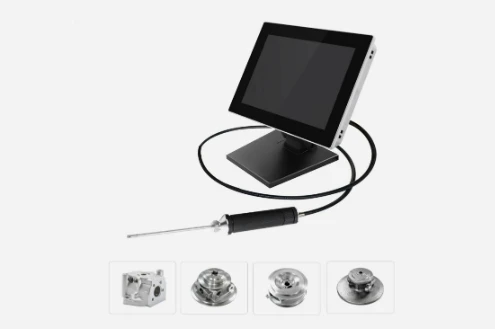
Lighting System Configuration
Select cold light sources with dimmable high-brightness LED or fiber optic transmission:
- LED light sources: Simple structure and high portability, the best choice for short-distance daily routine inspection.
- Back-end fiber optic cold light sources: Deliver uniform soft illumination and stable imaging, recommended for deep long-hole inspection.
Display Terminal Selection Standards
Choose industrial high-definition monitors with true color reproduction and delicate detail presentation to accurately identify micro defects including cracks, burrs and corrosion spots.
- Small-size screens: Outstanding portability for single-hand mobile operation.
- Large-size screens: Wider field of view to ease visual fatigue during prolonged inspection.
- Mandatory practical functions: Brightness adjustment, image freeze, snapshot and video recording. Adaptable to high-brightness workshop environments and dim closed cavities, supporting real-time observation and inspection data archiving to improve detection efficiency and judgment accuracy.
Summary
Rigid borescopes hold an irreplaceable position in linear channel and precision component non-destructive testing. Proper matching of probe viewing angle, diameter, rod length, light source system and display terminal can fully release equipment performance, satisfy differentiated NDT demands across various industrial fields, and provide solid technical support for equipment routine maintenance, production quality control and fault troubleshooting.