
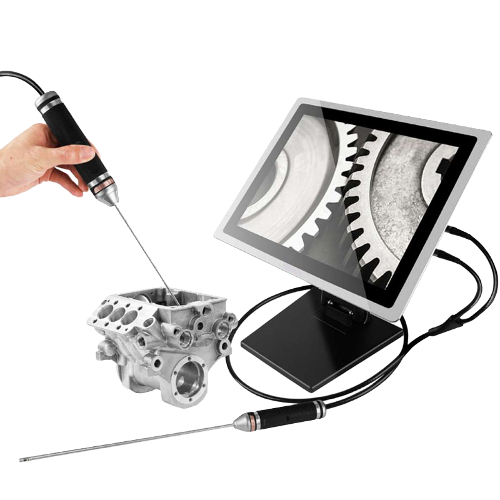
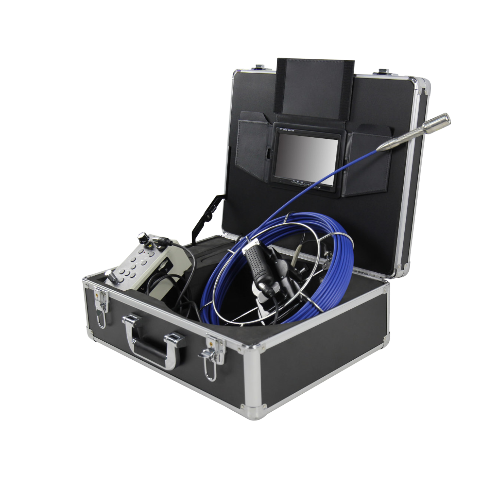
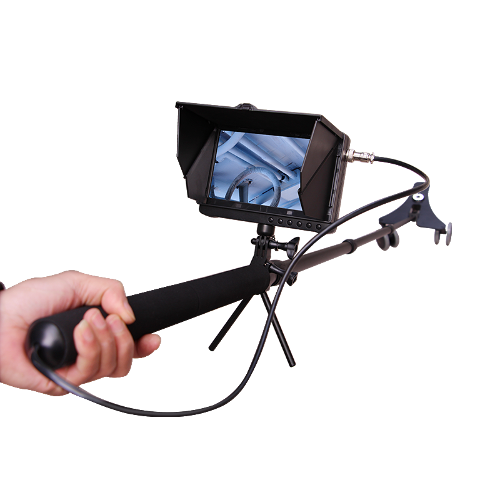
Part 1: What’s an Automotive Endoscope?
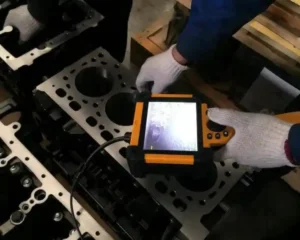
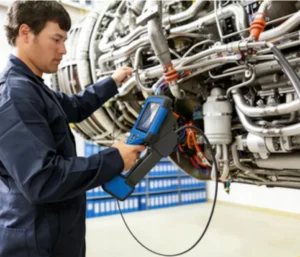
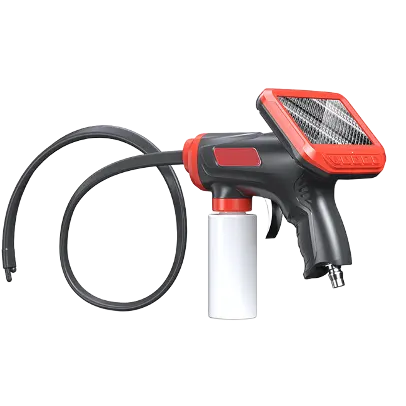
Think of it as a tiny “electronic eye” on a flexible stick. You can poke it into all those nooks and crannies in your car where your hands and eyes can’t reach, and it shows you a crystal-clear picture of what’s inside.
People use it to check out the engine, transmission, exhaust pipes, and the car’s internal structure—all without having to tear the whole thing apart. You get to see exactly what’s going on in there, what’s broken, or what’s worn down.
How does it actually work?
The main parts are: a probe, a lens, some lights, a tiny camera, and a screen.
Here’s the simple breakdown: The camera on the probe tip goes into the spot you’re checking → the little lights up front light up the area → the live video feed gets sent to the screen in your hand (or your phone) → and boom, you’re looking right at the real deal inside. It’s basically like giving your car a “gastroscopy”—you can spot problems at a glance.
Why can’t you skip the endoscope in car repair these days?
Modern cars are packed tight—super complex and with zero spare room. Parts aren’t cheap either. There are tons of spots you just can’t see with your own eyes. An endoscope saves you a bunch of time and money.
Check this out:
- No engine teardown needed to see carbon buildup or scratches on cylinder walls and piston heads.
- No transmission removal to check how worn the clutch plates or gears are.
- A quick peek tells you if the catalytic converter is clogged.
- You can even check inside an electric car’s battery pack with a special explosion-proof model.
- Buying a used car? Use it to look inside the frame for rust or hidden accident repairs, so you don’t get ripped off.
Bottom line: With an endoscope, repairs are faster, more precise, and you avoid throwing money at guesswork.
Part 2: What kinds are there? Which one for what job?
Rigid Borescopes (Stiff, won’t bend)
This one’s basically a rigid stick with the lens at the very end.
Good for: Looking straight down spark plug holes, checking cylinder tops, or peeking into straight holes in metal parts.
The deal: Picture is super steady, but it can’t bend. You only see what’s straight ahead.
Articulating Endoscopes (Bendy and steerable)
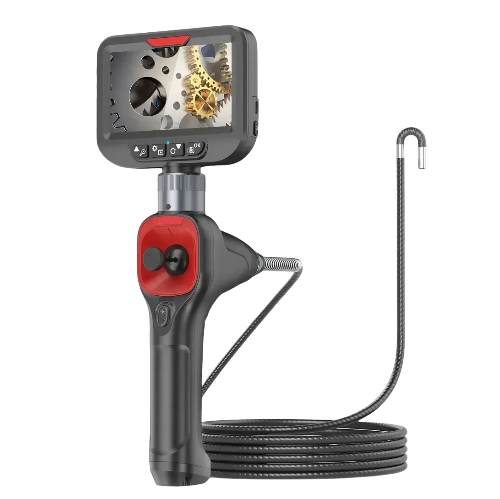
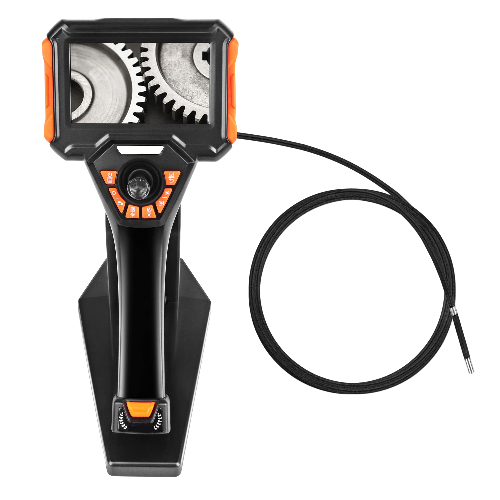
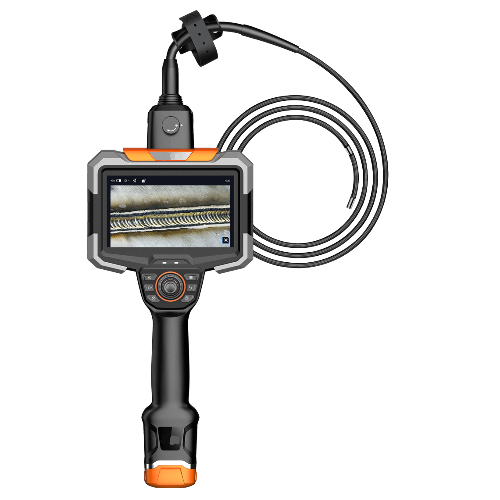
This type lets you wiggle and steer the tip with a button—it’s super agile.
Good for: Sneaking a look at the backs of valves, piston sides, inside turbochargers, valve seals, connecting rods, camshafts… all those deep, twisty, hard-to-reach places.
The deal: It bends and you control the direction. This is what the pros usually go for. It’s the fancy, high-end gear.
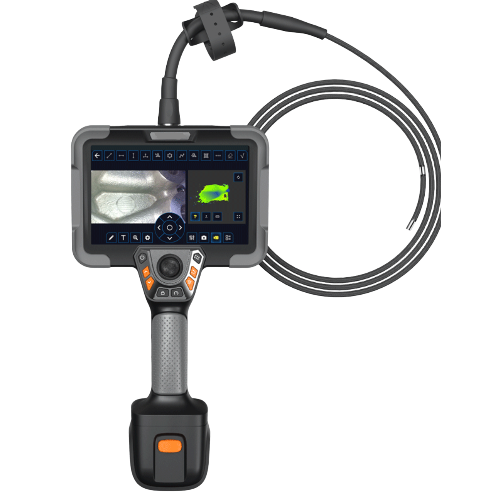
Video Endoscopes (Comes with its own screen)
This one has its own built-in display. Turn it on, and you’re looking at the feed right away.
Good for: Deep engine dives, checking inside transmissions, inspecting EV battery/motor systems.
The deal: Big screen, great picture quality, takes photos/videos, and it’s built to last. Pretty much every repair shop or dealership has one of these.
Wireless / USB Endoscopes (Hooks up to your phone)
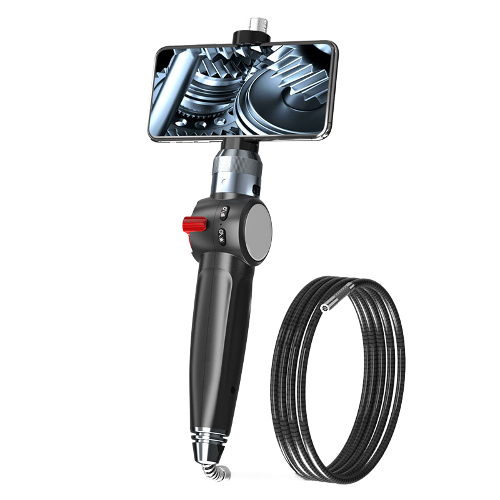
The cheapest and most portable option. Your phone becomes the screen.
Good for: General troubleshooting, DIY checks by car owners, quick “is there a problem?” inspections.
The deal: Light, affordable, ready to go wherever. Just don’t expect pro-level performance.
Part 3: Picking the right one – what specs really matter?
Lens & Picture Quality (Resolution)
Higher resolution = more detail. Common ones: 720P, 1080P, 2K, 4K.
Bigger number = clearer picture… and usually a higher price tag.
Lens types:
- Dual-lens: One looks forward, one looks sideways. See things from two angles.
- Triple-lens (or more): See from multiple angles at once. Handy!
Cool extras: Zoom, auto-brightness, photo/video capture, even split-screen to compare views.
Probe & Cable
The probe is the little camera on the end. Common sizes: 4mm, 5mm, 6mm.
Thinner = fits into tighter spots, but the image might not be as sharp.
Cable length: Usually 1–5 meters. Longer reaches further, but can be trickier to handle.
Look for tough materials like metal sheathing or anti-corrosion coating.
Screen & Viewing Angle
Screen sizes: Usually 4.3″, 4.5″, 5″.
Bigger screen = easier on the eyes.
Field of View:
- Wide-angle: Good for larger spaces.
- Narrow-angle: Good for deep, skinny holes.
Durability & Protection
Get a waterproof rating of IP67 or higher. Then you don’t sweat it if it gets dunked in water or oil.
Also check heat and oil resistance, especially for poking around hot, greasy engines. The probe needs to take the heat.
Connection & Storage
Connects via: USB, Type-C, or Wireless WiFi.
Photo/Video recording lets you save what you find.
Some can send files straight to your computer or phone, making sharing a breeze.
Portability & Battery
Battery life: Typically 2–6 hours.
A lighter, more portable design means less arm fatigue and easier carrying.
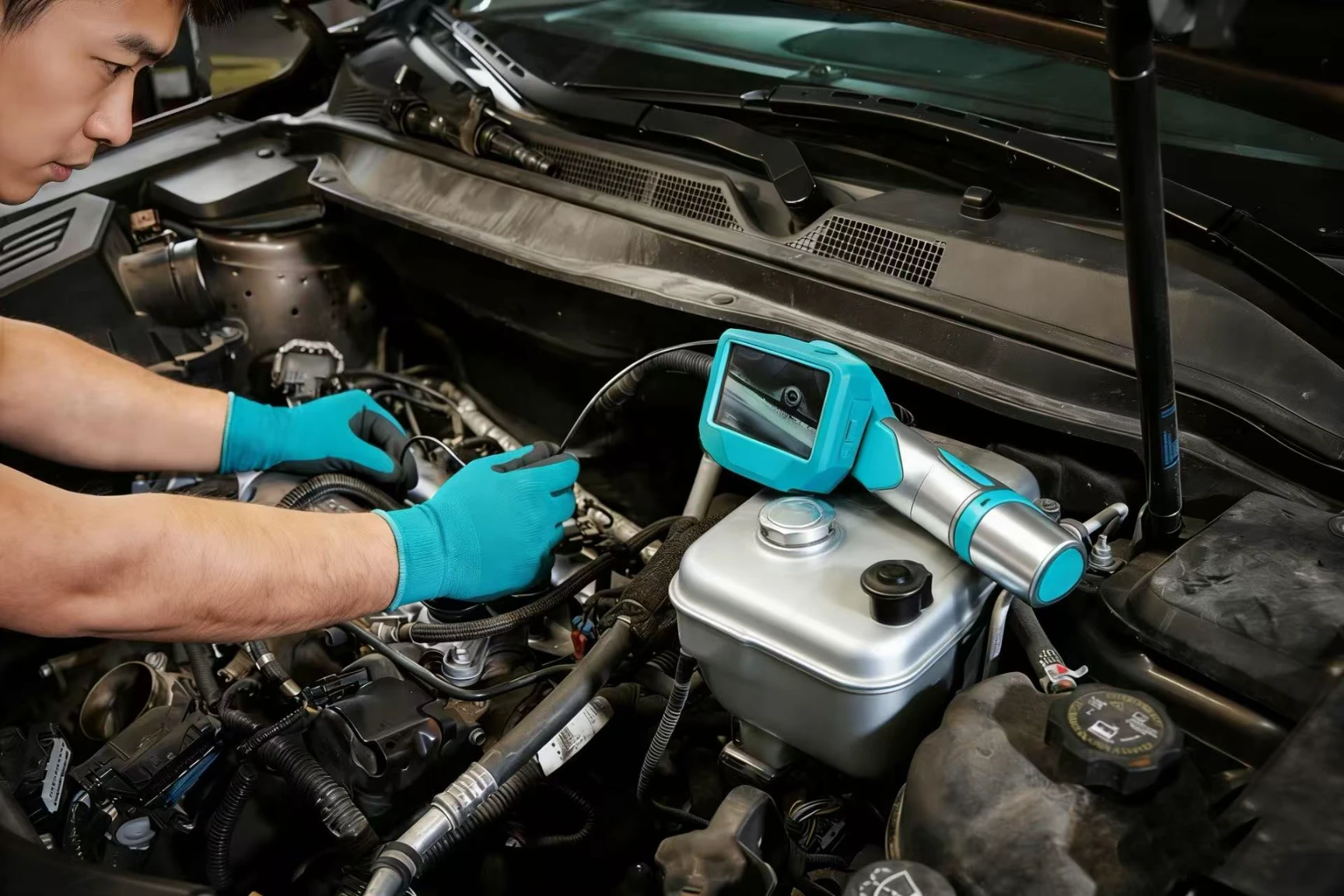
Part 4: Where do mechanics use endoscopes the most?
- Checking Cylinders & Pistons: Spot carbon buildup, scored cylinder walls, dings on piston tops, or piston ring issues.
- Looking at Intake & Exhaust Valves: Check carbon, wear, and sealing without removing the cylinder head.
- Peeking Inside Turbochargers: Inspect turbine blades, foreign object damage, and loose bearings.
- Catalytic Converter Check: Verify clogs or melting quickly via oxygen sensor holes.
- Intake Manifold Carbon: Essential for direct injection engine inspections.
- Spark Plug Hole Inspection: The fastest shortcut to check engine internals.
- Transmission Inspection: Check clutchbbore plates, gears, and pump wear.
- Cooling System Checks: Find rust, corrosion, and blockages in tubes.
Other Uses: Factory QC, body shop rust inspection, used car frame checks, EV battery/motor inspections (explosion-proof required).
Part 5: How to use it (From newbie to pro)
Before You Start:
- Let the engine cool down completely. Hot engines are dangerous.
- Clean the area to prevent dirt from entering the engine.
- EVs: DISCONNECT THE HIGH-VOLTAGE SYSTEM FIRST.
- Always use explosion-proof gear for fuel/battery areas.
- Insert the probe gently – do not force or twist.
Putting the Probe into a Spark Plug Hole:
- Remove the spark plug and clean around the hole.
- Adjust LED brightness to avoid glare or darkness.
- Insert the probe slowly and carefully.
- Use forward + side lenses together for full visibility.
Don’t Break Your Lens:
- Avoid sharp metal edges that scratch lenses.
- Never use on a hot engine – heat damages the camera.
- Do not kink the cable or force articulating joints.
Taking Pics, Videos, & Keeping Track:
- Pause to freeze steady images for clear photos/videos.
- Zoom in before capturing media.
- Label recordings (Cylinder 1, Piston Top, etc.) for organization.
Part 6: Common Problems & Fixes for Mechanics
Blurry Picture?
Wipe the lens, lower LED brightness, or adjust probe distance.
Bad Glare?
Dim lights and change the inspection angle.
Hole Too Small?
Use a 3.9mm/4.5mm thin probe.
Probe Got Oily?
Use a waterproof probe; wipe and air dry immediately if contaminated.
Too Dark or Too Bright?
Adjust brightness; use side-view attachments for wider views.
Part 7: Taking Care of Your Endoscope
- Clean the lens after every use.
- Store bendy probes straight to avoid wire damage.
- Keep in a dry, dust-free storage case.
- Inspect cables for cracks/kinks regularly.
- Deep clean and sanitize after oily/messy use.
Part 8: Real-World Repair Examples
Scored Cylinder: Vertical scratch marks → causes oil burning and poor performance.
Carbon Buildup: Heavy (thick black lumps) vs Light (thin brown coating) – easily distinguished with an endoscope.
Turbo Trouble: Nicks/polishing on blades = early warning to avoid costly repairs.
Spark Plug Well Oil Leak: Locate hidden head cracks or faulty gaskets in seconds.
Part 9: How to Choose YOUR Endoscope (Buyer’s Guide)
Newbie vs. Pro:
DIY/Car Owner: Dual-lens + 1080P + Portable – affordable and easy to use.
Professional Mechanic: Articulating + 4mm probe + Hi-res + Industrial-grade – powerful and durable.
Budget Pick vs. High-End:
Budget: Basic functions, ideal for home use.
High-End: Premium performance, shop-grade durability, accurate diagnostics.
Top Buying Priorities:
- Probe Diameter (fit small holes)
- Resolution (clear imaging)
- Number of Lenses (multiple angles)
- Cable Quality
- Screen Size
- Heat/Oil/Corrosion Resistance