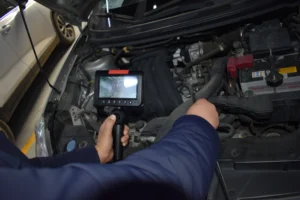

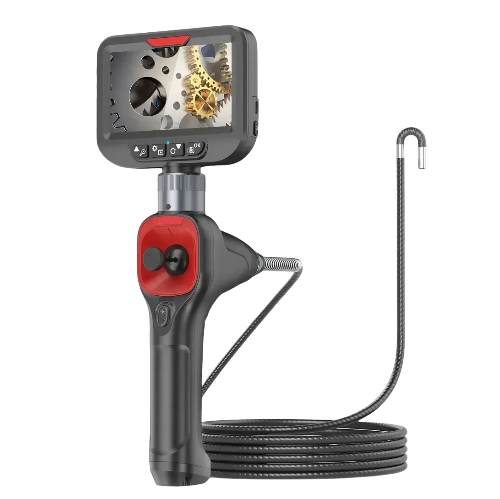
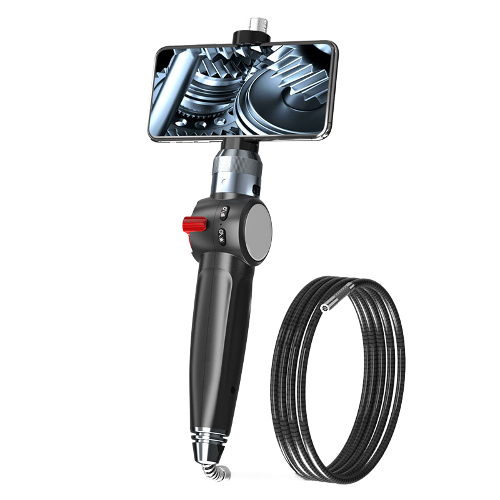
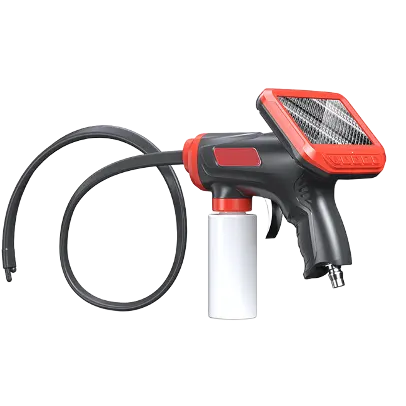
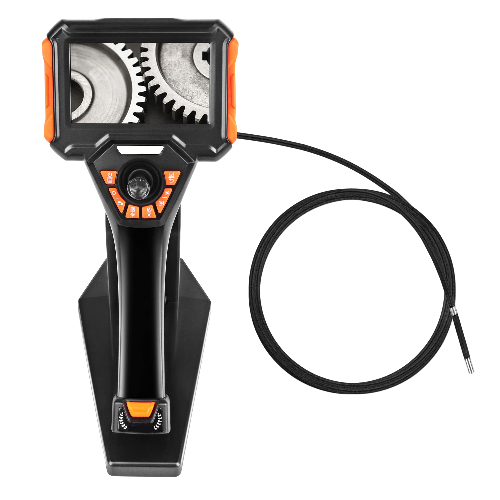
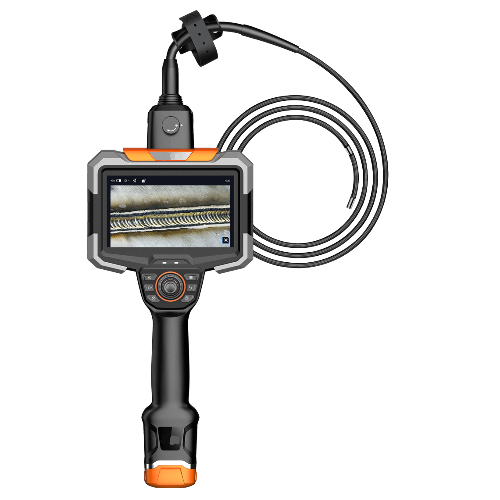
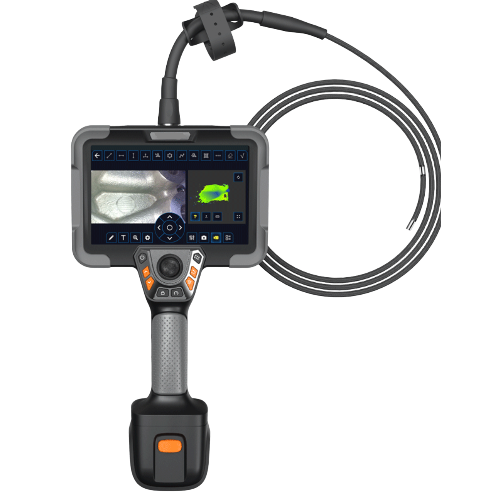
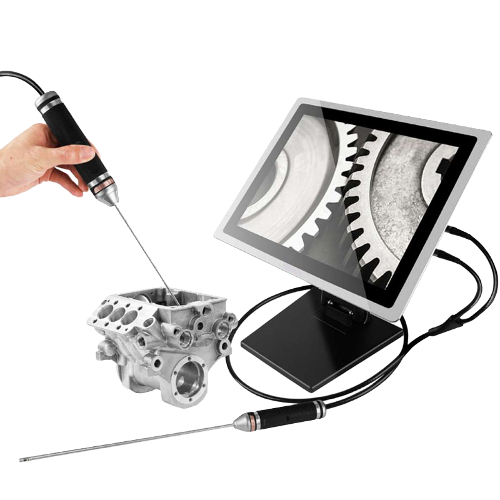
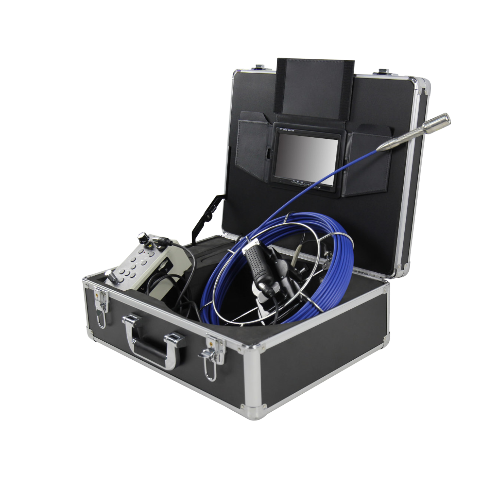
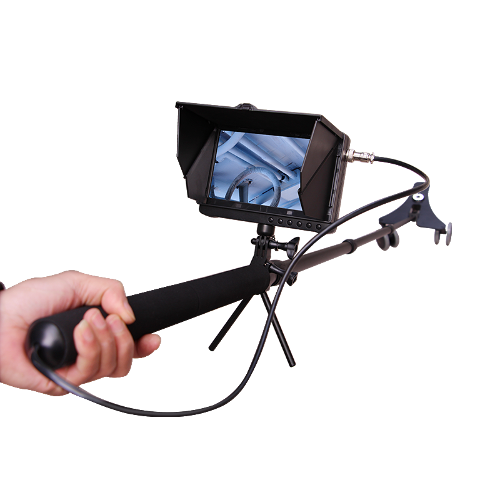
An automotive borescope is like an X-ray vision tool that lets us peek inside. Think of it as a combo of a microscope (for detail),
a periscope (to get around corners), and a recorder (to document it all)—making every hidden nook and cranny perfectly clear.
On the Production Line: The Ultimate Quality Bouncer
🔧 Making the Parts
It acts like a probe, going inside components to check castings for flaws like cracks or air pockets, making sure oil and coolant passages are clean and smooth, verifying threads in critical holes, and even looking for leftover debris in assembled parts like fuel injectors.
⚙️ Engine Assembly
Right before the engine gets sealed up, it gives one final look. It checks that connecting rods and camshafts are sitting clean, that piston rings are installed correctly, and ensures no metal shavings or other junk got left behind by mistake.
In the Body Shop: The Invisible Anti-Rust Inspector
🛡️ Corrosion Prevention Validation
Rust often starts from the inside. How do you know if rust-proofing treatments like electro-coating and wax injection are done right? You can’t see it. A borescope can sneak in through small access holes to see if the coating is even and the wax is fully applied, giving direct proof for improving the process.
During Testing: The Engineer’s On-the-Spot Detective
🚗 Road Test Forensics
When a new car has problems during road tests—like weird noises, vibrations, or loss of power—a borescope can quickly find the culprit. For example, by removing a spark plug, you can check cylinder walls for scoring or see if the piston top is damaged, all without taking the whole engine apart.
In Repair & Used Cars: A Mechanic’s “Magic Wand” and a Buyer’s “Truth-Teller”
🔍 Engine & Transmission Deep Dive
- Engine Check: See carbon buildup, figure out why it’s burning oil (worn cylinders or old valve seals?), and check wear on parts inside.
- Transmission Check: No need for a full teardown. You can look through the fill hole to inspect clutch plate or gear wear, helping diagnose noises or rough shifting.
- Inspecting Wrecked or Used Cars: Check internal structural parts (like frame rails) for bending or repair signs, find hidden rust or flood damage, and spot if parts have been tampered with. It’s like a “truth serum” for the used car market.
For New Energy Vehicles: The Essential New Gear
⚡ EV & Fuel Cell Precision
- Check battery packs for burn marks or leaks (using explosion-proof models is a must).
- Inspect motor windings and gear wear in the reducer.
- Check seals and connections in hydrogen fuel cell systems.
- Look for corrosion or clogs in cooling lines.
Problems in EVs are getting sneakier, which is exactly what borescopes are best at finding.
How to Use It: Entry Points & Must-Knows
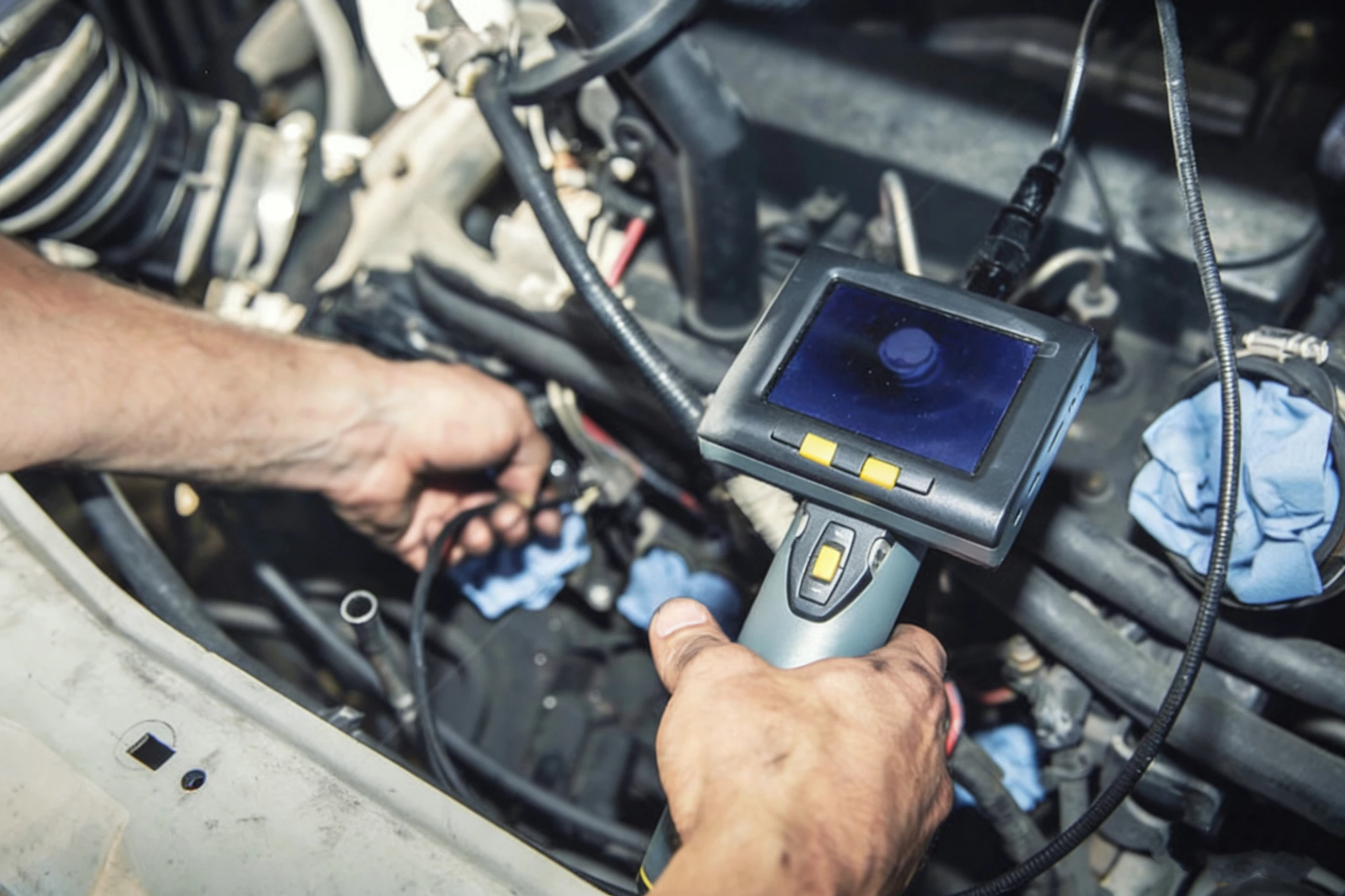
📍 Where to Look
- Engines: through the spark plug hole or oil fill cap.
- Body: pull out drain plugs or remove trim panels.
- Exhaust: unscrew an oxygen sensor.
- Transmission: via fill or drain ports.
🛡️ Safety First
- Let the engine cool down completely first.
- Clean the area to prevent anything from falling in.
- For fuel or battery systems, always use proper explosion-proof gear.
- For EVs, disconnect the power first.
- For important checks, it’s best to have a pro do it.
💡 Pro Tips
- Use articulating borescopes for complex turns.
- Record video for documentation and customer transparency.
- Always verify calibration if using measurement-capable models.
✨ Why it’s indispensable: From verifying casting integrity to detecting hidden flood damage in used cars, the borescope bridges the invisible gap. It eliminates guesswork and turns costly tear-downs into quick, precise inspections.
🔩 Bottom line:
Automotive borescopes don’t just help build better cars—they’ve completely changed how we find and fix problems. As cars get more electric and smarter, this “industrial eye” has become a must-have tool in the automotive world. From production lines to repair shops, it delivers truth in places the naked eye can’t reach.