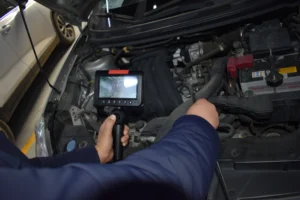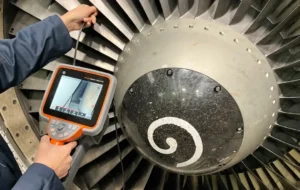

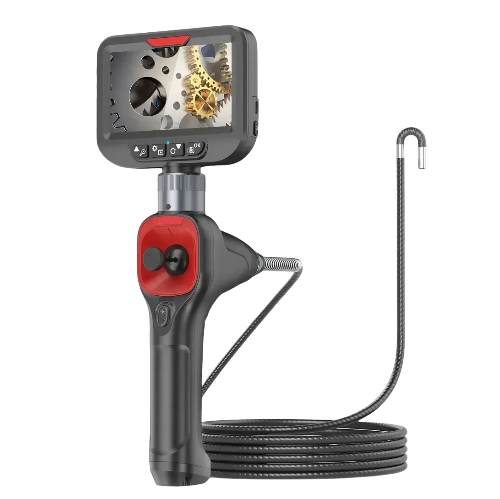
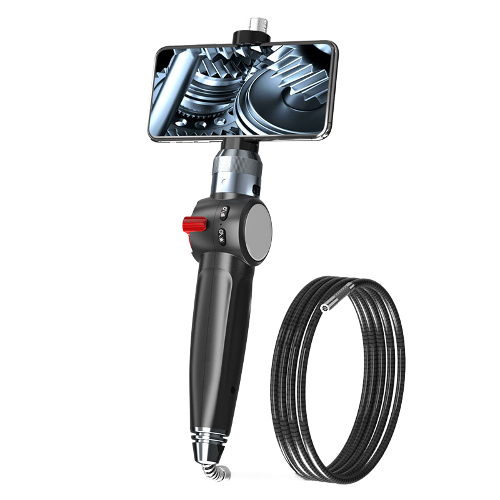
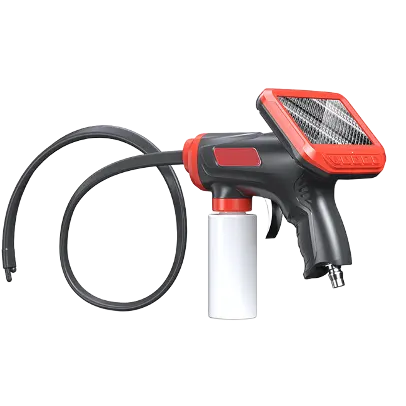
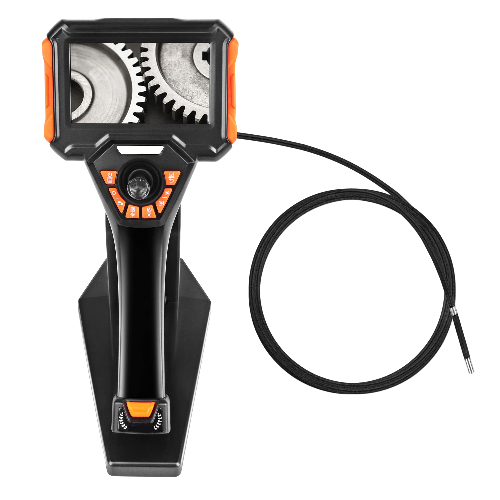
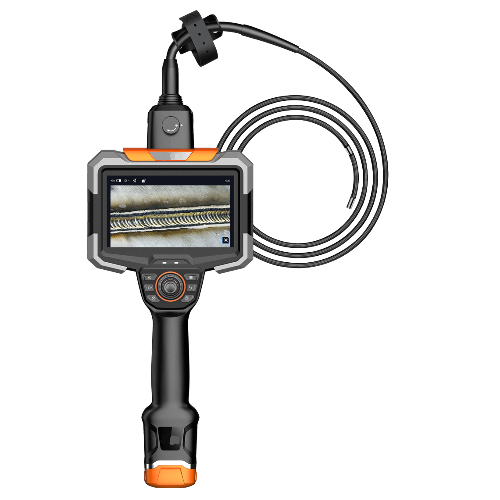
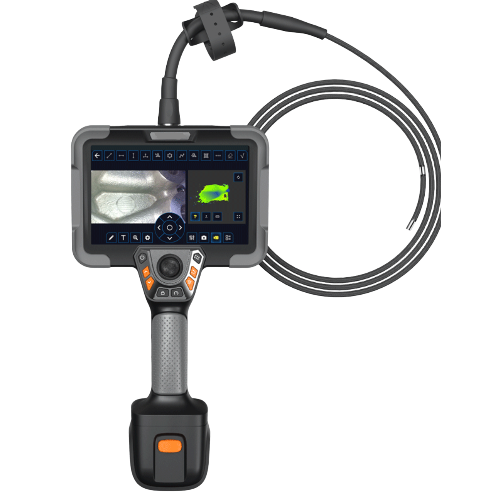
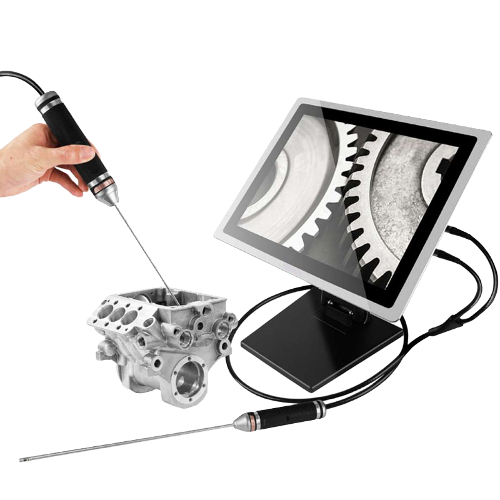
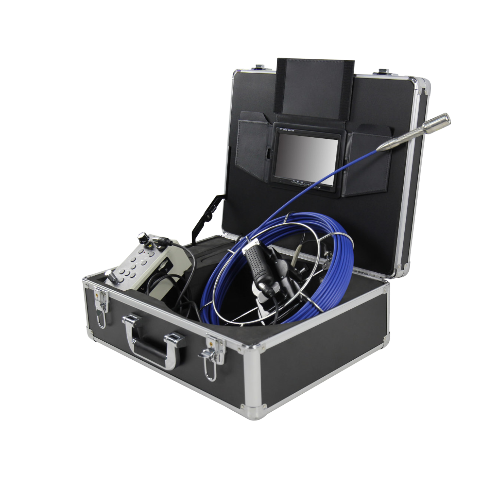
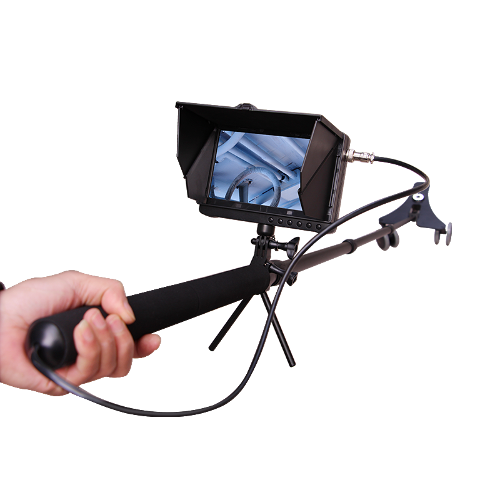
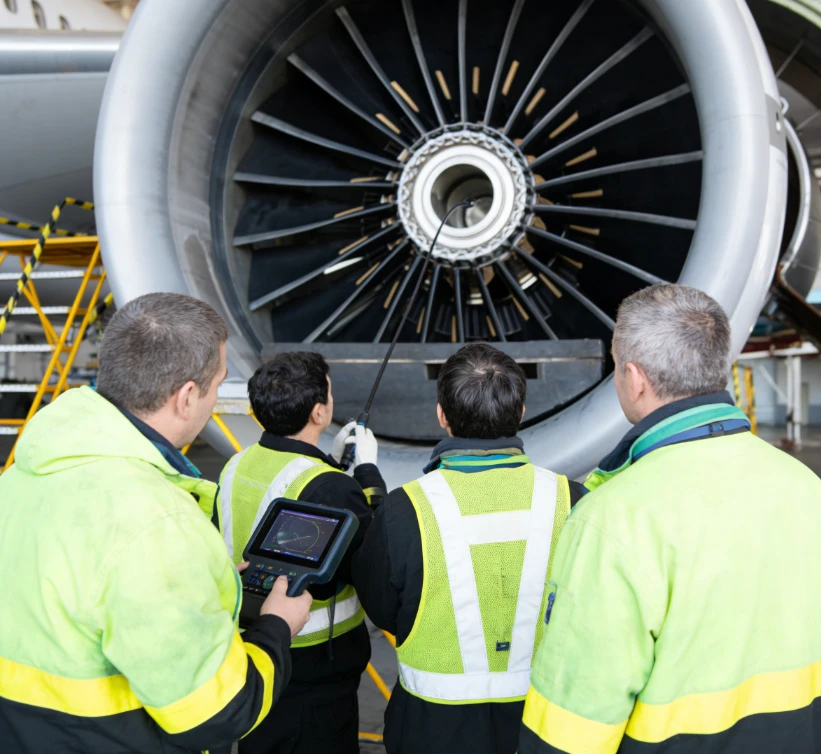
During routine inspections, maintenance personnel don’t need to disassemble engines or aircraft structures. By simply inserting an aviation borescope into an inspection port, they can see exactly what’s going on inside. This allows potential issues to be spotted early, addressed promptly, and prevents minor problems from turning into major incidents—greatly improving flight safety.
Where Aviation Borescopes Are Used
Aviation borescopes are widely used in aircraft manufacturing and routine maintenance.
- In manufacturing: They help check whether parts are made correctly and free of defects, ensuring strict quality control.
- In maintenance: Without taking anything apart, they let technicians inspect the inside of the airframe and engines, quickly spotting safety hazards and equipment issues to keep aircraft operating safely.
Modern engines are designed with inspection ports, making it easy to insert a borescope without damaging the equipment, while also significantly reducing inspection time.
Borescopes come with bright lighting and high-resolution imaging, allowing technicians to clearly see turbines, combustion chambers, compressors, and internal airframe structures. Problems like wear, scorching, or cracks can be spotted immediately. Some systems even support AI-assisted detection, helping inspectors identify issues faster and more accurately.
Besides seeing defects, borescopes can also measure them. 3D measurement capabilities let technicians determine the length, depth, and size of a defect—even on curved surfaces or chipped blade edges—helping them decide whether immediate repairs are needed.
Additionally, if foreign objects like screws or metal shavings end up inside the engine, a borescope combined with a robotic arm can safely retrieve them, preventing further damage to blades or blockages in the system.
What Areas Are Inspected
(A) Engine Inspections
Inside the Engine
Engines are the “heart” of an aircraft, so nothing can be overlooked. Aviation borescopes can reach areas that are normally hard to access—like the combustion chamber, turbines, compressor blades, and intake passages—to check for:
Cracks, Wear, Corrosion, Carbon buildup
Regular inspections help catch problems early, reduce unexpected failures, and extend engine life.
Key Checks for Different Engine Types
- Gas Turbine Engines: Focus on combustion chambers, turbine blades, and nozzles, checking for heat damage, carbon buildup, corrosion, cracks, or warping.
- Turbojet Engines: Inspect compressor blades, combustion chambers, and exhaust nozzles for blade wear, cracks, heat damage, carbon buildup, and nozzle corrosion or deformation.
- Turbofan Engines: Cover a wider area, including fans, low- and high-pressure compressors, combustion chambers, turbines, and exhaust nozzles, for a comprehensive check of wear, carbon buildup, cracks, corrosion, heat damage, and structural deformation.
(B) Aircraft Structures and Materials
Structural Components
Critical areas like welds, brackets, and joints must be flawless. Aviation borescopes allow technicians to check for welding defects, looseness, corrosion, or fatigue without disassembly.
They’re also used to inspect:
- Aircraft skin for tiny cracks, corrosion, or delamination
- Honeycomb structures for damage, blockages, or foreign objects
- Composite materials for delamination, voids, or cracks
These internal problems are hard to see from the outside, but borescopes reveal them clearly.
Key Systems
- Fuel System: Tiny fuel lines can be inspected for contamination, blockages, or corrosion, preventing fuel-related failures.
- Electrical System: Checks cables, connectors, and circuit boards for wear, looseness, or shorts, ensuring stable operation.
- Landing Gear: Inspects internal pistons, hydraulic lines, and bearings, catching wear or damage early to prevent serious failures.
Modular Maintenance and Repair
Many modern aircraft systems are modular. Borescopes allow technicians to see inside modules without disassembly, helping decide whether to continue using, repair, or replace them—saving time and improving efficiency.
(C) Helicopter-Specific Inspections
Main Rotor
Borescopes are commonly used to check for cracks or damage in the lower suspension straps of helicopter main rotors. Since rotors are mounted on top of the fuselage, inspections usually require platforms or scaffolding. In tight spaces, technicians may have to operate the borescope single-handedly, and heavier equipment can make this challenging.
Main Gearbox
The main gearbox (MGB) transfers engine power to the main rotor and is a critical component. Borescopes can check the gears and planetary components for cracks or damage.
However, because the gearbox is full of lubricating oil, if the lens touches internal parts, oil can smear on it, reducing image clarity and slowing the inspection.
Across all these applications, we continually refine our aviation borescope solutions for the field, optimizing image quality, ease of use, and reliability to better meet the real needs of inspections.