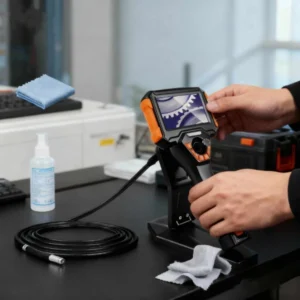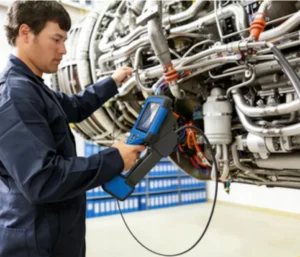

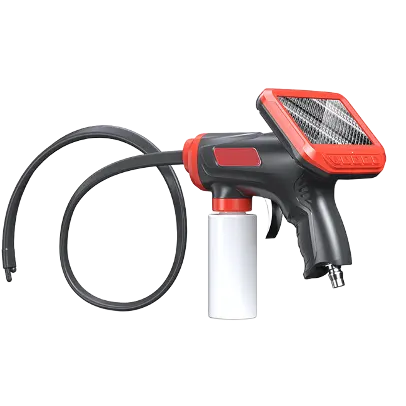
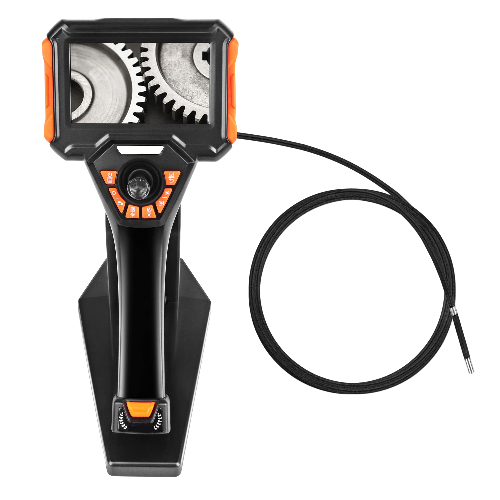
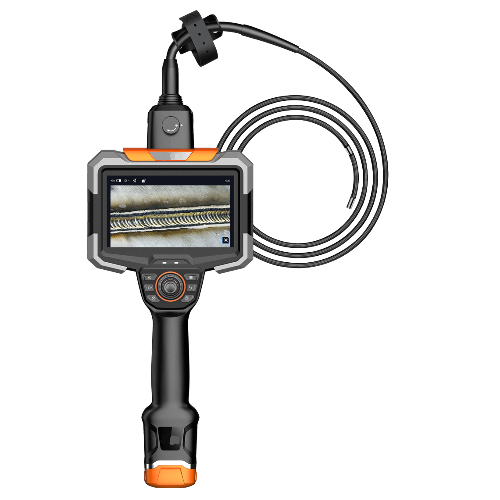
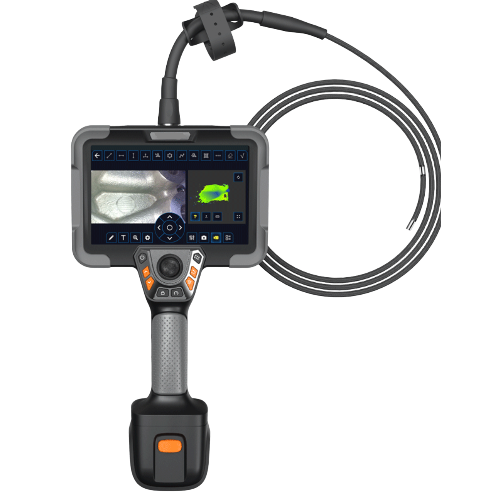
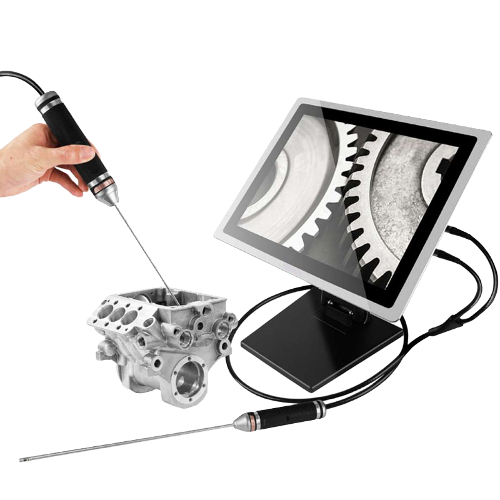
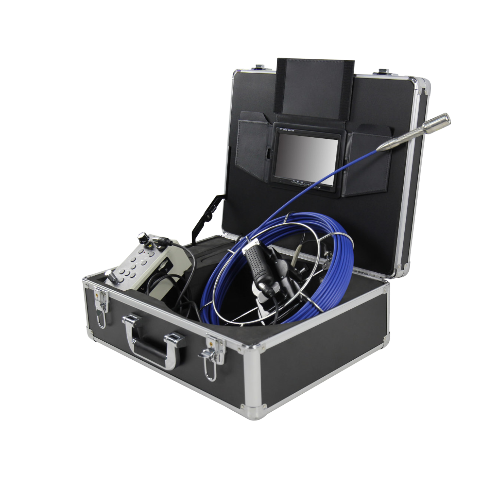
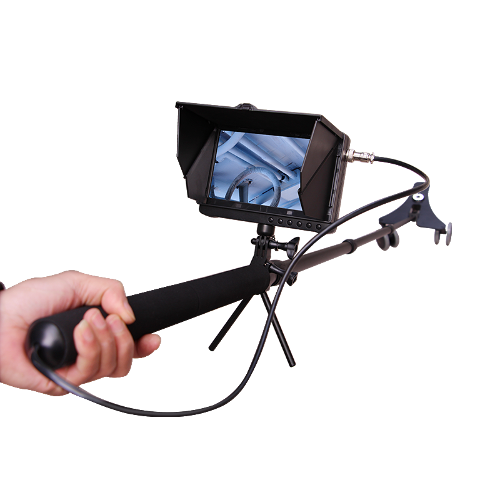
Now, with it—the aviation endoscope—you can visually comprehensive inspection and timely elimination of hidden dangers without disassembling the aircraft!
✈️ What is an aircraft borescope
Aircraft borescopes are a type of industrial endoscope, also known as borescope. It is a non-destructive testing precision instrument that uses a miniature probe to penetrate into the interior of a spacecraft and convert difficult to directly view areas into visible images, providing engineering personnel with a basis for judgment.
Widely used in the manufacturing, maintenance, and testing of aircraft and aerospace equipment, it can detect hidden dangers such as engine turbine blade cracks, corrosion, fuselage weld detection, fuel pipeline blockage, and foreign object residue without disassembling aircraft components, balancing detection accuracy and equipment safety.

⚙️ What are the components of aircraft borescope
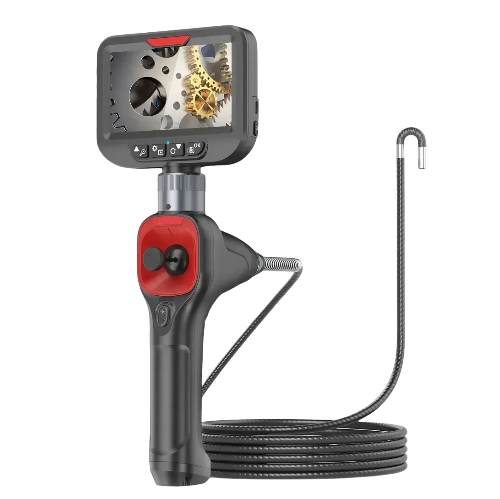
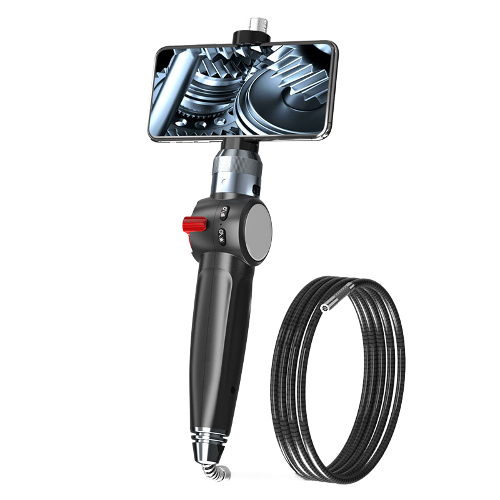
As a key non-destructive testing tool in aircraft manufacturing, maintenance, and quality inspection, aviation endoscopes typically consist of:
Boasting non-destructive, visual and high-precision advantages, industrial endoscopes have become very important aircraft inspection tools. They help detect and address internal defects and faults of spacecraft timely, enhancing their safety and reliability. Due to the uniqueness of the aerospace industry, aviation endoscopes face stricter precision requirements. Looking ahead, with industrial endoscopes technological upgrades, their applications in aircraft inspection will be even more extensive and in-depth.